Woman loses 56 kg in 1.5 years, shifts focus to muscle gain and strength
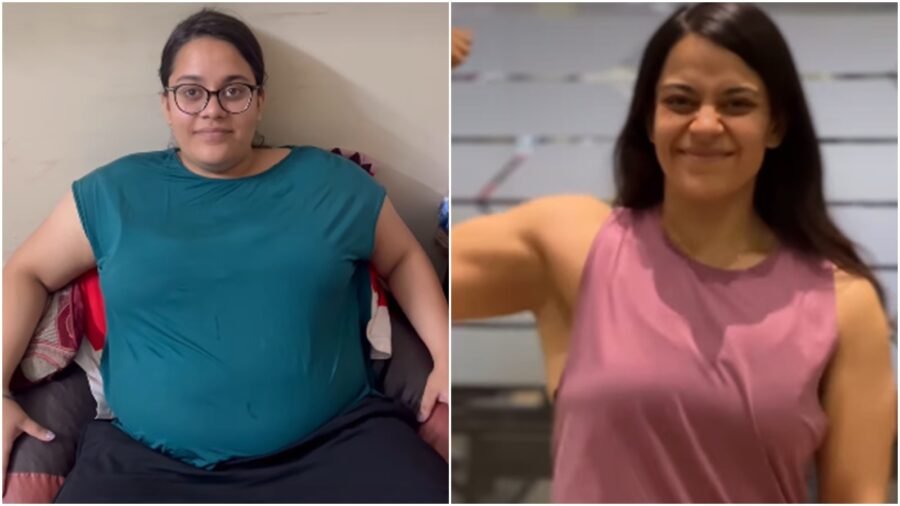
A middle-aged woman recently documented her fitness journey of losing 56 kgs in about 1.5 years. On a reel showing her transformation, Anureet Kaur commented on a user’s question about her weight loss and detailed, “It took me 1.5 years. I started in January 2024 and lost a total of 56 kg. Since then (2025), I have shifted my focus to muscle gain and strength.”
Consultant dietitian and fitness expert Garima Goyal called it a “powerful” story, noting that it is not just the number on the scale, but that she didn’t just get lighter—she got stronger. “In a world where most people still equate weight loss with eating less, skipping meals, or chasing crash diets, this story proves that the real goal should be fat loss with muscle preservation and strength gain,” said Goyal.
Story continues below.
Subscribe to see fewer ads.
It means showing up on days when motivation is low, choosing structured meals over impulsive eating, training regularly, managing cravings, improving sleep, and staying patient even when progress slows down. “But gaining muscle during the process shows that her approach was likely not based on starvation. It reflects a smarter strategy: adequate protein, progressive strength training, controlled calories, and recovery,” said Goyal.
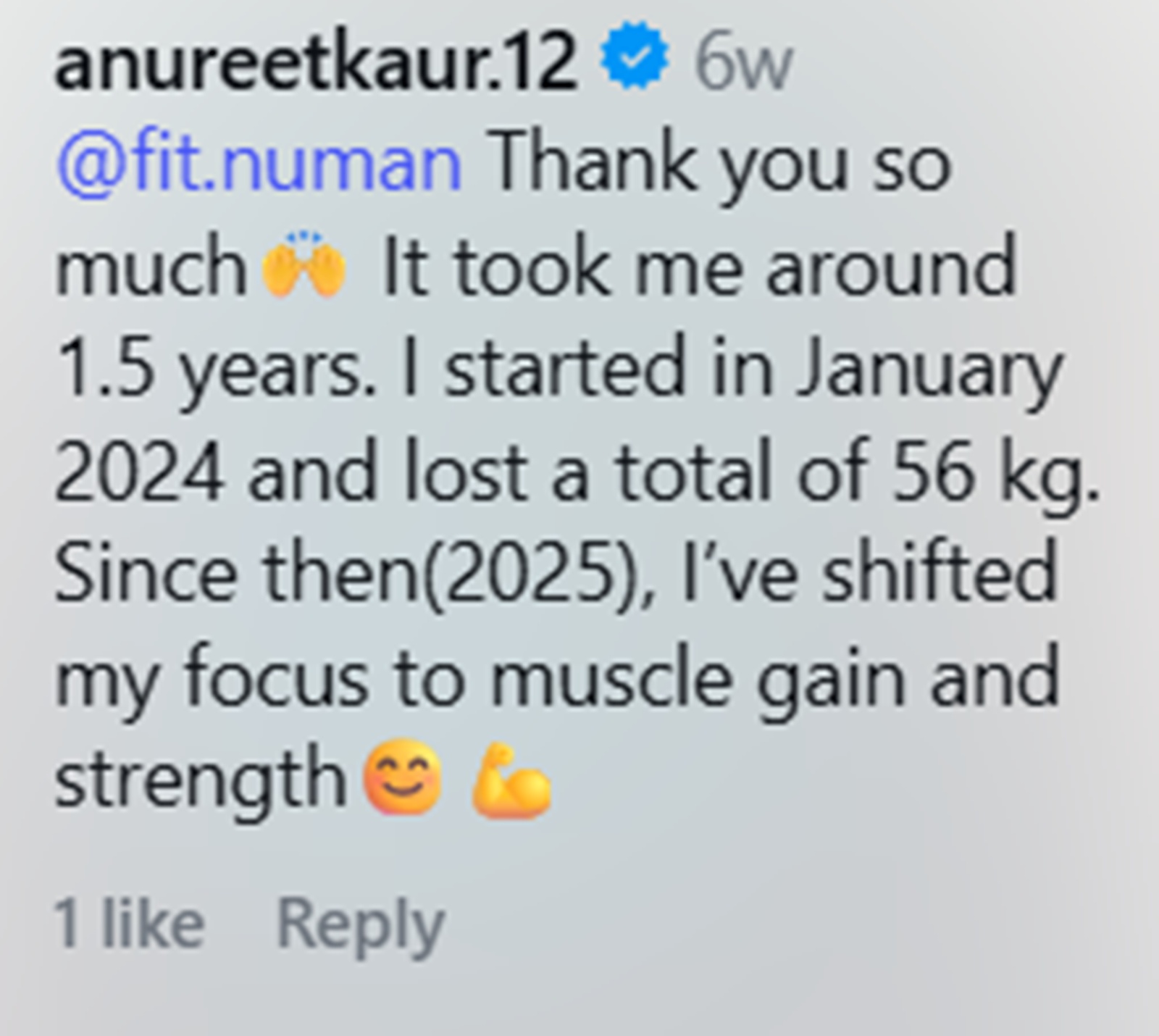 Anureet Kaur on how she lost weight
Sharing that people often focus only on reducing weight quickly, Goyal said that if the diet is too restrictive, the body loses not only fat but also muscle. “That may make the weighing scale drop, but it can also lead to weakness, loose skin, fatigue, poor metabolism, cravings, and weight regain. When muscle is preserved or gained during weight loss, the body becomes more toned, stronger, and metabolically healthier,” said Goyal.
Strength training plays a major role in this kind of transformation. “Cardio may help burn calories and improve stamina, but strength training gives the body shape. It helps build muscle, improves posture, supports bone health, increases functional strength, and improves insulin sensitivity. For someone losing a large amount of weight, resistance training is especially important because it helps the body look firm and athletic rather than simply smaller,” said Goyal.
Protein also becomes non-negotiable. “During fat loss, adequate protein helps repair muscles, improves satiety, reduces unnecessary hunger, and supports recovery after workouts. A well-balanced plate should include protein, fibre-rich carbohydrates, healthy fats, and enough micronutrients so that the body continues to function well while losing weight. Weight loss should never come at the cost of hair fall, weakness, menstrual disturbance, mood swings, or poor immunity,” Goyal told indianexpress.com.
Story continues below this ad
A 56 kg transformation also highlights the importance of mindset. “No one loses that much weight through one perfect week. It happens through hundreds of repeated decisions — walking when it feels easier to sit, eating balanced meals when cravings hit, lifting weights when the body feels tired, and restarting after setbacks instead of giving up. The journey is not linear. There are plateaus, slow weeks, water-weight fluctuations, emotional eating phases, and moments of doubt. What matters is returning to the routine again and again,” reflected Goyal.
View this post on Instagram
A post shared by Anureet Kaur (@anureetkaur.12)
However, such transformations should not be copied blindly. “Every person has a different starting weight, medical history, hormonal profile, lifestyle, stress level, and metabolism. Losing 56 kg in one year is a major achievement, but the safest pace and method will vary from person to person. For some, slower weight loss may be healthier and more sustainable. The focus should always be on preserving health while improving body composition,” cautioned Goyal.
The biggest takeaway from this transformation is that successful weight loss is not about punishment. It is not about starving, cutting out every favourite food, or doing endless cardio. It is about structure. It is about eating enough of the right foods, training consistently, sleeping properly, staying hydrated, and building habits that can continue even after the goal is reached.

How 10-minute deliveries are fuelling India’s growing waste crisis
By Sohail Khan · 24 Sep
Sensex, Nifty down over 1.6%: How crude oil, bond yields hit Indian markets
By Sohail Khan · 24 Sep
Opposition seeks Gyanesh Kumar exit: How can a Chief Election Commissioner be removed?
By Sohail Khan · 24 Sep
Leave a Reply