Pratap Bhanu Mehta writes | Amid AI, wars and climate change catastrophes, diplomacy is acting ‘normal’
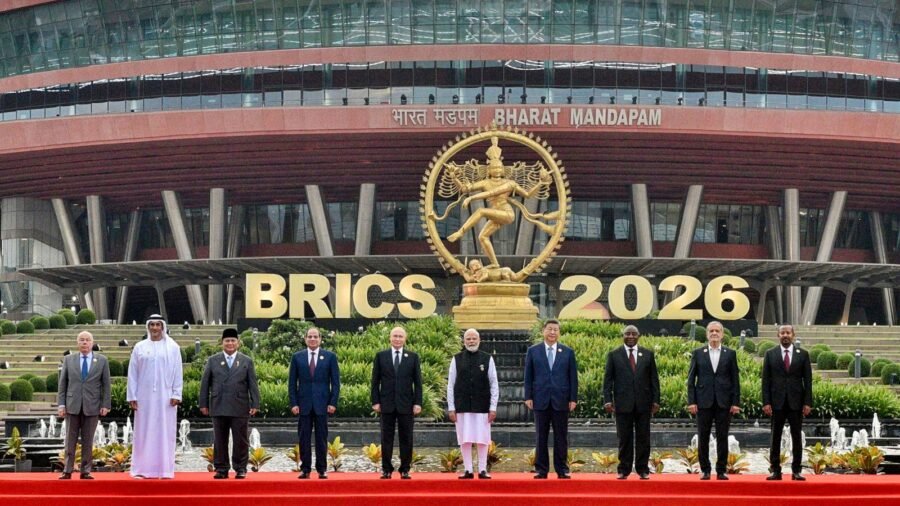
Soon, Xi and Trump will meet. World Leaders will descend on the UN General Assembly. Yet another forum of leaders, P4M, with Canada, Europe, Brazil, and Kenya, was just announced. The SCO met at Bishkek. The BRICS summit just got over in Delhi. The liturgy of international politics continues. Talking is usually good. This has helped put a floor under the multiple crises. In some cases, like trade, these summits have opened up new options for the world and created new alliances. It has, to use the current buzzword, helped build resilience. Who knows what might have happened without all this activity? In all likelihood, we would be worse off.
At the same time, it is not difficult to shake off the deep vertigo this activity is inducing. One of the greatest novels of the 20th century, Robert Musil’s The Man Without Qualities, had captured this well. It is psychologically a richly, layered novel. I first read it right after the fall of the Berlin Wall, when its pessimism about modernity seemed out of place. But its disorienting force lingers in two respects. The first is the sense of a civilisation that is sophisticated, intelligent, inventive, smart, capable, refined, even if a little amoral and confused. Yet, it has no sense of how to mobilise judgement or political action to avoid impending catastrophe. But the second thing is the weird juxtaposition between a sense of impending danger, even catastrophe, and the normal routines of ordinary life and diplomacy. Leaders and people were not exactly ignorant of what was going on. They were not quite “sleepwalking”. Everyone was aware of the momentous changes in politics, in technology, in society. They were daily news. But in a way, that was part of the paradox. Catastrophe talk or talk of dangers was just another one of those things. It is as if, in our times, the catastrophic melting of the glaciers and not quite getting the proportion of ice right in a cold coffee were on the same level of attention.
Advertisement
There is, of course, a virtue in not catastrophising; frenzy can produce fatalism or bad decisions. But the yawning gap between the machinery and protocols of international politics and the underlying historical dangers is quite striking. One temptation is to put this down to the absence of global leadership. One of the disturbing features of our current condition is that the fate of the world seems increasingly concentrated in the hands of a few individuals: Trump, Xi, a bunch of technology executives, and maybe a bunch of energy barons. In such a world, the characteristics of the few individuals seem to matter disproportionately. And yet never was the world more bereft of global leadership; if by leadership we mean the ability to rise above narrow self-interest and become a bridge between the interests of individual nations and global interest, between the present and the future. No one will expect Xi or Trump to play that role.
But you have to wonder if this is just about the quality of individual leaders we have. While individual leaders seem powerful, they are actually seriously constrained by each other. Neither China nor the United States can unilaterally frame the global order according to their whims. That is a relief. There are no hegemons. Countries can constrain each other. But they cannot produce collective action. Foreign policy is made under domestic constraints, and so it should often be. Governments are accountable to their citizens, who will care about the price of food, fuel, and employment. Domestic audiences in big powers also care about their national advantage: Leaders cannot surrender territory, accept defeat without facing domestic consequences, or be seen to concede technological advances to an adversary. The tension between national and global interests is baked into our sense of the normal. Not saving humanity might eventually be a disaster for any country, but trying to save it will often incur a high cost for the leader now. In normal times, these tensions are part of the fabric of international relations. We live with them, and they can be quite productive.
But when the magnitude of the risks has changed considerably, these tensions skirt at the edge of a breaking point, which is where we are now on every issue. In none of the wars that have systemic consequences for the world — Russia-Ukraine, America-Iran, Iran-Saudi, Israel and its neighbours – is there a bargaining solution within the current frameworks of territory, power and prestige. In AI, the incentives to accelerate, when driven by the quest for technological advantage, come just at the moment when the technology requires slowing down, regulation and deeper forms of information sharing. Climate negotiations have proved nearly impossible as each state protects its own energy security. Global debt seems an easy solution to economic woes. We want to continue to act normally when the stakes are no longer normal.
Advertisement
The summits will occur. The commitment to dialogue will be announced. The communique will be hailed as a triumph, as it was in the recent BRICS summit. The machinery working gives us a sense of normalcy. But you have to wonder: On a simple measure of significant risks to humanity — widespread war, climate change, pandemics, nuclear risks, and now possibly AI — is all this activity amounting to making us safer?
Musil’s subtle point was not that we are foolish, or ignorant or even depraved. It was rather that we might be rational, a bit too rational in taking our cues from normal times. Our leaders are doing what they are supposed to do: Preserve economic growth, energy security, compete for technological superiority, worry about the next election, and even stage the pageantry of summits. But conventional rationality and normalcy will not cut it. As in Musil’s novel a character says, “The function of diplomacy is to keep what we have.” To this, the character Arnheim gives a dark reply, “Keeping what we have leads to war.” The focus on Xi and Trump may make us forget just how stuck, and how much at risk, we are.
The writer is contributing editor,
Rohit Roy on brother Ronit Roy’s ‘bad boy’ phase: ‘We lived in constant fear’
By Sohail Khan · 22 Sep
What is the White House press pool, what its boycott of Trump can mean
By Sohail Khan · 22 Sep
Don’t use this silver-cleaning hack on pearls, opals and these other stones
By Sohail Khan · 22 Sep
Leave a Reply