Your Money: Before buying life insurance, ask these 4 questions
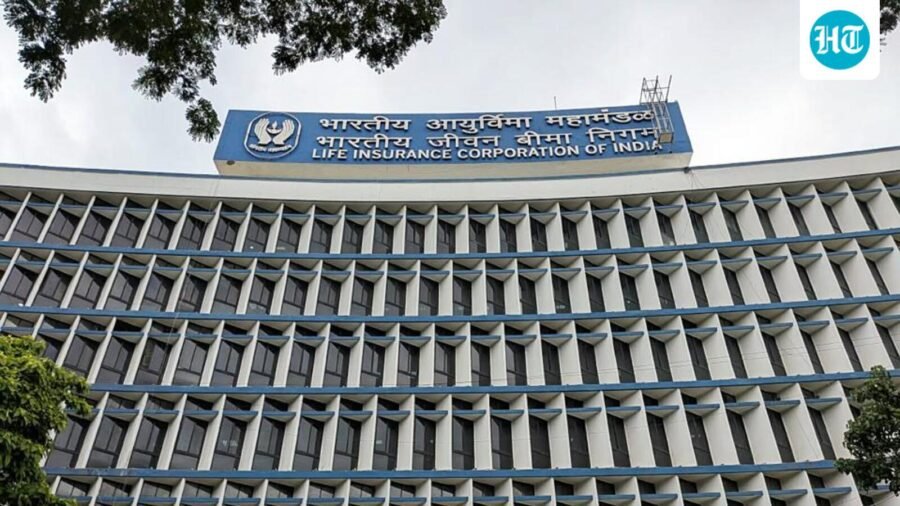
What financial goal does it serve? Is it the right fit? What will it really cost? And are you being pushed to replace an existing policy? You must avoid a mis-sale
Published on: Oct 6, 2026, 19:04:20 IST
Prefer HTon Google
Share via
Copy link
The rise in payouts to banks and other corporate agents that sell life insurance has been more than four times faster than the business they brought in. Yet policies sold by banks are the most likely to be abandoned: only 43% survive beyond five years, compared with 71% for the online channel.
Put simply, the cost of selling you a policy has risen much faster than the number of policies sold, and that cost is likely built into your premium.
In its latest consultation paper on distribution reforms, the Insurance Regulatory and Development Authority of India (IRDAI) said high costs and uneven service are diminishing trust and holding back insurance coverage. The proposed reforms aim to lower commissions and insurers’ operating costs and make sellers more accountable for ensuring products are suitable for customers. But these are proposals, open for comments from public until October 25, with implementation phased over five years. Until then, it is still up to you to spot a mis-sale.
Mis-selling does not just mean being sold something you do not need. It also includes misrepresented features, selective disclosure of information and insurance bundled with another product.
Start with a basic question: Why are you buying insurance — for protection or investment? A pure term policy costs a fraction of a traditional savings plan and gives more benefits. Get this clear first, then ask questions until you sign.
Guarantees feel safe, and sellers often lean on them to pitch endowment and money-back plans. There is considerable misrepresentation in sales pitches and, more often than not, the returns — though tax-free — barely beat inflation.
“We saw a case where a customer was sold a guaranteed plan on promise of 12% to 14%. That was worked out as a percentage of sum assured—it included customer’s own premiums coming back. But the way it was pitched, the customer understood it as return on their money. The actual return worked out to 5-5.5% a year. Sometimes, policies are sold showing returns for a lump sum payout on maturity, whereas amount is actually spread across several years, once again lowering returns promised,” says Mahavir Chopra, founder, Beshak.org.
Instead of the absolute amount you receive, ask for IRR (internal rate of return). It typically does not exceed 5.5%-6.5% a year on guaranteed plans and is locked in for decades. Exiting early can be expensive: IRDAI data shows a non-par (guaranteed return) policy surrendered in year five returns only 64%-84% of premiums paid; in year one, the figure is 31%-63%.
Chopra suggests: “There are three things one needs to watch out for. The commitment on how many years you need to pay premium, the liquidity – how many years before you can withdraw the amount and lastly, what is IRR on a spreadsheet. Take it all in writing. Don’t be impulsive in the decision to buy or be pressured because the sales person would like to close the deal fast.”
Suitability is at the top of IRDAI’s reform agenda but is seldom practised.
“One of the most common experiences is when customers are sold a savings product but they needed protection. People end up paying large premiums for very little cover. My regular autorickshaw driver in Mumbai was sold an endowment policy with minimal life cover – the premium was a burden but stopping wasn’t an option either because of the loss involved. Savings plans carry far bigger premiums than term plans,” says Sumit Ramani, actuary and co-founder of Protectmewell.com.
Were you sold a ULIP without being told you could lose capital? Or a 10-year regular-premium plan when your income is irregular? Was your elderly parent sold life insurance despite having no dependants and enough savings?
“Often, a parent is asked to buy a ‘child policy’ with the child as the insured because lower mortality rates apply, and that can translate into higher returns. But it’s not real protection or the purpose. What happens in the event of the earning parent’s untimely death? There will be no death benefit paid out,” says Chopra, giving an example of a common misselling practice. For a market-linked policy, ask about risks involved in generating projected returns.
Cost is where transparency is weakest. In a ULIP, charges for mortality, administration and fund management are deducted from your fund. Not everything you pay is invested, while returns depend on fund performance. “The most damaging cost is the one the customer never sees: the cover they should have had,” says Ramani. Another common practice is mispresenting premium cost: a multi-year premium policy sold as one-time premium. Sellers earn far more on a 10-year plan than on a single-premium policy. Barring credit life policies, the average single-premium commission ranges from 2%-11%, whereas the average first-year commission on a multi-year life insurance policy is 14% to 51%.
If the second-year premium catches you unprepared and you surrender the policy, you recover only part of what you paid, while the agent has already received a substantial payout.
“Insurers pay high upfront commissions on traditional plans. Much of that cost was recovered from customers who exited early because surrender values were low and the insurer kept a large share of what they paid. When IRDAI raised surrender values in 2024, insurers started clawing back commissions from distributors. That tells you how closely the two were linked,” says Chopra. Ask for how many years must I pay, and how much will I have to pay each year? Ask specifically about the costs and death benefit.
First-year commissions, according to IRDAI data, are several times higher than renewal commissions. Depending on the policy type, these have reached highs close to 80%, while the average goes up to 51%. By contrast, the maximum range for renewal premium commissions on life insurance policies is 5%-8%.
A seller can potentially earn more by replacing your policy than by servicing it.
Before you surrender a policy or let it lapse, ask why it no longer works and what the new policy does differently. Unless it offers a higher death benefit at the same or lower cost, why switch?
If you answered yes to any of the scenarios above, you may have been mis-sold a policy. Ramani suggests asking three questions before signing: What financial goal does this policy address? What other ways are there to meet the same goal? What percentage of my premium goes as commission to the agent? “The first two questions force a need analysis before a product is chosen. The third brings out the commission conflict,” he says.
If you bought the policy in the last few days, the 30-day free-look period may help. Check the brochure against what you were promised, and if the policy is not serving you as expected and seek a refund.
If this period has passed, write directly to the insurer with your complaint. If the insurer is unable to resolve the issue, you may escalate the matter to Bima Bharosa and then to the Insurance Ombudsman.
According to IRDAI data, in FY26, 63% of complaints disposed of by Bima Bharosa were settled in favour of the policyholder. Of the claims settled by the Ombudsman, 75% were in favour of the customer.
Even after asking every question listed above you can still be misled. For now, it is up to you to remain a vigilant customer.
Lisa Pallavi Barbora is a freelance writer and author of Money & Her
Track live Stock Market Today updates and check your NSE IPO Allotment Status Today. Stay informed with the latest business news like N Chandrasekaran, petrol and diesel prices, gold and silver rates, income tax updates, and major economic developments across India and globally.
See Less

CCI approves JSW internal restructuring
By Sohail Khan · 6 Oct
How Paramount, Warner Bros made Skydance
By Sohail Khan · 6 Oct
BCCI seeks new selector after Ajit Agarkar’s exit
By Sohail Khan · 6 Oct
Leave a Reply