Delhi’s new master plan can soothe parking pains
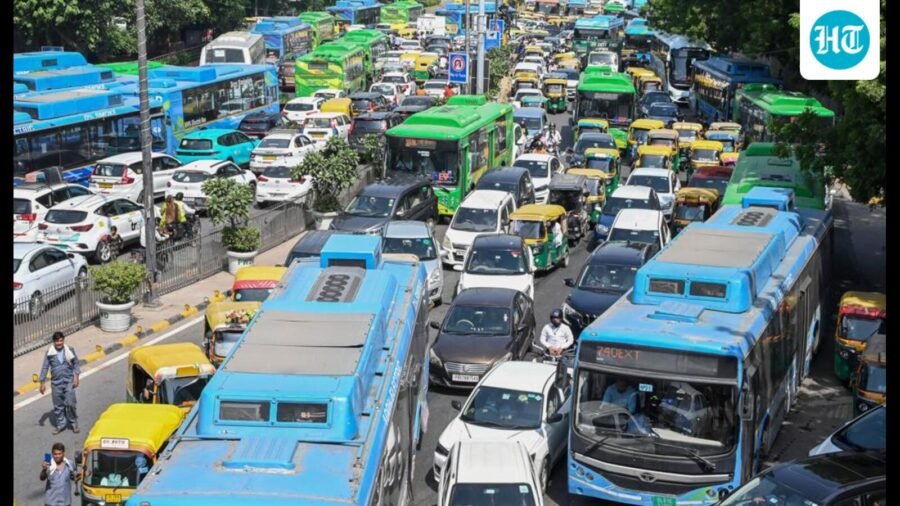
MPD-2047 proposes setting up a two-tier institutional framework for executing and regulating parking across the city
Published on: Oct 3, 2026, 06:15:22 IST
Prefer HTon Google
Share via
Copy link
While Delhi is moving towards paid parking in most of its commercial areas, unreserved parking in residential areas continues to be on a predominantly first-cum-first serve basis. The current practice of free on-street parking in most neighbourhoods of Delhi is not only an elite capture of public land for private purpose; it is also deeply contested often resulting in serious hostility between neighbours. There are an increasing number of media reports on violent disputes, at times ending even in deaths, over limited residential parking spaces as car ownership is consistently showing an upward trend in the city.
Delhi Master Plan-2047 (MPD-2047) notified on August 20, 2026, aims to disincentivise the use of private vehicles, encourage more public transport use, and “enhance the potential of active travel of walking and cycling as an affordable, comfortable and safe mobility option”. It also presents a “fundamental shift in managing city parking, which is moving away from expanding parking capacity to managing parking demand.” The plan clearly intends to rationalise parking norms for freeing up more street space, reducing and capping parking spaces for private vehicles, and introducing strict space limits. The plan’s measures for disincentivising private car usage include dynamic and congestion pricing in high-demand areas like employment, commercial, cultural and transport hubs, and significantly higher on-street parking fee within a 500-metre radius of any existing multi-level parking facility.
MPD-2047 proposes setting up a two-tier institutional framework for executing and regulating parking across the city. First, the establishment of a centralised Unified Parking Body to regulate and oversee all on-street, off-street, surface, and multi-level parking to eliminate institutional fragmentation and conflicts between various local bodies and traffic police. Second, decentralised micro-Level zoning and planning, which includes mapping out distinct “Parking Management Areas” (PMAs) covering neighbourhoods, local markets, and residential zones by urban local bodies (ULBs) and formulation of localised parking area management plans (PAMPs) jointly with resident welfare associations (RWAs), market associations and transit sector experts.
For mixed land use areas, the plan seeks to move cars inside the plot, or to a neighbourhood multi-level parking facility.
For residential areas, the plan mandates approximately two car spaces per unit and a “phased approach for regulating on-street parking through a system of permits and linking registration of new vehicles to the availability of parking space,” which builds on the provisions of the Delhi Maintenance and Management of Parking Places Rules, 2019.
But, these rules have not been implemented in the past seven years. There are also other cities like Ahmedabad, Mumbai, Lucknow, Kanpur and Bengaluru where parking policies are in place, or proposed, to enable ULBs to charge for on-street residential parking but implementation has been lacking. What can be done to change this?
First, working out a feasible pricing of parking lease and permits, and the penalties for multiple car parking. For instance, in Kolkata, the average price of a residential day and night parking permit is ₹1500 per month, levied by the Kolkata Municipal Corporation since 2022. The Shimla Municipal Corporation started regulating parking since 2015, due to its hilly terrain and severe space constraints under the “Yellow Line Parking Scheme.”
Second, given the limited success of paid residential parking, in spite of having an enabling policy framework, the first step should be creating awareness and people’s willingness to pay jointly with ULBs, ward level committees, RWAs and other concerned civil society organizations.
Third, and equally important, is advocacy for gaining political support for establishing a system of paid residential parking at all levels, including the central, state and local governments.
Fourth, an effort also has to be made to build space saving facilities like automated puzzle parking near residential areas.
As per the Economic Survey of Delhi 2025-26, Delhi has more than 2 million four wheelers and about 6 million two wheelers. At ₹1500 a month for four wheelers, and ₹300 a month for two wheelers, and assuming that 75% of cars and 50% of two wheelers are parked on the street, this will generate a revenue of about ₹3800 crore every year. By comparison, the collection of property tax was ₹3100 crore against a target of ₹3500 crore in 2025-26.
Imagine what a windfall it would be for Delhi to get an equal source of local revenue as sizable as property tax! A wide range of improved services can be provided with this additional income for its citizens, such as providing more support to last mile connectivity to help people use buses and metro; making buses free for all, not just women; making footpaths more walkable; combatting air pollution; and expanding parks, playgrounds and green areas, and so on.
Hopefully, the MPD-2047’s provision of consultative preparation of Parking Area Management Plans (PAMPs) will pave the way for speedy implementation of paid residential parking in Delhi.
Pushpa Pathak is a senior fellow at the Centre for Policy Research, New Delhi. The views expressed are personal
Get Current Updates on India News, Elections 2024, Lok sabha election 2024 voting live , Karnataka election 2024 live in Bengaluru , Election 2024 Date along with Latest News and Top Headlines from India and around the world.
See Less
In democracy’s journey to future, Gandhi is the wise guide and co-traveller
By Sohail Khan · 3 Oct
Unwise to ignore what Xi’s US visit pageantry masked
By Sohail Khan · 3 Oct

Leave a Reply