Women’s safety falls through the gap between intention and policy
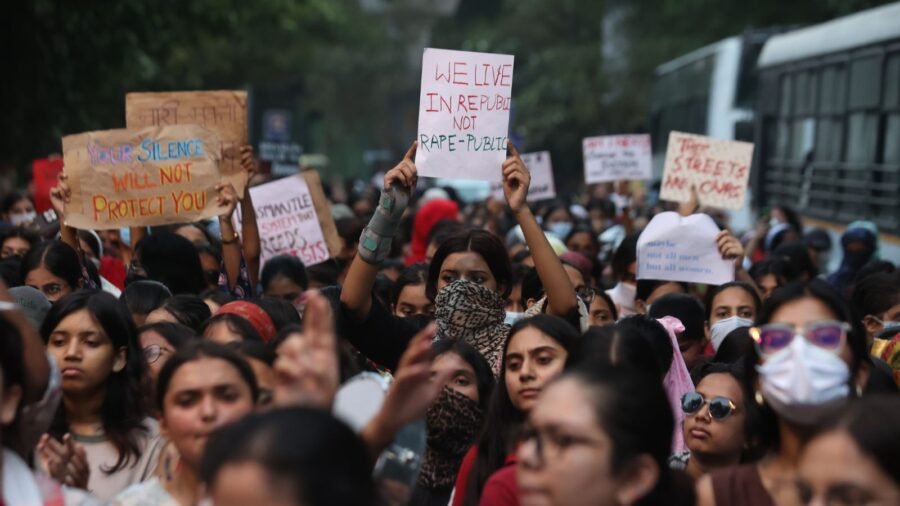
It’s been almost 15 years since the gangrape in Delhi in December 2012. It’s hard to forget the days that followed, when we took to the streets to agitate for greater safety for women. Some demands were met. The Nirbhaya Fund was created to support programmes for women’s safety and the Prevention of Sexual Harassment at Workplaces Act, 2013 was passed. It seemed like our country was finally building a legal and policy framework to prioritise women’s safety — with funding to back it up.
Between 2015 and 2025, Rs 5,846.08 crore out of the Rs 7,712.85 crore allotted under the Nirbhaya Fund was used. The funds have been used to set up nearly 15,000 women’s help desks in police stations and establish fast-track courts for rape cases. Cities like Chennai, Surat and Bhubaneswar established gender labs to explore how urban design could prioritise women’s safety. At Nikore Associates, we have done safety audits of public spaces and public transport facilities in at least 10 cities. So why are we still here? Why did Jamui happen? Why did Aastha Kunj park happen?
Advertisement
The answer lies in a series of systemic failures. One is accountability. Safety audits are increasingly being looked at as the end, and not the means for women’s safety. Administrations wax eloquent about the number of safety audits commissioned, but there is little discussion of how the issues discovered in these audits are being fixed. For example, if everyone knew that a lane behind Lady Sri Ram College has a 500m dark zone, with no streetlights, why was no action taken to fix it?
An audit is not enough. For women to trust safety measures, government agencies at the city level need to publicly share reports on how they are continuously working to fix issues discovered in safety audits; how they deal with calls received on women’s safety helplines; and how long their crisis response is.
There is also a problem of capacity. Today, at least eight states offer free bus travel for women. Governments are substituting investment in gender-sensitive infrastructure with free public transport for women. But, as our recent study shows, making buses free does little for women’s safety if the wait times are long and unpredictable, and if women have to walk to the bus on unsafe streets. This is a classic example of commitment to women’s safety without the capacity to innovate in a way that can truly build inclusive cities.
Advertisement
Women’s near absence from public spaces, especially in the evenings, is yet another factor in making cities even more unsafe. One way to fix this is having more women in public-facing jobs, like drivers, conductors, ticket checkers, station managers, park workers, cleaners, e-auto drivers. Employment in these jobs rests with government agencies and small changes can make a big difference. Take, for example, the height requirement for bus drivers. When the Delhi government dropped its height requirement from 159 cm to 153 cm in 2022, by the following year 34 new women bus drivers were inducted. Regulatory reforms and targets to increase women’s representation in these roles are required to push women’s employment and their presence in public spaces.
There is also a need to increase the number of women police. Today, just about 10 per cent of India’s police force is female, despite a central government target to take it to 33 per cent.
If we want a society with women-led development, the first step is acknowledging these failures, and then correcting them — starting with governments at all levels taking accountability.
The writer is founder, Nikore Associates

Microplastics in bottled water: What 240,000 particles per litre means for your health
By Sohail Khan · 28 Sep
Give India’s poor cash. But don’t stop there
By Sohail Khan · 28 Sep

Leave a Reply