‘What’s for lunch when your restaurant is travelling at 28,000 km/h?’
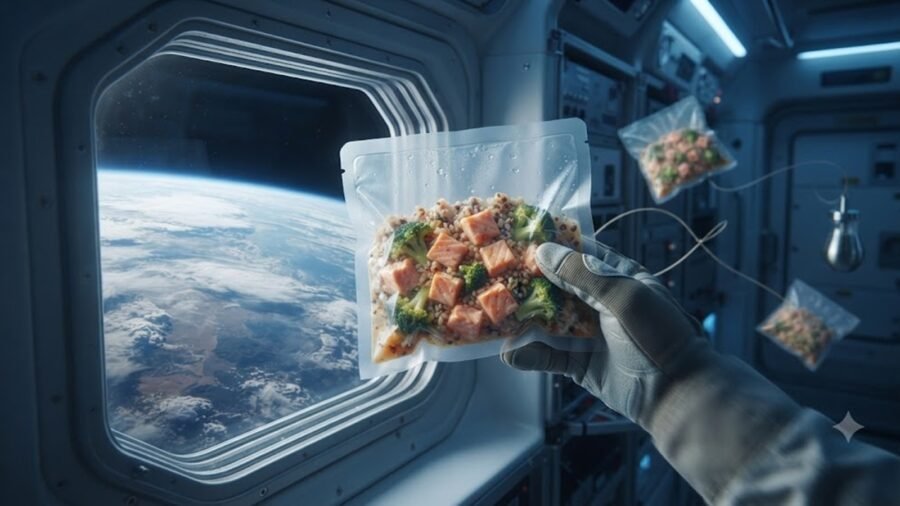
He also detailed the steps.
*Add water, let it rehydrate, and then choose your preferred temperature. You can put it in the refrigerator—yes, there is a fridge on the ISS—or warm it up in the food warmer.
Story continues below.
Subscribe to see fewer ads.
“A microwave, however, is one piece of earthly technology we don’t have on the ISS,” he said.
“And then there is the small matter of crumbs. In microgravity, they don’t politely fall onto your plate. They float around, looking for adventure—and potentially finding their way into equipment. So, even a simple mango salad comes with a little science, a little technique, and occasionally a lot of patience. Bon appétit… from orbit.”
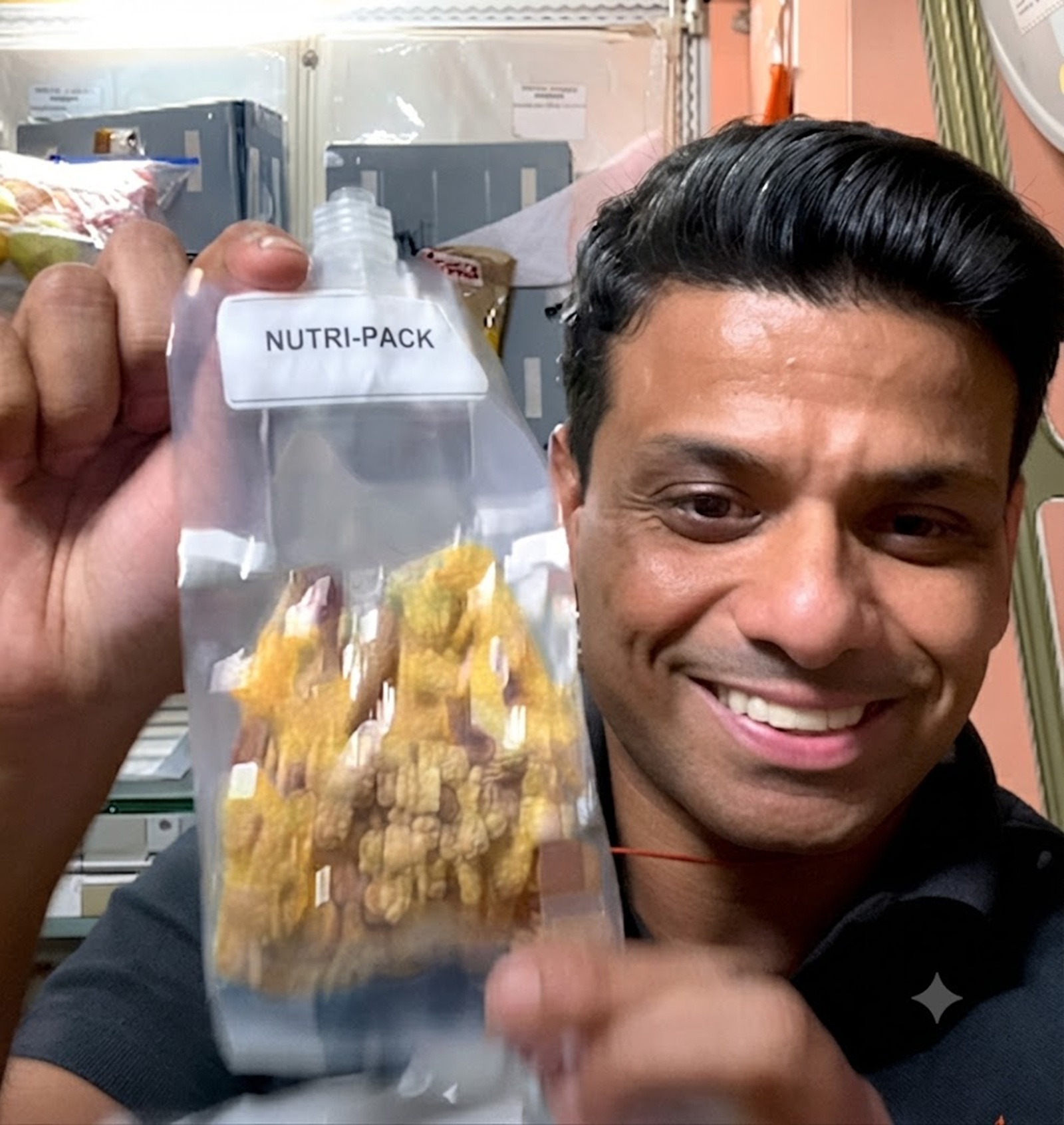 Shubhanshu Shukla shared a glimpse of mango salad in space
Dr Amit Saraf, director, internal medicine, Jupiter Hospital, Thane, responded that eating in space differs from eating on Earth, especially when foods need to be rehydrated or warmed before consumption. “Eating in space is less about the meal itself and more about adapting everyday habits to microgravity. On Earth, gravity helps with pouring, mixing, chewing, and swallowing. In microgravity, food and liquids behave differently, so astronauts have to be more deliberate. Astronauts rehydrate dehydrated or freeze-dried foods with a measured amount of water, while other foods may simply need warming. The nutritional objective remains the same: ensuring adequate calories, protein, vitamins, minerals, and fluids despite the unusual environment,” said Dr Saraf.
Does microgravity affect digestion, appetite or the way the body processes food?
The digestive system continues to function, but the body undergoes several physiological changes in microgravity, Dr Saraf asserted.
Story continues below this ad
“Fluid distribution shifts towards the upper body, and astronauts may experience changes in appetite, taste and smell, particularly during the early period of a mission. Reduced physical activity compared with life on Earth can also alter energy requirements. Maintaining a balanced diet therefore becomes important not only for digestion but also for preserving muscle, bone and overall metabolic health.”
View this post on Instagram
A post shared by Shubhanshu Shukla (@gagan.shux)
What happens if astronauts do not get enough nutrition during a long-duration mission?
Inadequate nutrition can become a significant concern during prolonged spaceflight. “Insufficient protein and overall energy intake can contribute to muscle loss, while inadequate calcium and vitamin D, combined with reduced mechanical loading on bones, can accelerate bone mineral loss. Micronutrient deficiencies may also affect immunity, wound healing, and general wellbeing. This is why space diets are planned carefully rather than being based simply on preference or convenience,” said Dr Saraf.
Does the absence of gravity create any specific challenges with food safety?
Yes, affirmed Dr Saraf. “Crumbs and small particles do not settle naturally; they can remain suspended in the cabin and potentially enter ventilation systems or equipment. Loose liquids can behave similarly. This makes food packaging, preparation and cleanup important parts of maintaining a safe environment. Meals are therefore designed around controlled portions and minimal loose particles.”
Is there any broader lesson from how astronauts eat in space?
It highlights how closely nutrition is linked to the environment we live in. “On Earth, we take basic functions such as eating and digestion for granted because gravity does much of the work around us. In space, those assumptions disappear. The experience reinforces a simple principle: good nutrition is not just about what we eat, but also about whether the diet suits the body’s physiological demands and circumstances,” said Dr Saraf.
Story continues below this ad

How South Africa’s new exchangeable pitches could shape the 2027 Cricket World Cup
By Sohail Khan · 28 Sep
The mindset shift Virat Kohli is talking about: ‘Promised myself…to play more freely’
By Sohail Khan · 28 Sep
Safe and healthy workplace as a legal right: Does the OSH code deliver?
By Sohail Khan · 28 Sep
Leave a Reply