Safe and healthy workplace as a legal right: Does the OSH code deliver?
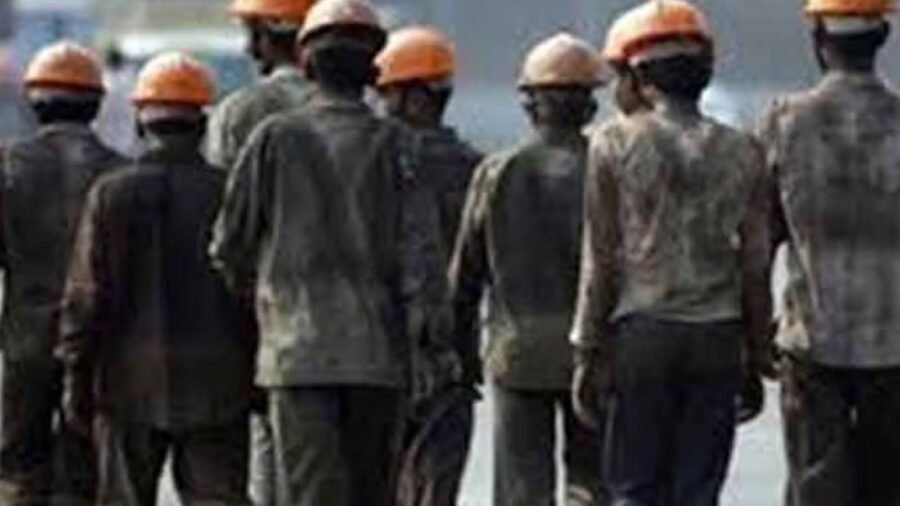
Two primary barriers have traditionally divorced ground-level realities from strategic policymaking. First, frontline workers remain de facto cut off from strategy makers. Second, caught in precarious employment, blue-collar workers are routinely hesitant to share real-time insights on imminent dangers or safety breaches, fearing it might bounce back and jeopardise their livelihoods. This weak feedback loop has long been compounded by our socio-psychological tolerance for makeshift arrangements — popularly known as jugaad — and a cultural acceptance of shortcuts (chalta hai). The result is a mindset that reflexively suppresses safety warnings and penalises whistle-blowers as troublemakers. Until lapses turn tragic, shop-floor issues are routinely managed locally without aiming for lasting, systemic improvements. Workers — fully aware that a minor error can snowball into a catastrophe — remain silent, bound by the old adage that “the boss knows best”. Historically, labour laws reinforced this hierarchical relationship, casting managers, engineers, safety officers, and supervisors as the sole guardians of workplace safety while relegating ordinary workers to the margins as mute spectators. For instance, the Maharashtra Factory Rules of 1963 adopted a patronising approach, placing the onus on management merely to disclose basic information regarding “hazardous processes”.
Inverting the Pyramid
Advertisement
The commencement of the Occupational Safety, Health and Working Conditions Code, 2020 (OSH Code 2020) marks a watershed moment, dismantling this top-down model. Section 14 establishes it as a legal right for employees to obtain health and safety information from their employers, transforming its compliance into a strict statutory obligation.
Further, if a worker raises an alarm regarding inadequate safety measures, the employer is legally mandated to take immediate corrective action to the worker’s satisfaction, shifting the power dynamic firmly toward employee well-being. The OSH Code 2020 takes a giant leap by inverting the traditional safety ecosystem and placing the worker at the centre. Authorities like safety officers, safety committees, and Inspectors-cum-Facilitators (ICF) under the Labour Department now revolve around ensuring employee satisfaction regarding health and safety. If a blue-collar worker points out a safety anomaly, the safety committee and safety officer must act immediately, escalating the issue to the employer for corrective action. The employer is required to implement prompt remedial measures, inform the workers, and submit a detailed report — including actions taken — to the ICF. Crucially, employers can no longer casually dismiss safety warnings as ungrounded. If they choose to reject a claim, they must formally report their reasons to the ICF, who serves as the final, binding authority to authenticate such alarm bells.
Protecting the Protectors
Raising safety concerns in good faith should never be a career hazard. Yet, as the old adage warns, “whosoever answers the knock must open the door”. We must rigorously question whether the OSH Code goes far enough to shield those who step forward.
Advertisement
While the Code rightly mandates that no financial charge be levied on employees for safety provisions and requires employers to escalate disputed claims to authorities, it stops short of explicitly safeguarding whistle-blowers against subtle retaliatory actions, such as unwarranted transfers, demotions, or termination of contract terms. Closing this crucial gap through supplementary guidelines is essential if we want workers to play their due crucial role in developing common OSH architecture at the workplace.
The ‘Conversational’ Approach to Health and Safety
In its 2022 report, “A safe and healthy working environment,” the ILO underscored the vital role of social dialogue — through inputs, discussions, consultations, and talks — in building a safe and healthy work environment. The OSH Code embeds this conversational approach directly into its legal framework. It ensures that reporting safety hazards does not get reduced to mere in-house adjustments where workers are discouraged or employers respond with insincerity. Instead, the entire vision of a safe workplace rests on a clear legal premise: Workers possess the most accurate, ground-level understanding of workplace safety architecture due to their frontline role; they are the ones facing an imminent threat if it fails. Consequently, workers’ voices must be fully accounted for in developing OSH architecture at the workplace.
Rule 21 of the OSH Code seeks to entrench this premise. Now safety officers are required to actively interact and seek inputs, viewpoints or suggestions of workers at OSH arrangement at workplace/shop-floors level. Further, while redressing safety concerns raised by workers, both employers and the ICF must ensure the complainant-worker’s satisfaction before filing a closure report on any OSH breach case. This conversational approach ensures a bottom-up model of developing OSH architecture at the workplace and dismantles conventional mold of authorities acting as rigid, one-way communicators.
Rights as a Duty Well Performed
The framework of workplace safety does not end with the mere declaration that a “safe and healthy work environment” is a legal right; it requires much more. In accordance with this dictum, the Code enjoins upon employees specific responsibilities to keep workplaces accident-free, healthy, and safe. Section 13 provides that individual actions can either strengthen or undermine the entire safety framework, as the omission or negligence of one worker can jeopardise all. Consequently, the Code requires every employee to attend to personal hygiene, safety, and health in the interest of the entire workforce, backing these duties with strict penal provisions for personal failure or negligence.
Ultimately, the OSH Code establishes a proactive, personalised, and dialogue-oriented framework — turning a safe, healthy, and hygienic workplace into a legal right that operates as a self-equilibrating system for everyone.
The writer is regional labour commissioner, Thiruvanathapuram

‘What’s for lunch when your restaurant is travelling at 28,000 km/h?’
By Sohail Khan · 28 Sep
How South Africa’s new exchangeable pitches could shape the 2027 Cricket World Cup
By Sohail Khan · 28 Sep
The mindset shift Virat Kohli is talking about: ‘Promised myself…to play more freely’
By Sohail Khan · 28 Sep
Leave a Reply