Time runs short for Iran and America
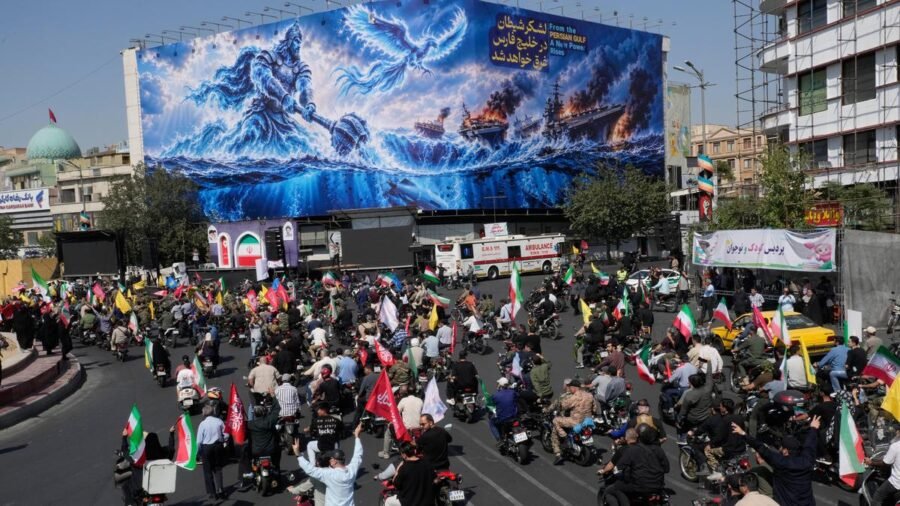
It may be tempting to see the recent jerky resumption of negotiations between the Islamic Republic of Iran (IRI) and the United States as déjà vu. Similar attempts resulted in the June 17 Memorandum that unravelled within weeks, and the two belligerents resumed their respective blockades of the Strait of Hormuz and Iranian ports.
A different moment now
So, what is different this time? They have both realised that time is not on their side. Their respective domestic considerations make continuation of the seven-month-old war costly and unsustainable. In the short run, going by the past pattern, September 26 saw United States President Trump’s dismissal of Iran’s seven-point proposal, which may be an opening gambit seeking better terms and sequencing. While the Iranian initiative may betray their economic desperation, it also showcases their reasonableness to the Trump sceptics in America and the region who regard his “War of Choice” against Iran as ill-begotten.
The November 3 mid-term congressional elections could upend Mr. Trump as a lame duck. Iranian hardliners, too, need to exhaust this option to justify their aggressiveness. In the longer run, Mr. Trump needs to salvage his legacy to match his extravagant promises. Similarly, the Iranian theocrats need to keep Gen Z engaged and avoid regional blowback from the coagulating mistrust. Thus, while retaining their braggadocio about final victory, each needs to move away from its maximalist obduracy and seek a “Hudna” or temporary peace. The impact of the unfolding imbroglio on the two belligerents as well as on Israel and Gulf states must be examined.
Statistically, the U.S. has a quantitative premium and staying power vis-à-vis Iran: It has three times the population, 85 times the GDP and 20 times the military budget. Iran is also at a disadvantage in quality and modernity of weaponry, although its asymmetric strategy has blunted that edge. Washington has weaponised ‘Operation Economic Outcast’ against the already “maximum sanctioned” Iranian economy. Yet, the IRI has not “capitulated”, and the U.S. itself faces inflation, ammunition depletion, and isolation. Battle asymmetry aside, their respective combat histories are relevant. The Iran war has been an outlier from the usual U.S. military doctrine of battle dominance through “shock-and-awe”, tech superiority, and leveraging its global primacy through the global politico-financial architecture. The last battle that the U.S. fought as an underdog was its war of independence nearly 250 years ago, and hubris haunts it now. In contrast, Iranians have often been the underdogs to Greeks, Byzantines, Arabs and Ottomans. More recently, British and American manipulation for oil, and Iraq’s 1980 invasion of a fledgling IRI, still frame Iranian political discourse. Their Shia sect being a minority among the Sunni Muslims reinforces their sense of virtues in suffering and martyrdom. The legacy has made the IRI more determined to face enemies with grit, guile and gumption.
The political ecosystem in Iran is hardened, with dissent stifled and externalised to demonised America and Israel as the two Satans. Mr. Trump has been less successful in getting Americans and the allies abroad behind his trenchant anti-Iran rhetoric. This is partly due to his divisiveness, lack of coherent endgame strategy and inability to protect his allies’ security and economy. Triggering a decapitating war that ignored Iranian politico-military resilience and retaliatory capacity was a strategic blunder. It risked the closure of the two vital maritime choke points, rising hydrocarbon prices, and threatened to push American “hyperpower” into a forever conflict against a middle-ranked, but determined, Iran. Similarly, his recent strategy of inflicting economic pain on Iranians may also fail by making them rally around the flag. Occasional tanker attacks and the ongoing Yemen-Saudi scrimmage notwithstanding, seven months on, the two belligerents are currently licking their wounds.
Uncertain path ahead
Two formidable unknowns loom before some educated projections can be made about the U.S.-Iran conundrum. First, although the Iranian seven-point proposal is based on the June 17 Islamabad memorandum, its precise contents are foggy. Second, the failure of the Islamabad memorandum, subsequent tit-for-tat attacks, the U.S. blockade, Operation Economic Outcast and fire-eating rhetoric since June 17 have deepened mutual mistrust, raising the bar for the modus vivendi required for a peace deal. These negatives are balanced by awareness that the continued stalemate would lead to a shared perdition of a hostile Congress blockading Mr. Trump and anti-establishment demonstrations pulling the rug under the Mullahs.
Under a positive scenario, both sides can breathe easier and develop greater mutual empathy. Failure of the June 17 Grand Bargain would have presumably made them more realistic and incremental. So, instead of a race to the bottom, each would need to reluctantly adopt a “Live and Let Live” approach. Despite Mr. Trump’s rejection, signs, such as the Iranian leaders extending their stay in New York, Tehran’s flexibility about controlling the Strait of Hormuz and the use of Qatari mediation instead of alacritous Pakistani generals, seem tentatively positive. To be effective and beneficial to both sides, the deal would have to last at least till November 3, the election date.
Even if this band-aid deal allows the two belligerents to staunch the haemorrhage temporarily, what guarantees its long-term sequel, say, after the Congressional elections? The IRI and the U.S. are certain to use the interregnum to “recharge their batteries” and get ready for the next round. Their mutual scepticism and contentious issues such as the nuclear and missile programmes, and the proxy non-state actors could impede any progress towards permanent normalisation. A “high noon” can be expected by mid-November.
The sequel would depend on which of the two belligerents is able to hold his flock together. An inherently unpredictable Mr. Trump may only suspend the gamut of anti-Iran measures and keep his forces deployed in the region. Similarly, Iran is unlikely to let go of control of the Strait of Hormuz as future deterrence. To dissuade him from resuming military kinetics, Iran has already unveiled its possible escalatory ladder that includes advanced weaponry, a possible al-Houthi blockade of Bab al-Mandeb, retaliatory attacks on America’s Gulf allies and hints of pre-emptive strikes. Simultaneously, Tehran has sought a regional diplomatic reset through an interim supervisory arrangement with Oman on the Strait of Hormuz, to be endorsed by other Gulf littoral states.
Wider regional consequences
The past two years have brought Israel and Iran into two direct no-holds-barred wars. Intense drone and missile attacks have convinced Israeli public opinion that Iran constitutes an existential threat. On its part, Iran is unlikely to forgive the Lesser Satan for the assassination of its last Supreme Leader. Their resultant intense regional geopolitical competition, particularly in the Levant, would outlast any Tehran-Washington peace deal, giving their two-millennia-old civilisational animus a new edge. Although the October 27 Knesset elections may see hawkish anti-Iran Prime Minister Benjamin Netanyahu replaced, any successor is likely to be hostile to an Iran pursuing a nuclear duality. Iran can be expected to rely on its proxies and asymmetric arsenal to create a balance of power with Israel equipped with state-of-the-art U.S. weapons. In the long run, time would favour the one with better innovative skills. While Israel is a “Startup Nation”, Iran has also been impressively inventive under pressure.
Other regional countries in the Arabian Peninsula, Iraq and Jordan, were caught in the crossfire and suffered considerable collateral damage under Iranian retaliation. Their hydrocarbon exports and other economic activities have been stifled. In most cases, their extensive forex reserves are likely to help them tide over the turbulence. However, their long-standing security reliance on the U.S. would call for a thorough reappraisal. Among the uncertainties they need to tackle is the future of oil, now more tightly tied to geopolitics than the supply-demand equilibrium.
In this war, “time” has emerged as an element even more slippery and opaque than oil.
Mahesh Sachdev is is a retired Indian Ambassador, specialising in West Asian and oil issues

Light on truth: on the Tamil Nadu G.O. and RTI
By Sohail Khan · 29 Sep
Tackling food loss and waste — India’s opportunity
By Sohail Khan · 28 Sep
Revisiting the farmer question
By Sohail Khan · 28 Sep
Leave a Reply