The 80s nostalgia holds caste bias
On July 17, 1985, an argument at a drinking water tank in Karamchedu, in coastal Andhra Pradesh, turned into a massacre. A Madiga woman objected to a Kamma youth soiling the public drinking water tank her family drank from. By nightfall, six Madiga men were dead and three Dalit women had been raped. The police called it a riot. A civil liberties fact-finding team called it a one-sided massacre. The killings birthed the Andhra Pradesh Dalit Mahasabha and a four-decade argument over whether the Constitution reaches inside a village.
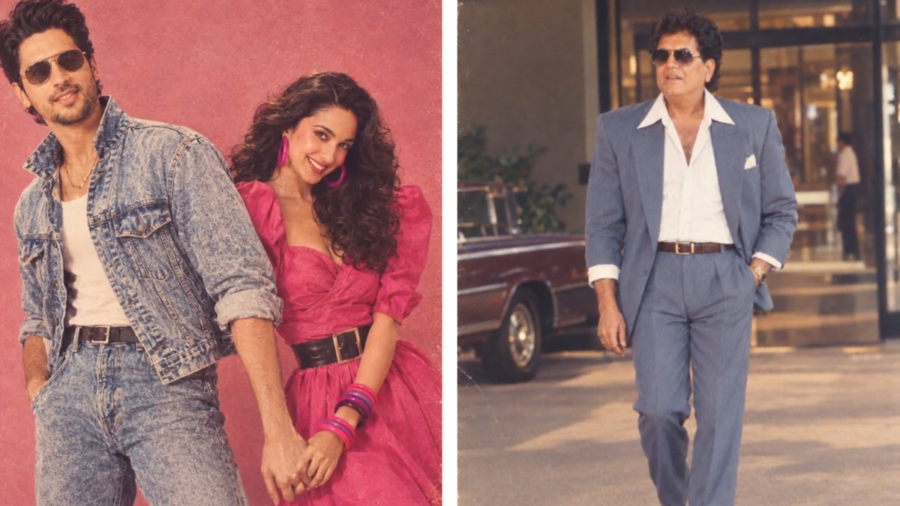
Forty-one years later, our feeds are full of the past; AI-generated images of the 80s. Chiffon sarees against sunlit walls, Ambassadors and Contessas. Thus, India became the No. 1 country for Google’s Nano Banana image-generation model, and its signature trend was retro-Bollywood portraits. However, where did this aesthetic come from?
Model or mood board, the source material is the same — film stills, magazine spreads, studio portraits, and family albums. However, in the India of the 1980s, all four belonged to households with money and standing; overwhelmingly savarna, urban or landed. In 1983, by the Planning Commission’s own estimates, 44.5% of Indians, some 323 million people, lived below the poverty line. In 1980, only about a quarter of households lit their homes with electricity. Parliament enacted the SC/ST (Prevention of Atrocities) Act only in 1989.
It is not that Dalit and Adivasi lives were not photographed; they were, but by others — the state took pictures for its welfare files, activists after an atrocity, as well as anthropologists. The family photograph, which is taken simply to be seen, and is the genre nostalgia runs on, was the one the poor could least afford. Those who could reach a photo studio posed before a painted Swiss chalet; the colony and the forbidden tap remained outside the frame.
A model trained on such an archive reproduces the silence, and hardens it. Tests by MIT Technology Review found that GPT-5 chooses the stereotypical answer in 80 of 105 sentences: the clever man is upper caste, and the sewage cleaner is Dalit. A study presented at the ACM’s FAccT conference this year analysed 1,536 images from Gemini’s image model, the engine behind Nano Banana, prompted with Indian names and no caste labels. Caste surfaced anyway, through food, neighbourhood, work and worship. One image placed a sanitation worker beneath a banner reading “Bhangi Colony”.
Ask the machine for the 1980s and it gives you an upper-caste version. Ask it for a Dalit and it reaches for dirt. The machine did not invent this prejudice; it inherited it and now industrialises it.
A state that looks away
Nobody outside the companies know what is in the training sets. Nor do those who label them (often South Asian workers paid per task to judge which faces look Indian enough). Can a labeller who has never seen a colony flag a model that has never rendered one?
And the government? The Ministry of Electronics and Information Technology (MeitY)’s AI Governance Guidelines name bias and discrimination as risks, and then leans on voluntary codes and self-certification. The Centre has told the Rajya Sabha that no new horizontal AI law is needed at this stage. Meanwhile, the ₹10,371-crore IndiaAI Mission subsidises “sovereign” models. Moreover, Union Minister Ashwini Vaishnaw has promised that Indian-trained models will be free of “the bias of many other models”. Which bias? Tested how?
A committee is reportedly drafting firmer rules; caste must be written into them. Additionally, the MeitY and the IndiaAI Safety Institute should answer these four questions — what is in the training data? who labelled it? has a caste-bias evaluation been done? will relevant date be published? Anything short of mandatory, public answers is consent by silence.
The counter-evidence is on our screens through films such as Fandry, Kammattipaadam, Pariyerum Perumal, Vaazhai etc. What they share is not budget, but authorship. The person remembering has stood on the other side of the water tank. Caste vanishes from nostalgia not because it is subtle but because it is not an object. Caste is who sits where, and who draws from which tap. You cannot buy it as a prop; you will miss it unless it has not shaped your life.
So, do not ban the filter. Go upstream. Ask Dalit, Adivasi, Muslim and working-class families what images they hold from 1975 to 1995, who took them, and what was kept out of frame. Fund community photo archives as seriously as we fund film restoration.
Rejimon Kuttappan is a workers rights advocate
Light on truth: on the Tamil Nadu G.O. and RTI
By Sohail Khan · 29 Sep
Tackling food loss and waste — India’s opportunity
By Sohail Khan · 28 Sep
Revisiting the farmer question
By Sohail Khan · 28 Sep
Leave a Reply