Tackling food loss and waste — India’s opportunity
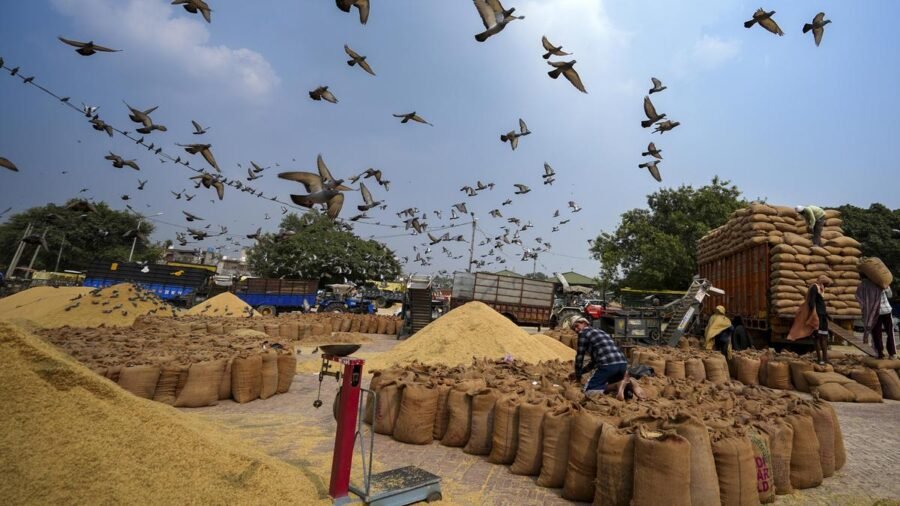
Food loss and waste remain one of the world’s most persistent challenges, with severe consequences for climate, food security, economic costs, and sustainable use of natural resources. India produces enough to feed its population of 1.4 billion, yet a significant share of its produce is lost across the value chain. As the country advances towards more resilient, sustainable and efficient agrifood systems, tackling food loss and waste can deliver a triple win: strengthening food security and nutrition, reducing pressure on natural resources and emissions, and improving incomes and productivity. The International Day of Awareness of Food Loss and Waste, observed annually on September 29, highlights this opportunity for India.
India has already taken the first step by generating nationally representative data.
India’s evidence base, a global first
India is the only country to have conducted three national post-harvest loss surveys. The Ministry of Food Processing Industries assessed losses across 45, 45, and 54 commodities in 2005-07, 2012-14, and 2020-22, respectively, covering the supply chain from farm to retail. The process for a fourth round is now under way.
This sustained effort supports its reporting of the Food Loss Index under the Sustainable Development Goals. However, these estimates cover mainly losses on the farm and in the supply chain. Data on food waste in retail, in hotels and restaurants, and at household level remains far less developed.
The Food and Agriculture Organization of the United Nations (FAO) is working with the government, research and financial institutions across India’s agrifood systems to translate the triple win from theme to practice. Generating evidence, testing technologies and mobilising investment from farm to market to the city have been the core of these initiatives.
When food is lost, so are the resources used to produce it. Reducing losses can help India meet its climate and resource-efficiency goals while strengthening food security. The scope for reducing losses is greatest with better storage, drying, cooling, moisture management and processing. Digital tools such as traceability systems can further improve how food is moved and managed through the supply chain.
Food loss and waste need to be integrated more systematically into agricultural planning, food-processing strategies, climate action and investment decisions. This means directing finance towards technologies and infrastructure where they can have the greatest impact, while ensuring that solutions remain affordable and accessible to farmers, producer organisations and small businesses. Circular approaches can add another dimension. Surplus food can be redistributed, while unavoidable organic residues can be converted into compost, biogas or energy, reducing waste and creating additional economic value.
Wholesale markets, overlooked opportunity
Assessments by the FAO and the National Council of Agriculture Marketing Boards (COSAMB) have found that major wholesale markets can generate up to 100 tonnes of organic waste a day; in some cities as much as a fifth of all urban organic waste reaches landfills. Nationally, this adds up to an estimated 3.5 million tonnes a year. It is no waste stream but a resource base, which if treated, can offset roughly 3.3 million tonnes of CO2-equivalent emissions annually, or close to $30 million in carbon credits.
A 50-tonne-a-day bio-CNG plant in Surat, Gujarat, has been run through a private-sector partnership for over five years and reportedly cuts methane-related emissions by about 7,500 tonnes a year.
India can adapt such models to local conditions, including the commodity mix and infrastructure of different markets. Municipalities and market committees can also improve organic-waste segregation, collection and treatment, while developing markets for compost, biogas and other recovered materials.
Investment and innovation
India must move from individual interventions to a more connected national approach with financing at its core. The FAO and the Small Industries Development Bank of India (SIDBI) are linking identified food-loss hotspots with climate-resilient technologies such as drying, moisture control, energy-efficient cooling and storage, while SIDBI is arranging finance to help small and medium enterprises adopt them.
The FAO is also working to equip Indian cities with a practical “Package of Practices” for urban food loss and waste management, giving municipalities the tools to measure, prevent, reduce, redistribute and valorise waste across households, wholesale markets, retail and food service.
India now has the data, technology and viable models to reduce food loss and waste. The priority is to close data gaps, direct investment and make loss reduction part of agricultural, food-processing, urban and climate policy.
Konda Chavva is Officer-in-Charge, FAO Representation in India

Light on truth: on the Tamil Nadu G.O. and RTI
By Sohail Khan · 29 Sep
Moon gardens are trending: 5 plants and easy tips to create one at home
By Sohail Khan · 28 Sep
Turmeric, honey, and yoghurt: Decoding Ananya Panday’s glow secret
By Sohail Khan · 28 Sep
Leave a Reply