The simple movement you shouldn’t give up as you get older: ‘Asian squat’
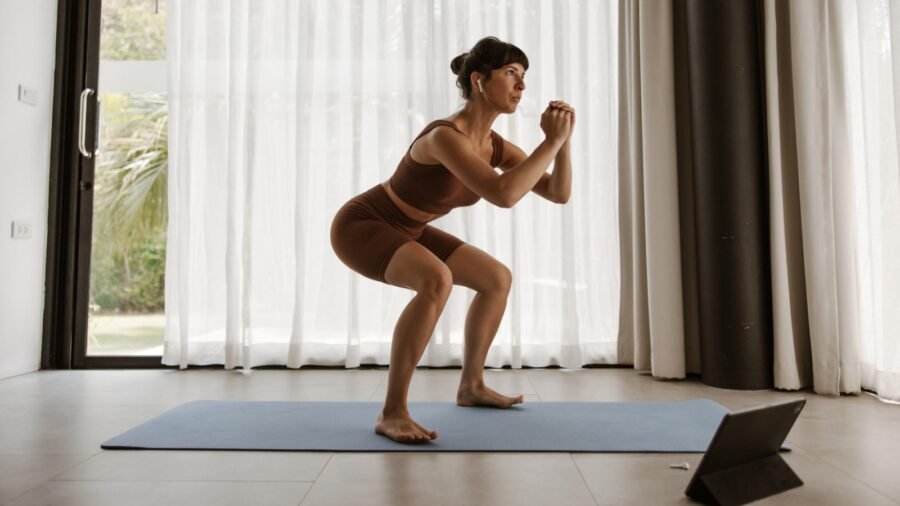
As we get older, movements that once felt effortless — sitting on the floor, getting up without support or squatting down to pick something up — can gradually become harder. Nutritionist Dr Amy Shah recently highlighted the importance of retaining these movements, demonstrating what is commonly called the deep or “Asian” squat in a video featuring BBC journalists.
“This is the deep Asian squat. Your feet are flat, and you’re sitting in a very low position,” Shah said, explaining that the position was traditionally used as a resting posture and for using squat toilets.
She also pointed to potential benefits including joint flexibility, posture, lower-body flexibility and balance. “As you get older, you want to do more things where you have to get up from the ground from a seated position,” she said.
Story continues below.
Subscribe to see fewer ads.
But does regularly practising deep squats actually help preserve physical function as we age?
According to Dr Mrinal Prakash, Consultant, Orthopaedics (Joint Replacement & Sports Injury Specialist), KIMS Hospitals, Thane, the ability to perform a deep squat or rise from the floor is less about the squat itself and more about the physical capacities behind the movement.
“The ability to comfortably move into a deep squat and get back up from the floor reflects a combination of hip, knee and ankle mobility, lower-body strength, balance and coordination,” Dr Prakash says.
A deep squat also makes the quadriceps, gluteal muscles and core work while taking the hips, knees and ankles through a relatively wide range of motion.
View this post on Instagram
A post shared by Dr. Amy Shah (@dramyshah)
Why floor movements become important with age
Dr Prakash says regularly practising movements that involve sitting down, standing up and changing levels can help maintain functional strength as we age.
“This is particularly relevant because everyday independence depends on the ability to rise from a chair, climb stairs, recover balance and get up from the floor,” he says.
Story continues below this ad
That makes these movements relevant beyond exercise. Being able to get up after sitting on the floor, for instance, can be an important marker of how comfortably someone can manage everyday activities.
However, Dr Prakash cautions against interpreting this as evidence that deep squats themselves extend lifespan.
“The deep squat itself is not a magic exercise for longevity,” he says. Instead, maintaining the mobility and strength required to perform such movements can support healthy ageing.
What happens when we stop squatting or sitting on the floor?
“The body tends to adapt to the movements we perform regularly,” Dr Prakash explains. If these joints are rarely taken through their full comfortable range, stiffness may gradually increase, and mobility may decline.
Story continues below this ad
Muscles can also lose strength in positions we don’t routinely use.
“Floor sitting and getting up require repeated coordination between the legs, hips and trunk. Avoiding these movements altogether can make them progressively more difficult,” he says.
That does not mean avoiding deep squats alone causes age-related stiffness. Dr Prakash points out that age, previous injuries, arthritis, body weight, muscle strength and overall physical activity can all influence mobility.
Should everyone do deep squats?
A deep squat may be safe for many people with adequate mobility, strength, and control. But Dr Prakash says it is not essential for everyone, particularly older adults with significant knee or hip arthritis, recent surgery, ligament injuries, severe pain, or balance problems.
Story continues below this ad
“The goal should not be to force the body into the deepest possible squat,” he says. “A pain-free range, good technique and gradual progression are more important.”
If you can’t comfortably perform a deep squat, there are other ways to build similar abilities. Controlled chair squats, supported squats and supervised floor-to-standing movements can help maintain strength, mobility and confidence.
Expert Explains | What the BRICS 2026 summit achieved — and what challenges remain
By Sohail Khan · 15 Sep
AI’s real danger is not the future. It is what we cannot control
By Sohail Khan · 15 Sep
C Raja Mohan writes: India may want a multipolar world, but we might be moving away from it
By Sohail Khan · 15 Sep
Leave a Reply