Subsea cables: The many vulnerabilities of the world’s most critical digital lifelines
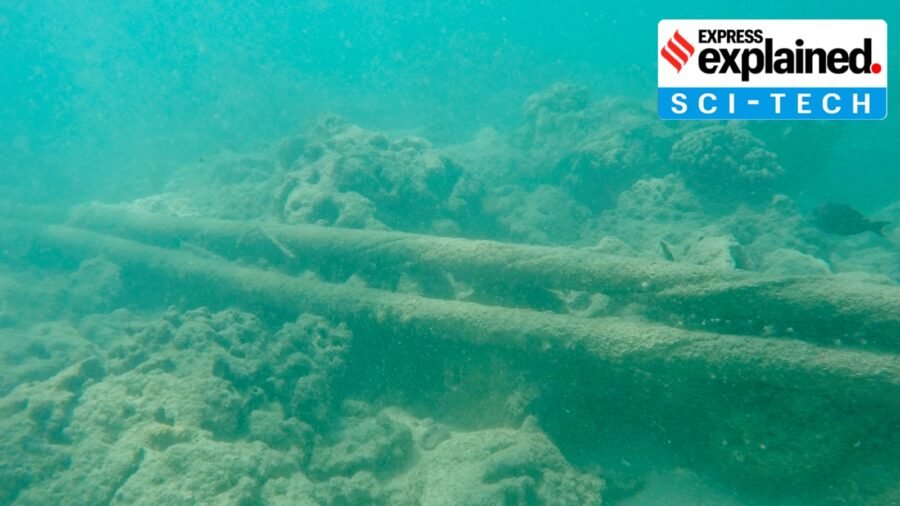
Subsea cables carry over 99% of the internet’s traffic. They are the single most critical component underpinning all of present-day digital connectivity.
Why are subsea cables increasingly being targeted?
Subsea cables have become indispensable to modern life. All digital communications — global financial transactions, government operations and day-to-day communications — take place because of this network of undersea cables, making them strategic assets on a par with national energy grids.
Disruption to a cable system can lead to a complete loss of connectivity for a region or country, as seen across many countries in Africa in 2024. This can halt a citizen’s access to the government for services, information and relief. Disruption to a cable could also result in economic losses owing to a breakage in transaction links, affecting governments, industries and individuals.
Story continues below this ad
Another key vulnerability is cybersecurity. All information that is generated digitally — images, videos, emails, invoices and even secure communications — is carried through these cables. Adversarial attacks could result in the leak of sensitive information.
Undersea cable sabotage could, therefore, potentially cripple a State’s operations — part of why they are increasingly being seen as targets.
Who owns and manages subsea cables?
Despite their strategic importance for countries, the global network of subsea cables is primarily private industry-led. Historically, cable networks were owned, financed and managed by telecommunication companies operating as part of consortiums.
Story continues below this ad
These consortiums are private groups that comprise telecommunication firms, cable manufacturing companies, and content providers that fund and manage a cable system. Consortium members collectively take decisions on technical and commercial aspects of a cable system, including the number of fibre pairs, routes, landing sites and local landing partners.
As hyperscalers — technology companies providing cloud and infrastructure services at a large scale and who were previously consortium members — expanded content services in emerging markets, a need for higher bandwidth for their data traffic has led them to invest more heavily in cable systems.
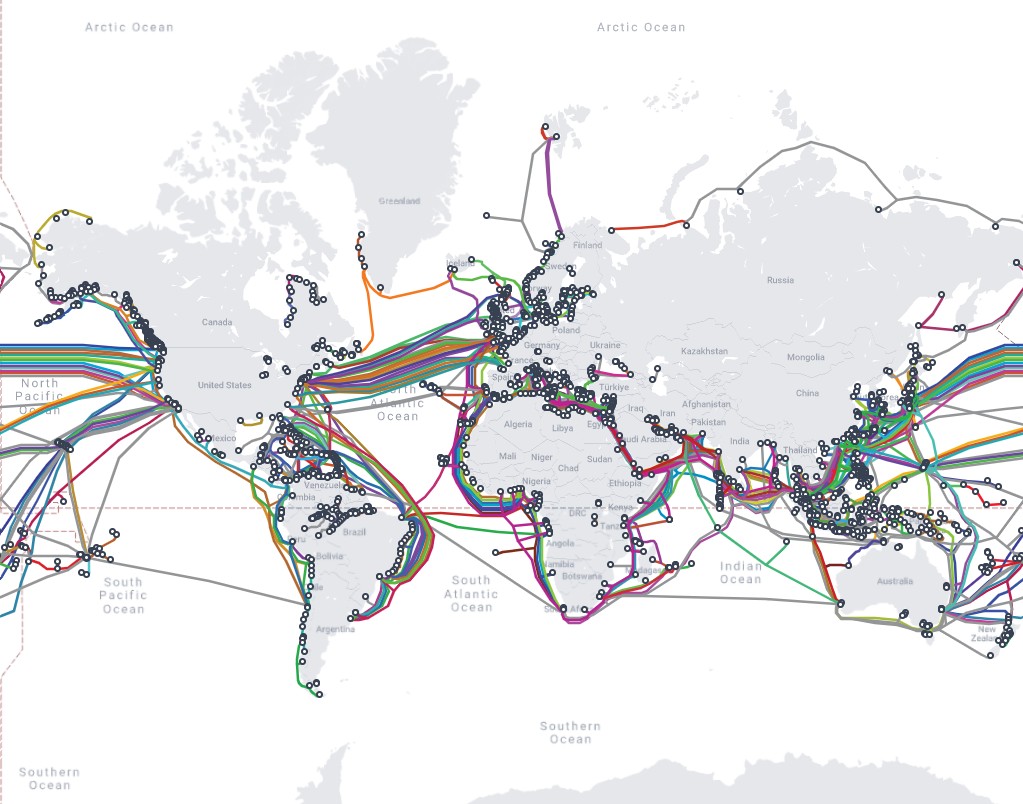 A map of undersea internet cables today. TeleGeography
Additionally, AI-associated workload is causing a surge in bandwidth demand. Data carried through these cables could previously be stored in local servers closer to the point of consumption and be duplicated and transmitted. A movie, or a YouTube video, for example, could be easily accessed locally after being transmitted once. AI-related network traffic needs higher bandwidth and speed because of the novelty of the data that is being carried — every new query is a new packet of data. Consortium arrangements, where the total bandwidth was leased to different content providers, are now changing to hyperscaler-led arrangements.
Cable manufacturing and repair capabilities is another concentrated segment.
Three key players dominate the manufacturing market: Alcatel Submarine Networks of France, SubCom of the US and NEC of Japan. Operating through consortium arrangements, these firms together have built approximately 90% of total cable length deployed presently.
Story continues below this ad
Read together with hyperscaler dominance, this figure brings to sharp relief the dependence of the world’s internet on a small group of stakeholders.
Adding to this vulnerability is a key concern: the lack of adequate repair capacity globally. Cable repair operations are highly technical, and time- and capital-intensive exercises that need specialised vessels and crew. A concentrated group of repair and maintenance service provides works based on regional maintenance agreements signed between them and cable consortiums.
What does the concentration of the subsea cables supply chain mean for digital sovereignty for countries?
Story continues below this ad
Countries are trying to build sovereign capabilities across the AI stack, from hardware to compute to applications. Underlying all of this is a concentrated supply chain that has yet not been restricted by export controls. However, the potential of sabotage to undersea cables can prompt states to impose export controls on supply chain components, and place restrictions on routing and other aspects.
For countries with no major leverage in this supply chain, this will have implications for the debate on digital sovereignty, particularly, how much control they can exercise over the infrastructure that underpins their digital economies.
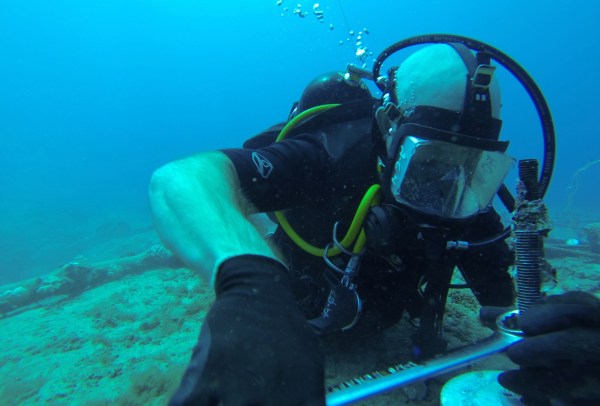 A worker repairs an underwater cable. (Wikimedia Commons)
Expansion of digital infrastructure is increasingly shaped by a small group of mostly US-led private players. Digital connectivity and transformation, thus, come to depend on the private sector, which can have implications for which regions are prioritised as markets for greater investment — and, in turn, for the overall diffusion of the benefits of digital transformation.
Cable routes, for example, are seeing a shift with hyperscaler-led projects preferring direct routes over the high seas for intercontinental connectivity, rather than landing at multiple sites along the way. This could have downstream effects on where new connectivity hubs emerge, where future data centre investments are made, and how the benefits of greater digital connectivity are distributed.
Story continues below this ad
Where is India placed and how can it build resilience for subsea cable infrastructure?
India hosts a total of 18 subsea cables, which land across five major sites. While there is no current threat of intentional sabotage in the Indian Ocean region, the country should not overlook the possibility of it, given the challenges of attribution in a cable damage incident which can be exploited by adversaries.
Building domestic capacity for cable repair and maintenance is a strategic necessity, but will need to address regulatory and permit challenges, which have for long disincentivised private initiative in this area. India’s Department of Telecom is reportedly building a single-window clearance portal that reduces permit hurdles and eases the way for private sector investment in repair capabilities.
Bhatt is a research analyst at Carnegie India.

Donald Trump is trying to rename AI. That won’t solve any of its problems
By Sohail Khan · 24 Sep
AI has taken on a Millennium Problem. Is that scary?
By Sohail Khan · 24 Sep

Leave a Reply