Donald Trump is trying to rename AI. That won’t solve any of its problems
Advertisement
On the first point, interpretability research has advanced, yet developers can still explain what their systems do more reliably than why they do it. That deficit was tolerable when models merely generated text. It is far less so now that they write and execute code, act autonomously across the internet, and contribute to the design of their own successors. The builders acknowledge this. Anthropic’s chief executive, Dario Amodei, has expressed concern that AI models are themselves accelerating progress beyond engineers’ capacity to comprehend it.
The second point, the pace of change, has now been conceded by the industry’s leaders. On September 12, Amodei published an essay urging the industry to slow capability development and committed Anthropic unilaterally to granting independent evaluators permanent, employee-level access to its systems. His warning was specific: Absent greater investment in safeguards, a swarm of AI agents could plausibly take control of the internet within six months to a year. OpenAI’s Sam Altman, rather than dissenting, stated that he agreed on the need to pace the frontier, and told Fortune that a roughly 10 per cent chance of catastrophe by the decade’s end was unacceptable. Earlier, in July, over 1,300 employees of Anthropic, OpenAI, Meta and Google DeepMind had signed an open letter urging Washington to regulate AI and slow its advance.
Some observers regard these statements as an attempt by incumbents to entrench their position behind regulation that smaller rivals cannot afford. The concern merits attention. However, the argument for regulation does not depend on the motives of chief executives. It rests on a simpler proposition: A technology of this reach should not be governed solely by the internal policies of a few firms and the competitive pressures acting upon them.
Advertisement
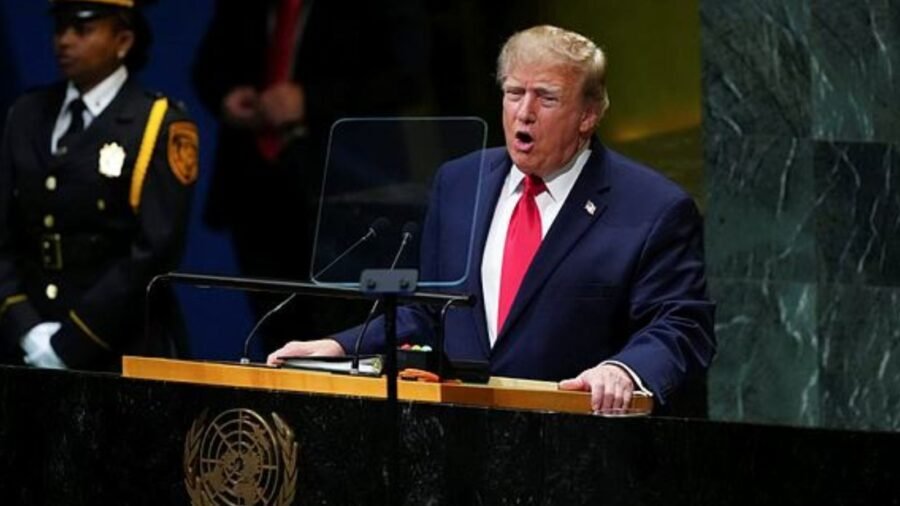
It is here that the third condition, the absence of governance, becomes decisive. The joint statement released on Monday by the office of Finnish President Alexander Stubb, and endorsed by 20 countries and the European Union, calls for AI to be developed consistently with international law and to remain under human direction, oversight and control. It asks developers to test systems before release and admit independent evaluators, asks governments to build common safety standards, and asks UN members to draw on existing efforts while exploring a new international institution. The US and China, the two leading AI powers, did not sign. Neither did India. Even so, a coalition spanning Germany, Canada, Kenya and Singapore has placed a concrete proposal before the Assembly.
The design of such an institution can draw on the UN’s experience with cyber governance, which offers both a template and a caution. The Group of Governmental Experts on information security first convened in 2004, and its 2015 report articulated 11 norms of responsible state behaviour, later endorsed by the General Assembly. The Open-Ended Working Group, established in 2019, extended deliberations to all member states and eventually produced a permanent mechanism for continued dialogue. The architecture is sound: A compact expert body undertakes the technical work, while a universal forum confers legitimacy.
The caution lies in the pace and the character of the outcome. Two decades on, the cyber norms remain voluntary, and critical infrastructure continues to be attacked with impunity. AI governance cannot follow the same timetable. The UN already possesses the building blocks, including the independent scientific panel on AI and the global dialogue on AI governance created last year. These could perform the functions the GGE and OEWG served for cyberspace, provided they receive a time-bound mandate measured in months rather than sessions.
They must also be given binding force. Much of an AI regime can reasonably remain in the form of guidance, given how rapidly the technology changes. A limited set of provisions, however, should be mandatory from the outset. Models above an agreed compute threshold should undergo independent pre-deployment testing, with evaluators afforded genuine access. Serious safety incidents should be reported to a shared international registry within a fixed period. Large training runs should be notified in advance, since advanced semiconductors remain the principal physical choke point in the industry. Developers should also demonstrate a verifiable capacity to suspend or withdraw a system that behaves dangerously. None of these measures would halt research; each would make the frontier visible to parties other than those competing to advance it.
India, having hosted the AI Impact Summit in New Delhi earlier this year and maintaining working relationships with both Washington and the Global South and as a resource in the AI build-up, is well placed to broaden the coalition. The joint statement itself cautions that oversight must not widen the gap between countries in access to AI’s benefits. Clearly there is much on the table, and it can be addressed collectively.
Trump may call the technology what he wishes. The underlying realities remain unchanged: Systems only partly understood, advancing faster than they can be examined, and operating without an international referee. The vocabulary has moved on; the rules must now follow.
The writer is a defence and tech policy adviser and author of The Digital Decades: On 30 Years of the Internet in India

Subsea cables: The many vulnerabilities of the world’s most critical digital lifelines
By Sohail Khan · 24 Sep
AI has taken on a Millennium Problem. Is that scary?
By Sohail Khan · 24 Sep

Leave a Reply