SpaceX Starship engine failure could hit NASA moon mission plans
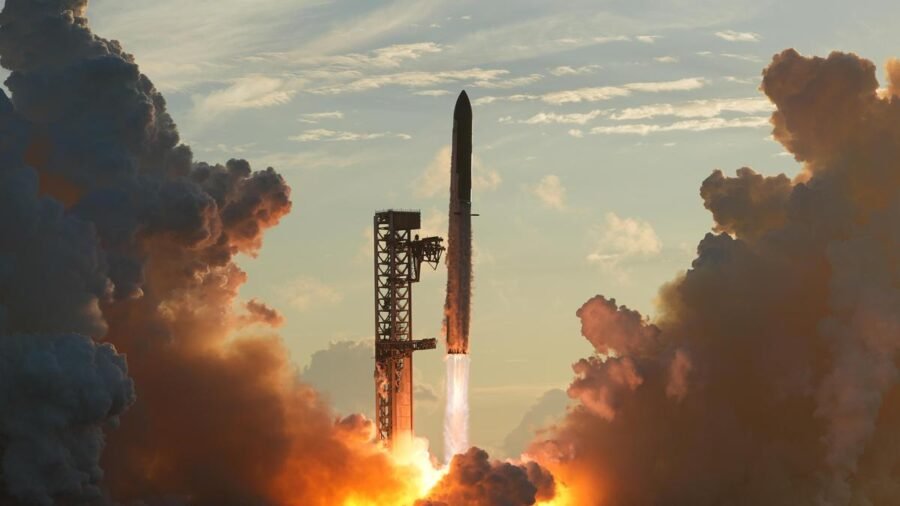
The Starship engine failure that nearly foiled the orbital debut of SpaceX’s next-generation spacecraft on its 14th uncrewed test flight may complicate NASA‘s ability to meet its time frame for astronaut missions to the moon.
Starship, designed in part to carry large payloads to space, is one of two vehicles vying to become the first craft that NASA will use as early as 2028 to land humans on the moon and bring them safely home, a feat last achieved in 1972 at the end of the Apollo era.
While Starship accomplished a number of key objectives in its latest test launch from Texas on Monday, the mission was cut short by several hours after a malfunction of its propulsion system.
Despite the unexpected shutdown of one of its three main Raptor engines following Starship separation from its lower-stage booster rocket, flight controllers proceeded with sending the spacecraft to orbit for its first-ever commercial satellite deployment.
Determining what caused the engine glitch remains critical to SpaceX’s bottom line. But the stakes are potentially higher for NASA, as a Starship moon-landing vehicle would rely on the same engine system for transporting astronauts through space to and from the lunar surface.
How big a blow to Starship’s development progress the engine snafu becomes depends on whether it turns out to be “a one-off failure of a single part” or points to a larger design problem that requires upgrades “across the fleet,” said Dean Sladen, an aerospace engineer for Accu Components.
“Any engine fix that holds up the next flights, including the planned attempt to catch the ship with the launch tower’s arms (after re-entry), eats into that schedule,” he said.
SpaceX did not immediately respond to requests for comment.
A NASA spokesperson did not address questions for comment on the engine issue or its Artemis programme, instead pointing to a post on X from the head of the space agency, Jared Isaacman, saying Starship had “achieved an important milestone.”
‘The real pressure is the moon’
A longer delay would pose not only a greater setback to SpaceX’s commercial ambitions to rapidly expand its Starlink broadband satellite network, but its pivotal role in NASA‘s Artemis moon programme.
Raptor engine and propulsion-system issues have contributed to several previous Starship setbacks, including an engine that failed to ignite as planned during Starship’s 12th flight in May. The methane-fuelled engines are among the most complex and expensive components on the rocket.
During some previous flights, SpaceX scrubbed plans to test-ignite the Raptor engine in space. But all of the engines successfully fired during ascent on Starship’s 13th flight in July.
SpaceX is competing with Blue Origin, the rival rocket company from fellow entrepreneur Jeff Bezos, to usher in an era of lunar exploration under NASA‘s Artemis programme.
While SpaceX was originally contracted to provide the first crewed lunar lander for Artemis, Isaacman said in April that NASA would go with whichever lander was ready to fly first. NASA saw the added competition as healthy for progress in light of mounting delays in Starship’s test flight programme.
NASA officially aims to return astronauts to the moon’s surface by 2028, a target widely seen as overly ambitious, to get there ahead of China, which plans a crewed lunar landing by 2030.

Cloud cover over pedagogy and academic culture in IITs
By Sohail Khan · 30 Sep
India innovated on UPI. Can’t we innovate on merchant fee too?
By Sohail Khan · 30 Sep
‘Disgusting’: Soni Razdan calls out trolls for passing ageist comments
By Sohail Khan · 30 Sep
Leave a Reply