Becoming fully renewable energy-based by 2040 may be challenging for Keralam: study
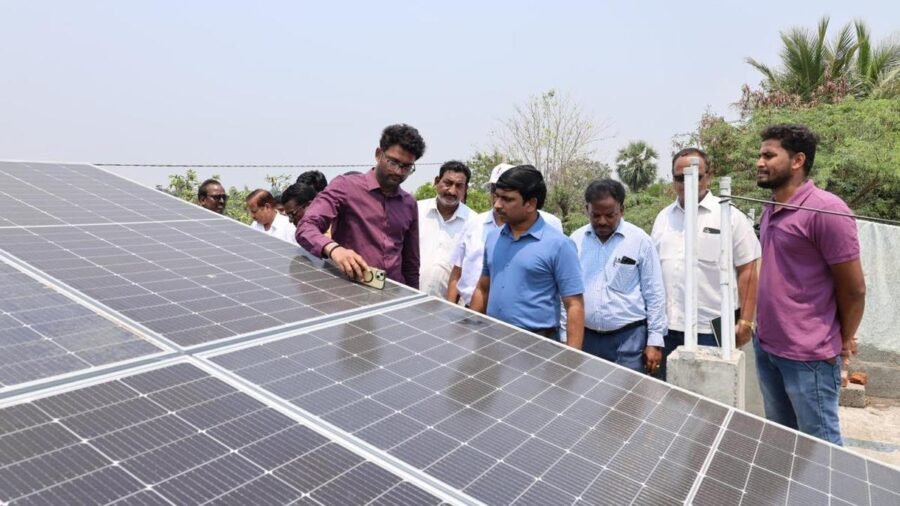
Becoming a fully renewable energy (RE)-based State by 2040 could prove a “challenging” task for Keralam, indicates a new study released in Thiruvananthapuram on Tuesday (September 29, 2026).
The southern State would need at least 27 gigawatts (GW) of renewable capacity addition to meet the 2040 demand “purely from renewables, hydro and nuclear without any thermal power support,” according to an ‘exploratory’ Zero Thermal 2040 scenario considered in ‘Pathways for Kerala’s Clean Energy Transition,’ a study conducted by WRI India.
Financial implications
The estimated financial input needed for a complete shift from a thermal power-dominant landscape to a fully RE-based one is huge. The report, released at a workshop organised by the Kerala State Electricity Board (KSEB) and WRI India, pegs the estimate at ₹64,890 crore, 96% higher than in a business-as-usual scenario.
While Keralam aspires to become 100% RE-based by 2040 and carbon neutral by 2050, around 60% of its electricity demand is being met by thermal power plants located in other States. “By contrast, the share of RE (wind, solar and small hydro) stood at 7%, with large hydro and nuclear contributing the remaining share,” the report observed.
Private participation
It has recommended a multi-pronged strategy that combines rapid deployment of diverse RE technologies, long-term renewable power purchase agreements with out-of-State generators, and adoption of decentralised RE solutions for a potential 100% RE transition by 2040. For such a transition, Keralam may need to tap private and international finance. “Larger private participation in the distribution sector is essential, along with strengthened consumer participation in Keralam’s energy governance,” according to the report.
Three scenarios
Meant to brief stakeholders on possible pathways that Keralam can take, the study considers three scenarios other than the one where the State moves away completely from thermal sources. All three indicate that non-renewables will still be part of the energy mix in 2040.
Under a business-as-usual (BAU) scenario with future capacity addition based on current policy targets and historical trends, Keralam can meet its electricity demand for 2030 from available sources. However, shortfalls in electricity generation should be expected after 2035. “Under this scenario, Keralam’s electricity demand is estimated at 35,668 million units (mu) and 56,057 mu for 2030 and 2040, respectively. But excess generation tapers beyond this point, and shortfalls occur post-2035.
The report looks at a ‘High Renewables Scenario’ where large-scale solar and wind capacity additions are envisioned. Under this pathway, renewable generation increases to 26%. However, the thermal share would still be 37% in 2040.
A ‘Low Thermal Scenario,’ where expiring thermal power purchase agreements are not renewed, could lead to significant electricity shortfall by 2034. “High solar and wind capacity additions, along with other renewable or green energy open access capacity additions, could be considered to improve the overall generation and meet the demand. This improves the contribution from renewable generation to 48% by 2040 while mostly meeting the electricity demand. However, the share of thermal remains high, at about 29%, in 2040,” it noted.


Guntur man gets life imprisonment for killing his wife at Motadaka village
By Sohail Khan · 30 Sep

Leave a Reply