Supreme Court weighs in favour of conditional relaxation on next-gen joined green crackers ahead of festive season
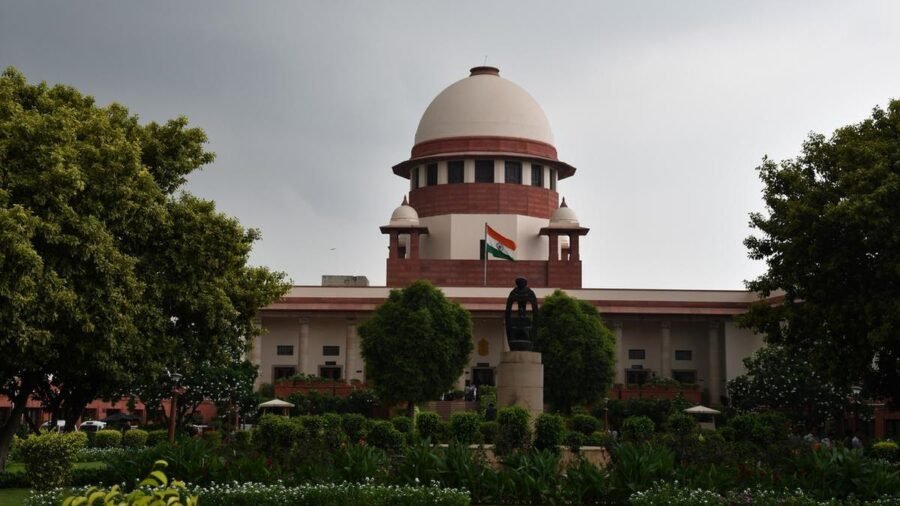
The Supreme Court on Wednesday (September 30, 2026) accepted suggestions by the Council of Scientific and Industrial Research-National Environmental Engineering Research Institute (CSIR-NEERI) for a “limited and conditional relaxation” allowing the manufacture of next-generation joined green crackers in compliance with the applicable noise, emission, and safety requirements ahead of the Deepavali festivities.
Appearing before a Bench headed by Justice M.M. Sundresh, Additional Solicitor General Aishwarya Bhati, for the Centre, said the CSIR-NEERI has recommended that green crackers conform to specifications/formulations tested and approved by the competent authority and are made exclusively by duly licensed manufacturers.
The premier scientific body suggested that crackers must be within the prescribed noise limit of 125 dB(AI)/145 dB(C) peak and strictly fall within permissible emission brackets, Ms. Bhati said.
The law officer submitted that CSIR-NEERI has prescribed the shell size, shell number and bursting duration/time of green crackers, which showed lesser noise and emissions when compared with conventional joint crackers. The scientific report underscored that these crackers should be free of banned chemical ingredients.
The apex court had queried in July whether a “partial relaxation with respect to certain types of crackers may be possible, with specific reference to noise”. A subsequent court order had asked Ms. Bhati to provide measures undertaken to limit the shell size and time between bursts of crackers.
The CSIR-NEERI report on the ‘new generation joined firecrackers’ said a series of the green variety had been developed without the use of barium in their compositions. These crackers were different from the conventional ones in terms of shell/tube size, formulation, bursting duration, and frequency of bursting, with corresponding reductions in noise, particulate emissions and solid waste generation, the report said.
Tests conducted on them show a 30% reduction in emissions compared to conventional joined crackers. The shrinking of the shell size has also reduced solid waste generation from 4% up to 32%, the CSIR-NEERI report said.
Further, in conventional joined firecrackers, 25 braids were burst in a second. But the next gen joined crackers complete only five braids in one second. “The bursting time duration has increased five times in the next generation joined green crackers,” the report noted.
The court on Wednesday (September 30, 2026) said it would take a balanced view on the issue of firecrackers, particularly with apprehensions of air pollution with the onset of winter and the festive season.
“Total ban will hurt certain sentiments. We will not agree on a total ban across the country. At the same time, we will not allow a 24-hour bursting anywhere, as it affects the sick, the elderly, and children,” the Bench remarked orally.
The court said it would look into directing specific time windows for bursting crackers.
The court gave more time to the Central Pollution Control Board (CPCB) and the Union government to continue with further barium and joint firecracker tests to test decibel levels.
The CSIR-NEERI in an interim report on ‘Green Firecrackers: Gen-2’ mentioned that new generation firework formulations with reduced quantities of barium salts/nitrates in combination with other oxidisers achieved particulate emission (PM10 and PM2.5) reductions of 45%-60% when compared with conventional firecracker formulations.
“The use of reduced barium salt-based formulations not only reduced the air emissions but also reduced the chemical/environmental footprint of barium as compared to conventional firecrackers,” the law officer, who also appears for CPCB, submitted..
CSIR-NEERI has initiated the study for four locations, namely, Bhopal, Delhi, Kolkata and Chennai for assessment of impact on ambient air quality due to barium content in Generation 2 green firecrackers, Ms. Bhati said.
“NEERI has informed that the modelling exercise for Bhopal has commenced and the modelling for the remaining selected cities, Delhi, Kolkata and Chennai, is being undertaken… The study shall provide further scientific assessment regarding the dispersion of emissions from firecrackers in the selected cities and is expected to be completed by October 15,” the law officer submitted.
“This development marks an important milestone for the Indian fireworks industry and reflects the recognition of scientific research, technological innovation, and sustained efforts undertaken to develop environmentally improved fireworks,” Tamil Nadu Fireworks and Amorces Manufacturers’ Association said in a statement in response.

Guntur man gets life imprisonment for killing his wife at Motadaka village
By Sohail Khan · 30 Sep
Becoming fully renewable energy-based by 2040 may be challenging for Keralam: study
By Sohail Khan · 30 Sep

Leave a Reply