Punjab owes it young a chance to recover
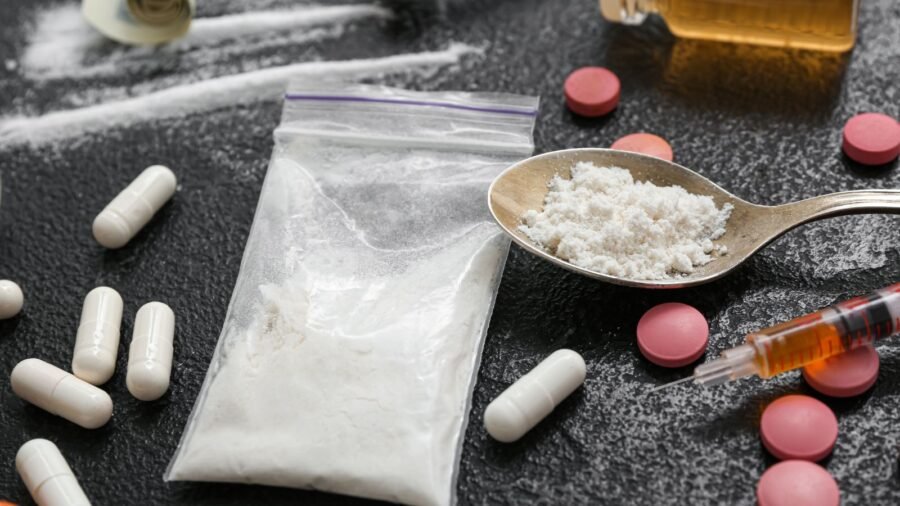
Over 10 lakh people in Punjab have registered at government de-addiction clinics since the state opened them — that is only those who gave their names.
First, let us shed the delusion that Punjab was a pure land into which drugs were smuggled by strangers. Afeem (opium) has been in this soil for two 100 years. Our grandfathers took it at weddings and at funerals. Our farmers took it to get through the harvest. Our soldiers took it to battle. Bhukki (poppy husk) was sold at the village shop, and nobody thought it was the end of civilisation. We were never a society devoid of intoxicants. However, we were a society with boundaries and rules. What has changed and blurred these boundaries is not our morals. It is the chemistry.
Advertisement
I am neither a doctor nor a scientist, but I have spoken to several. Here is the crucial element of addiction that is rarely explained, and it matters more than any sermon. Opium and heroin act on the same receptor in the brain. The difference is speed. Opium eaten is absorbed over hours — a slow rise and a body that can argue with it. Heroin smoked or injected reaches the brain in seconds. It is the rate of the rise, not the substance itself, that burns a person’s craving.
That is why afeem produced old men with a habit while chitta sends boys to graveyards.
The brain has its own opioids — the chemistry that lets you bear pain, feel pleasure, sleep, hold a conversation. When a stronger drug floods those receptors every day, the brain stops making its own. Within months, the body is no longer chasing a high. It is chasing a normal. Withdrawal doesn’t just mean discomfort. It is a body that has lost the ability to feel ordinary comfort. Which is why the word “willpower” is the single most useless word in this debate. You may as well ask a man with a broken femur to walk it off.
Advertisement
Why Punjab? We have taken risks. We have always sent our young men to do dangerous things a long way from home — to the Ghadar movement, Flanders, Kohima, the Line of Control, oil rigs, highways, and now to Brampton. Restlessness is not a defect in the Punjabi character. It is the engine of it.
Give a 20-year-old built for risk nothing worth risking, no work, no field of his own, no rank to earn, no team to belong to, and that appetite does not disappear. It goes looking. And there is always somebody at the edge of the village willing to sell something.
We moralise about this because moralising is free. Governing is not. So let me be specific about what governing would look like.
On supply, the border is not a slogan; it is an engineering problem. These molecules are now potent enough that a year’s worth of them crosses in a drone the size of a tiffin box. No amount of seizures will outrun that arithmetic. What works is technology on the fence, detection grids, counter-drone systems, forensics that trace a consignment backwards and the political will to prosecute the men who protect the trade rather than the boys who consume it. Every government of every colour has arrested peddlers. Not one has broken a network.
I was finance minister when Punjab built the Outpatient Opioid Assisted Treatment programme. I signed the cheques for it, and I will say plainly that we built the frame and then starved it. Today we can tell you how many crore tablets were dispensed last year. We cannot tell you how many people recovered. We are counting pills instead of counting lives. And a tablet worth thirty rupees at the clinic sells for three hundred outside it, which tells you exactly how much supervision we are paying for.
We need more money, yes. And I mean money of an order that would embarrass this state’s present priorities. The entire de-addiction budget is a rounding error on our power subsidy bill. Money needs to be spent on the parts that are empty — psychiatrists, of whom Punjab has a shameful handful, counsellors, hospital beds. Follow-ups are necessary — for every relapse happens 18 months after the last dose. And jobs, because a recovered boy with nothing to do on a Tuesday afternoon is not recovered.
This is not a moral emergency. It is a medical condition, with a criminal supply chain, sitting on top of a governance failure. Each of those three has a known solution, and all three cost money and attention that we have chosen to spend elsewhere.
A boy addicted to drugs can recover. That is the fact nobody says that loudly enough. His brain heals, slowly, imperfectly, but it heals. Ten lakh families in this state are waiting to find out whether we care enough to help it along.
The writer is former finance minister of Punjab and national vice president, BJP

Amitabh Bachchan’s ‘retire’ remark shows how our mind fills in the gaps
By Sohail Khan · 18 Sep
Behind the Xi-Modi thaw, a larger US-China game
By Sohail Khan · 18 Sep
India needs a risk-based approach to food adulteration: Sukhvinder Pal Singh
By Sohail Khan · 18 Sep
Leave a Reply