No fuel without PUC in Delhi: What this certificate says about your vehicle
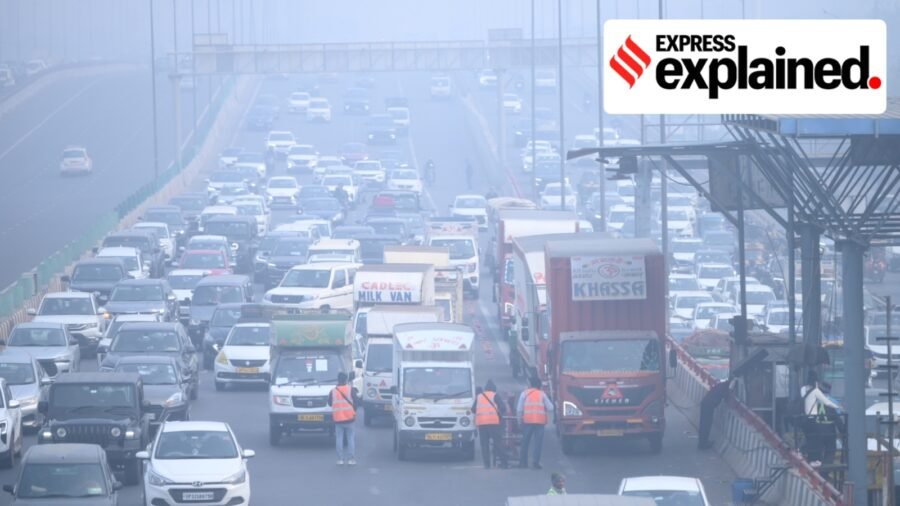
As part of the Delhi government’s plan to combat air pollution in the upcoming winter, Delhi Environment Minister Manjinder Singh Sirsa outlined a series of measures on Monday (September 28). Besides a complete ban on construction and demolition activities from December 10, 2026 to January 20, 2027, the government has mandated that petrol, diesel, and compressed natural gas (CNG) or liquefied petroleum gas (LPG) retail outlets across Delhi supply fuel only to vehicles with a valid Pollution Under Control Certificate (PUCC) throughout the year.
After a high-level meeting on Monday chaired by Union Environment Minister Bhupender Yadav and attended by Delhi Chief Minister Rekha Gupta, Sirsa told reporters: “Regarding the actions proposed in this meeting, our ‘No PUCC, No Fuel’ policy will be intensified… A strict drive against ‘end-of-life’ vehicles will be conducted at all 500 petrol pumps in Delhi equipped with ANPR (Automatic Number Plate Recognition) cameras. A public awareness campaign regarding this will be launched in October, and PUC centres will be upgraded in November… Fitness checks for 2.5 lakh vehicles will be conducted through three Automated Testing Stations…”
#WATCH | Delhi: State Minister Manjinder Singh Sirsa says, “Today, a meeting focused on pollution in Delhi and the NCR was held under the chairmanship of Union Minister Bhupender Yadav, attended by Delhi Chief Minister Rekha Gupta, Delhi PWD Parvesh Verma, and myself;… pic.twitter.com/dYOjOF8cyF
— ANI (@ANI) September 28, 2026
On Saturday (September 26), Delhi Chief Minister Rekha Gupta announced an enforcement drive against vehicles with invalid PUCCs from October 1.
So, what exactly is a PUCC? How can vehicle owners obtain one? And how does a pollution control check work? Here’s what’s to know.
Story continues below.
Subscribe to see fewer ads.
What is a PUC certificate?
As the name suggests, the PUC certificate confirms that the vehicle’s pollution is under control: that is, its tailpipe emissions meet the required norms. It is mandatory for all vehicles and must be renewed regularly to avoid penalties under pollution control laws. Any person driving a motor vehicle can be asked to produce this document by a police officer in uniform authorised by the state government.
According to the Transport Department website, there are over 730 authorised PUC centres across Delhi, with some 441 centres for petrol/CNG/LPG vehicles and 295 centres for diesel vehicles. These centres issue PUCCs if a vehicle undergoes the test and is found complying with the prescribed emission norms.
The PUCC contains important information about your vehicle and the test, including the PUCC serial number, vehicle registration number, test date, emission readings, and the validity of the PUC test.
How is a pollution control check carried out?
The computerised model for pollution check was developed by the Society of Indian Automobile manufacturers. A gas analyser is connected to a computer, to which a camera and a printer are attached. The gas analyser records the emission value and sends it to the computer directly, while the camera captures the license plate of the vehicle.
Story continues below this ad
Subsequently, a certificate may be issued if the emission values are within the limits.
Is this a legal requirement?
In a Press Information Bureau (PIB) note dated July 22, 2021, the Central government standardised the PUCC to be issued in a common format across the country. It also noted that according to Rule 115(7) of the CMVR, every fuel-based vehicle needs to carry a valid PUCC “after the expiry of a period of one year from the date on which the motor vehicle was first registered”. It said that “the certificate shall always be carried in the vehicle and produced on demand by authorised officers”.
Also, for vehicles manufactured as per BS-IV or BS-VI norms, the validity of the certificate shall be 12 months. For vehicles produced as per older emission norms, the validity of the PUCC would be six months. BS refers to Bharat Stage emission standards: India currently follows the BS-VI standards, which were implemented nationwide in 2020. These norms prescribe strictly lower limits for nitrogen oxides and particulate matter.
Story continues below this ad
The cost of a PUC certificate is anywhere between Rs 50 and Rs 150 depending upon the type of vehicle, but the cost of non-compliance is far higher. On Saturday, the Delhi government announced that under the existing provisions, driving a vehicle without a valid PUCC would attract a fine of Rs 10,000. The Rules also allow for harsher penalties such as disqualifying the driver from holding a licence for three months and even imprisonment up to six months in severe cases.
How can one download a PUC certificate?
After getting their vehicles checked at an authorised centre, vehicle owners can obtain the PUC certificate online. On the Parivahan Sewa website, one needs to enter the vehicle registration number, last 5 digits of the chassis number, and a security code.
Are electric vehicles exempt from PUC certificates?
The simple answer is Yes.
Since EVs use electrical power and do not emit any pollutant or smoke, it is not mandatory for vehicle owners to obtain a PUC certificate.

Sea level rise: Can a country retain its statehood even if it loses its territory?
By Sohail Khan · 28 Sep

I wanted a minimalist wedding until I walked into Delhi’s Chandni Chowk
By Sohail Khan · 28 Sep
Leave a Reply