I wanted a minimalist wedding until I walked into Delhi’s Chandni Chowk
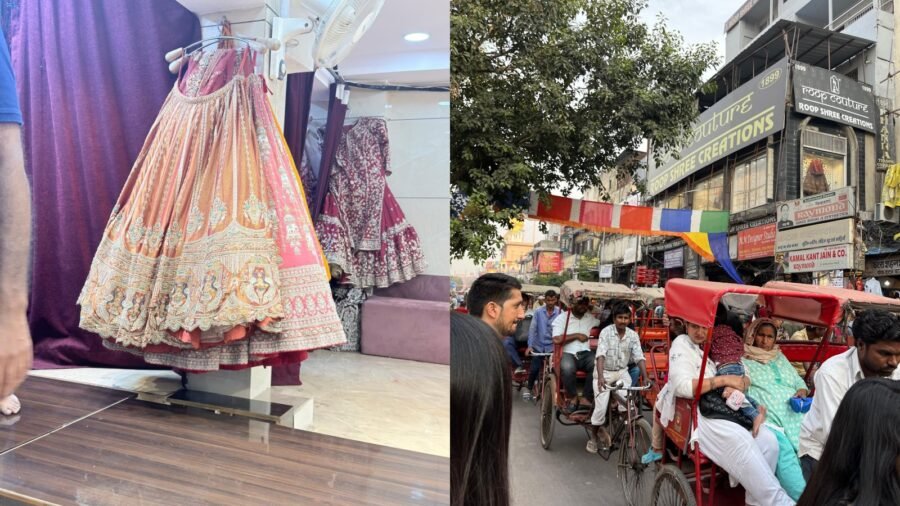
As a woman approaching 30, I thought I’d reached the same conclusion. I wanted to save my hard-earned money, embrace minimalism and keep my wedding uncomplicated. Then I walked into Chandni Chowk, Delhi’s sprawling wedding-shopping hub.
Story continues below.
Subscribe to see fewer ads.
Fondly known as CC, the market is a maze of narrow lanes bursting with fabrics, embellishments, colours, and designs. With every turn, it seemed to whisper: you can have the wedding you once dreamed of. I found myself face-to-face with my 17-year-old self, the girl who had grown up romanticising every beautiful fallacy Bollywood had sold her. And, suddenly, I wanted a designer bridal trousseau for myself as well.
For an anxious shopper like me, Chandni Chowk was both overwhelming and strangely comforting. There was so much of everything that, paradoxically, I felt less pressured to settle. If one shop didn’t have what I wanted, ten more were down the lane. If one salesperson quoted a price that made my eyes widen, another shop could offer a completely different number. The market seemed to run on the reassuring principle that there was always another option, another lane, and another shopkeeper who might understand what you wanted better than the last one.
Chandi Chowk has rules. Learn them before you shop
I took the metro to Chandni Chowk one morning, armed with the kind of confidence that usually disappears within the first 15 minutes of wedding shopping. I had been told that CC comes with its own rules: avoid weekends, reach early, preferably around 11.30 am, and start at Omaxe Mall to get an idea of the designs, fabrics, and prices before venturing into the narrow lanes. The important part, I was told, was not to buy immediately, even if something looked perfect, because the real market was waiting outside.
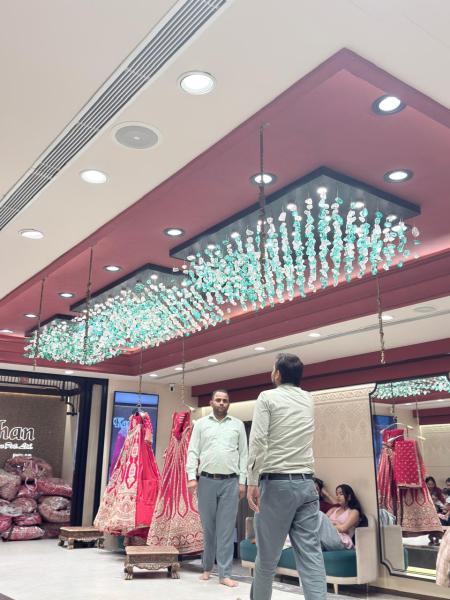 A lehenga showroom at Chandni Chowk
So I began walking. The first thing you learn in Chandni Chowk is that everyone wants you to go somewhere. Rickshaw pullers will offer to take you to Nayi Sarak, middlemen will assure you they know exactly where to find the perfect lehenga, and shop representatives will sometimes appear with the confidence of people who have already decided what you should buy. For a first-time shopper, it can be overwhelming, particularly when you are already unsure about your budget, your taste, and the difference between the ten fabrics someone has just placed in front of you.
Story continues below this ad
I decided to explore on my own. That did not mean I thought middlemen were unnecessary. Quite the opposite. After spending hours in Chandni Chowk, I understood why they exist and why they can be useful. They know the lanes, the shops and the people, and for someone who has no idea where to begin, that knowledge can save hours.
But I also wanted to understand the market before allowing someone else to navigate it for me. I wanted to know what I liked, what I could afford and, more importantly, what I was being told to like simply because someone wanted to make a sale. So I followed my instincts, my taste, and occasionally my budget.
From Rs 4.8 lakh lehengas to finding the one
I tried on lehengas I could never have afforded, including one priced at Rs 4.8 lakh and another at Rs 1.2 lakh. Some were beautiful enough to make me forget my bank account for a moment. Others looked spectacular under showroom lights but felt completely wrong once I saw myself in them. By then, the middlemen had begun to recognise my face. They would spot me from across the lane and try to persuade me to visit their clients’ shops, each promising I would find exactly what I wanted if I only followed them. I didn’t.
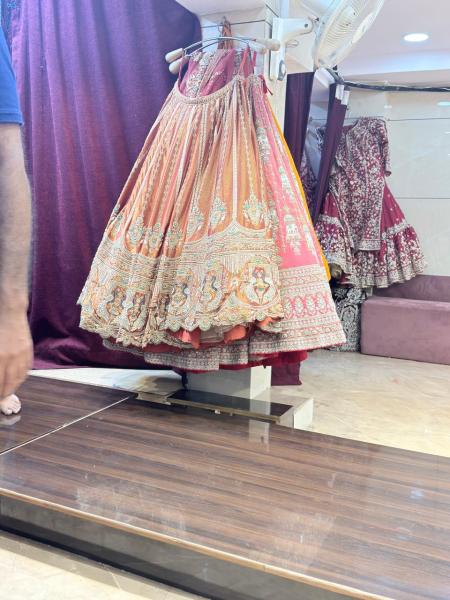 A wholesale bridal shop at Chandni Chowk
Eventually, I walked into a showroom on my own and found my lehenga. The salesman was from Bihar, my home state, and perhaps that shared connection made the conversation warmer, but what stayed with me was how genuinely helpful he was. Once I had finalised my lehenga, he called someone who could help us with the groom’s trousseau.
Story continues below this ad
“Ab aap humari family ki tarah ho, hum puri koshish karenge ki aapko acche price mein sab mil jaaye,” he told me. It was lovely to hear from someone who had met me that morning, especially in a market where the relationship between buyer and seller is often expected to end at the billing counter.
The man who dressed movie stars
My next discovery was even more unexpected. I went into a wholesale shop looking for my sangeet outfit and found myself being dressed by a man who casually mentioned that he had worked on movie sets. As he draped my dupatta and improvised a makeshift blouse so I could see how the outfit would look, he told me that he had dressed actors for films, particularly when they needed someone to drape sarees and dupattas.
I asked him what he was doing in Chandni Chowk if he had worked in movies. “I’ve always worked in CC,” he explained. He took on film projects when they came along, but Chandni Chowk had always been his workplace.
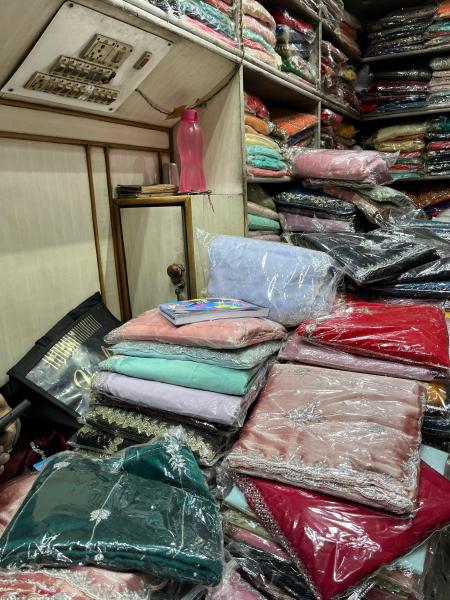 A saree wholesale shop in Paranthe Wali Gali
After nearly an hour of bargaining, I bought a Seema Gujral-inspired lehenga from the wholesale shop. By then, something strange had happened. I had started to understand wedding clothes.
Story continues below this ad
I could talk about zardosi without looking completely clueless. I knew what tissue silk and organza looked like, had formed an opinion about double-toned fabrics, and could at least try to distinguish machine work from handwork. I had entered Chandni Chowk wanting a pretty lehenga and was slowly becoming someone who could discuss embroidery techniques with a salesperson. I was, admittedly, a little proud of myself.
A cup of tea at Paranthe Wali Gali
After lunch, I headed to Paranthe Wali Gali, though the food wasn’t exactly what I’d had in mind. The lane greets you with an assault of smells and colours. Chaat and sweets line both sides: samosa-chole, palak patta chaat, Delhi-style tikki, and the famous, oil-heavy parathas. By then, I had spent hours walking, negotiating and trying on clothes, and my migraine had begun to make itself known. I passed the food stalls without stopping and briefly felt that I deserved some bravery award for it.
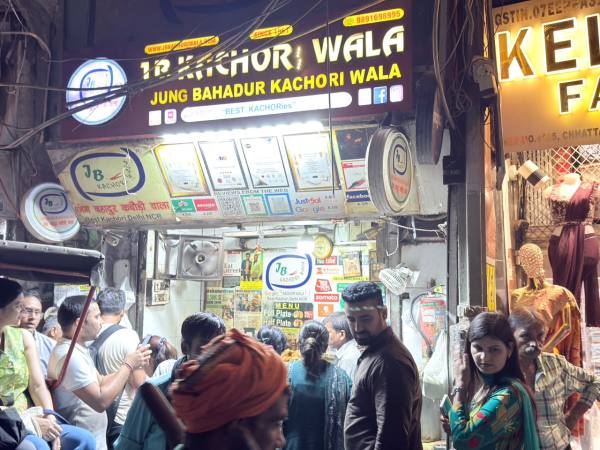 Paranthe Wali Gali, Chandni Chowk
The shop I was looking for was tucked so deep inside the lane that even reaching it felt like an achievement. Looking at the chaos around me, I never would have guessed a wholesale wedding store was hidden there. The young salesperson welcomed me with a cup of tea, which, given my headache, felt like genuine kindness. What followed was less a shopping appointment and more a crash course in men’s fashion.
We discussed everything from Ranbir Kapoor’s blush-pink sherwani from Tarun Tahiliani’s Tasva collection to Sidharth Malhotra’s rust-orange haldi look, and somewhere in between the conversation about colours, silhouettes and fabrics, I spotted an anarkali-patterned sherwani. It had the kind of shape that immediately felt like a fashion moment, and as I looked at it, I had already begun imagining the thousand ways I could style it for myself after the wedding.
Story continues below this ad
The people who make the market work
What surprised me most about shopping there was how often a salesperson’s help extended beyond their shop. The salesman took me to another saree shop, personally walked me through the lanes and helped me navigate the maze around Akshay Kumar’s old house in Chandni Chowk, all while protecting me from some of the more persistent middlemen trying to redirect me elsewhere.
It taught me something I hadn’t expected to learn in a market I had entered primarily to find clothes: there is a difference between being sold something and being helped to find something. The best shopkeepers I met understood that difference.
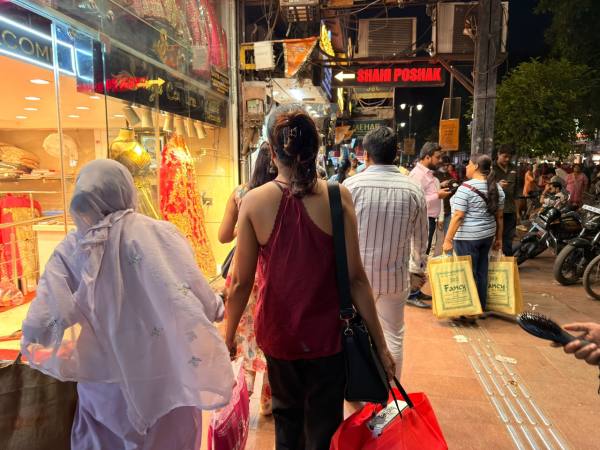 Towards Nai Sarak, Chandi Chowk
One shop led to another hidden gem. One salesperson recommended another. Someone who had already spent years navigating the market became my guide for the next 20 minutes, and suddenly a place that had initially seemed intimidating began to feel almost intimate. The market was chaotic, but it had its own ecosystem of trust, relationships and recommendations.
And that is where the middlemen, whom I had spent the morning avoiding, began to make more sense to me. They are not merely people trying to pull shoppers into stores; they are also part of the informal market infrastructure that can be bewildering to an outsider. The trick, I learnt, is not necessarily to avoid them but to know when to accept their help and when to keep walking politely.
Story continues below this ad
Lajpat Nagar, Rajouri Garden, and the rest of the hunt
After Chandni Chowk, Lajpat Nagar became my second favourite wedding-shopping destination. I decided to visit on a weekday after work, which turned out to be one of my better decisions. The streets were considerably less crowded, and I could actually speak to shopkeepers without feeling as though I was competing with a hundred other brides, mothers, sisters and aunts for their attention. I also explored Rajouri Garden and Karol Bagh for ethnic outfits, accumulating the inevitable headaches and backaches that seem to come free with wedding shopping.
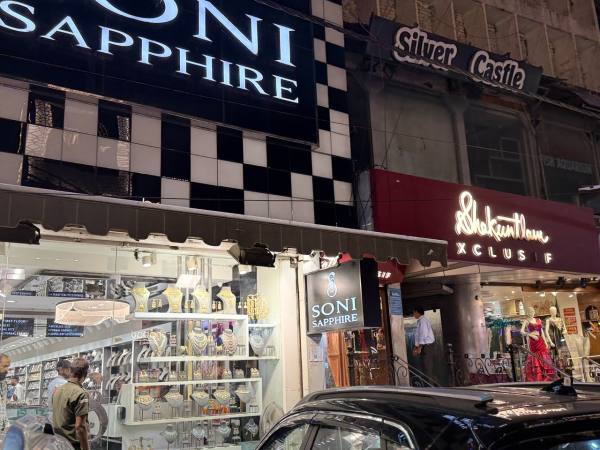 Popular jewellery shop at Rajouri Garden, Delhi
By then, I had realised that Delhi’s wedding markets aren’t really shopping destinations in the conventional sense. They are experiences that require patience, stamina, curiosity and a willingness to get a little lost. You walk in with a Pinterest board and a budget and emerge with opinions about fabrics you didn’t know existed, strong feelings about embroidery techniques, and, if you are lucky, a few people whose advice you will remember long after the shopping bags are put away.
Wedding shopping is often presented as a search for the perfect lehenga, the perfect saree or the perfect sherwani. Still, for me it became a lesson in navigating the space between what I had imagined, what I could afford and what I actually wanted. Bollywood may have taught me to dream about the wedding, but Chandni Chowk taught me how to shop for one.
And somewhere between the narrow lanes, persistent middlemen, cups of tea, endless negotiations and fabrics I can now identify by name, I realised that perhaps minimalism was never really about giving up the dream. It was about choosing which parts of the dream were worth keeping.

Woman wears same T-shirt after 7 years, shows 65-kg weight-loss transformation: ‘Baby Nonu…’
By Sohail Khan · 28 Sep
In great powers’ AI race, New Delhi’s place will depend on capabilities built at home
By Sohail Khan · 28 Sep

Leave a Reply