NAZA shows why we must listen to both Palestinian survivors and Israeli insiders
Twenty-five minutes of applause for 24 anonymous Israeli soldiers and intelligence officers describing how Gaza was targeted. Within hours, the Venice ovation for NAZA had provoked a backlash. Some asked why the world was once again learning from Israelis what Palestinians have been saying for two years. Others went further, likening the applause to a celebration of men who should be in the dock, even invoking the image of SS officers receiving an ovation. One of those charges deserves a serious answer. The other closes down thought.
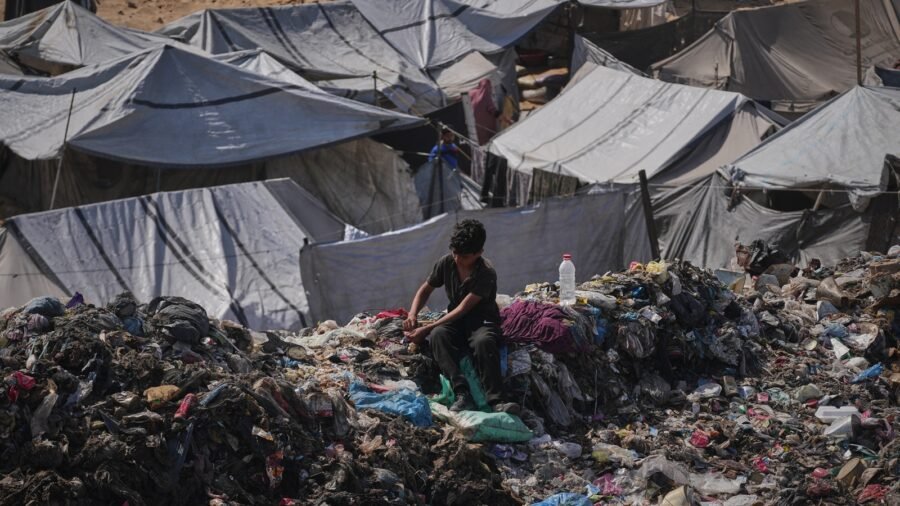
The serious question concerns whose testimony the world is prepared to hear. Palestinians have documented bombardment, displacement, hunger, bereavement and the destruction of ordinary life with extraordinary persistence. Their testimony has too often struggled for the attention and credibility it deserved. The international hierarchy of listening is itself part of the story of this war.
Advertisement
That history gives force to the question being asked of NAZA. Why should testimony from Israeli military and intelligence insiders command attention when Palestinians have already described the consequences of the same violence?
Because testimony from within the machinery of war can reveal a different dimension of the same reality. Palestinian survivors tell us what bombardment, forced movement, and loss do to human lives. Insiders can show how targeting systems operate, how decisions are made, how technological processes acquire authority, how language sanitises consequences and how professional routines accommodate extraordinary harm. Their accounts can illuminate the distance between the person who suffers an action and the person who authorises or facilitates it from behind a screen.
That knowledge matters historically. Societies eventually have to understand how violence became administratively possible. It matters politically because denial survives partly through distance from the mechanisms that produce suffering. It may also matter legally when testimony generates information that can be tested against other evidence.
Advertisement
The ovation itself tells us very little about what the audience knew before entering the theatre. Those who responded strongly to NAZA may well have heard Palestinian voices, read Palestinian accounts and followed the devastation of Gaza closely. Applause records a response to a film. Treating it as proof of prior indifference requires assumptions about the audience that cannot simply be made.
The anonymity of the 24 speakers raises legitimate ethical questions. So does the responsibility of filmmakers who may possess information relevant to alleged crimes. Evidence capable of assisting an investigation should reach the appropriate legal authorities. Those questions deserve scrutiny in their own right. They do not exhaust the public value of testimony.
The fiercer criticism draws on a familiar suspicion captured in the phrase “shooting and crying”. Israelis commit violence, reflect upon it, receive international recognition and return with their moral standing restored. There is history behind that scepticism, especially when Palestinian suffering has so often had to compete for recognition.
Still, the phrase becomes too sweeping when it reduces every act of internal reckoning to reputation laundering. Self-reflection has political meaning precisely because it emerges against the pressure of conformity. Societies at war generate powerful incentives for silence, justification and identification with the state’s actions. Voices from within that environment can fracture the consensus that sustains violence. They can also make denial more difficult later.
This is why the SS analogy is so corrosive. It turns the act of hearing into acquittal and the presentation of testimony into celebration of the speaker. It also erases the distinction between exposing the workings of violence and excusing those who participated in it. A festival audience may applaud the bringing of concealed evidence into public view, the courage of filmmakers, or the fact that a closed institutional world has been made visible.
There is an uncomfortable asymmetry here that should remain central. Palestinian testimony should never have required Israeli corroboration to become credible. The fact that an Israeli insider may command attention denied to a Palestinian survivor reveals something disturbing about global hierarchies of credibility. Devaluing the insider’s testimony in response would leave that hierarchy untouched. The harder task is to insist that both forms of witnessing enter the public record with their different evidentiary and moral weight.
NAZA matters because it brings the machinery into view from the inside. The suffering of Palestinians remains the moral centre of the story. The film adds another layer by showing what can be disclosed when people within the society conducting the war turn their gaze inward.
Such self-reflection deserves its own place. Societies acquire moral seriousness through their capacity to generate dissent, permit uncomfortable testimony and examine what has been done in their name. Internal scrutiny cannot deliver justice on its own. It can make denial harder to sustain, complicity harder to disguise and accountability harder to evade.
Palestinian testimony remains indispensable. Accountability remains indispensable. NAZA adds to the record by making visible the voices, mechanisms and rationalisations emerging from inside Israeli society itself.
The writer is Professor, Centre for West Asian Studies, Jamia Millia Islamia, New Delhi

From Ralph Lauren to Fendi: Why Indian crafts are easy to borrow but hard to protect
By Sohail Khan · 17 Sep

Why melting glaciers could ‘put 20% of India’s GDP at risk’, and one change that can help
By Sohail Khan · 17 Sep
Leave a Reply