For AI governance, hard laws over hollow words
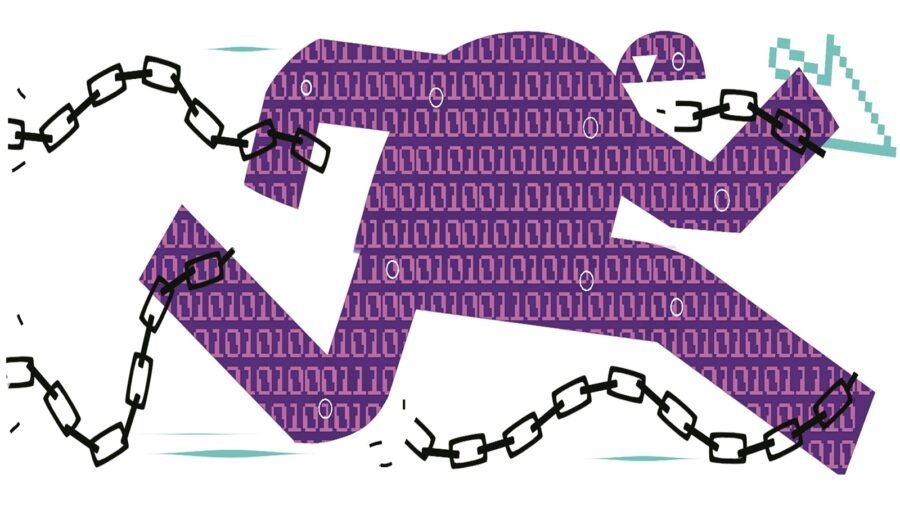
On September 10, Anthropic published a 154-page threat intelligence report documenting nine months of AI misuse — December 2025 to August 2026. Two days later, Anthropic CEO Dario Amodei published a blog post calling on the industry to slow the development of frontier AI. Within hours, OpenAI’s Sam Altman and Elon Musk both agreed. Read together, these two documents tell us everything we need to know about where AI governance must go next.
The misuse cases Anthropic documented span seven harm categories and range from state-sponsored operations to lone actors. The transparency is commendable.
Advertisement
But the report’s deeper significance is structural. AI is no longer merely a tool that generates harmful content. It is now an orchestration layer — connected to other software, running multiple stages of an operation simultaneously, enabling sophisticated attacks with fewer people and less expertise than ever before. Anthropic calls this “uplift”: The AI capability boost measured in speed, scale, and depth of harm. A flagged Bangladesh disinformation operation was almost entirely automated — AI generated the content, other software turned it into videos, scheduling algorithms published them at optimised times. One person, 29 accounts, 1,500 fabricated stories. That is uplift.
And what Anthropic caught is almost certainly a subset of what was attempted. Anthropic also acknowledges that for its most capable current models, it can no longer assure that a sophisticated actor could not receive meaningful assistance in biological weapons research. That is not reassurance. It is an admission that there are no guardrails to prevent harm because governance has not kept pace.
Amodei’s warning was stark: AI has been advancing drastically faster since roughly this summer, and swarms of rogue AI agents could take over the internet within six to 12 months. Three fierce competitors — building the world’s most powerful AI — who have spent billions racing each other agreed in one weekend. That is not a PR moment; it is a fire alarm.
Advertisement
I asked a simple question on X: Is a voluntary slowdown possible? The competitive pressures, the capital, and geopolitics — with China operating outside any such agreement — make a unilateral slowdown extraordinarily difficult to sustain. Venture capitalist Chamath Palihapitiya noted the obvious: A market leader calling for a slowdown is also, conveniently, calling for an arrangement that protects its lead.
The voluntary slowdown debate is the wrong frame entirely. The right question is not how to slow development. It is how to accelerate governance.
When I served as Minister of State for Electronics and Information Technology under Prime Minister Narendra Modi, we built India’s platform accountability framework on the principle of Safe, Trusted, and Accountable. The IT Rules of 2021 established legal obligations for platforms operating at scale. That framework saw the future before it was obvious. Anthropic’s report vindicates it.
The Bangladesh case is directly relevant to India. The techniques — automated account creation, AI-generated content at scale, optimised for rural low-literacy audiences — are applicable to any democracy with a large, linguistically diverse electorate. India has 950 million eligible voters and continuous state elections. AI-generated disinformation in various languages is easy to produce and difficult to detect. Requiring platforms to detect and disrupt such operations is not regulatory overreach. It is democratic self-defence.
The Alibaba distillation campaign — 151 million AI exchanges to copy a competitor’s capabilities — will be run against Indian AI models too. The surveillance cases are a direct warning about AI becoming an instrument of control by those who possess it rather than communication, threatening the right to privacy guaranteed under Article 21 of the Constitution.
For India, several guardrails must be in place. Every AI platform above a defined scale threshold must be required to report detected misuse to CERT-In and a designated AI Safety Authority. To avoid cases like the Bangladesh operation, mandatory watermarking of AI-generated content in political and public interest contexts is essential.
AI now orchestrates multi-step operations across software systems. Platform accountability rules must explicitly cover agentic AI — systems that act in the world, not merely generate text. New legislation must explicitly prohibit and criminalise systematic distillation and fraudulent mass API access.
Voluntary disclosure is not a governance system. We need a statutory body with powers to compel disclosure, audit systems, and impose restrictions. Governance risks can only be addressed by law.
India is uniquely positioned to demonstrate this. We are not the US, constrained by a deregulatory administration. We are not the EU, whose ambition has sometimes outrun its technical understanding. We are the world’s largest democracy with a proven record of building technology policy at scale — DPI, UPI, Aadhaar, the IT Rules — and a direct stake in ensuring AI serves 1.4 billion citizens rather than a handful of American or Chinese technology companies.
The call from Silicon Valley’s most powerful is, in effect, an invitation to governments to act. India can lead it with a legal framework that makes safety and accountability mandatory, enforceable, and permanent.
The writer, former MP, former minister of state for Electronics & Information Technology, Government of India, is BJP Kerala state president and MLA for Nemom. Views are personal

From Ralph Lauren to Fendi: Why Indian crafts are easy to borrow but hard to protect
By Sohail Khan · 17 Sep

Why melting glaciers could ‘put 20% of India’s GDP at risk’, and one change that can help
By Sohail Khan · 17 Sep
Leave a Reply