My lessons in turning ambition into reality
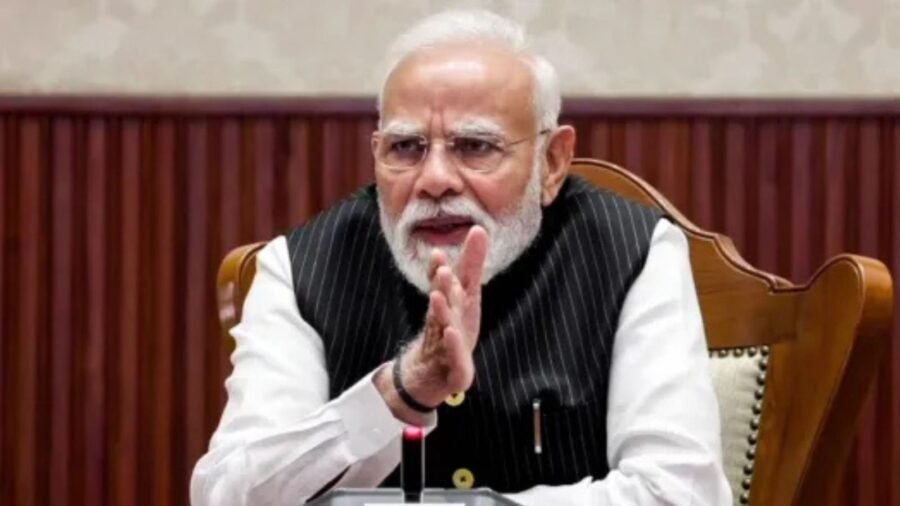
I was beginning to lose hope that India’s ambition to develop its first green-field city would become a reality. As CEO of the Delhi Mumbai Industrial Corridor Development Corporation (DMIDC), I was tasked with driving the next phase of India’s industrial urbanisation. Every chief minister had rejected our proposal, saying that earmarking 150 sq km for such a project was far too risky. Then I walked into the Gujarat chief minister’s office. Narendra Modi heard me out and said, “150 sq km is too small. If you’re going to dream, then dream big.” He offered 750 sq km. In 2009, the Gujarat government enacted the Special Investment Region (SIR) Act and officially declared Dholera SIR alongside its master plan.
That conversation showed me the scale of his thinking. He did not see land as a constraint and saw the possibility of building a new engine of growth for Gujarat and, in time, for India.
Advertisement
In 2014, a new government came to power at the centre, and Modi became the Prime Minister of India. As the then-Secretary of the Department of Industrial Policy and Promotion, I was among the first officials to make a presentation to him. He was disappointed that India was ranked 142nd in the World Bank’s Ease of Doing Business rankings and asked us to focus on a mission — to make India easier, simpler, and more efficient for its citizens and businesses.
We worked on the Insolvency and Bankruptcy Code, the Goods and Services Tax, and the elimination of outdated rules, regulations, procedures and Acts. Changing the mindset of departments was difficult, but we persisted. India eventually rose 79 places in the rankings.
PM Modi’s belief in frontier technologies has consistently been accompanied by a willingness to create the policy and institutions that enable Indian entrepreneurs to build in new areas. Under him, India has created immense opportunities in AI, quantum computing, geospatial technology, drones, defence and space exploration. The success of India’s space missions, including Chandrayaan-3 and Aditya-L1, has been accompanied by the emergence of a vibrant private space ecosystem.
Advertisement
At the same time, initiatives like the National Green Hydrogen Mission ensure that the country’s development and industrial growth do not come at the cost of the planet.
I found myself at the head of India’s apex policy think tank, NITI Aayog, by 2016. During a cabinet meeting, PM Modi asked me to begin work on India’s most backward districts. That conversation led to the Aspirational Districts Programme, through which I saw the PM’s deep belief in real-time data, measurable outcomes and the power of young officers. He was convinced that transforming these districts would transform India. The results confirmed his instinct. Districts began improving their performance across health, education, agriculture, financial inclusion and basic infrastructure.
As I was leaving NITI Aayog, I called on the PM to offer my gratitude. He asked me to take on the responsibility of India’s G20 Sherpa. Geopolitical tensions were high, and consensus seemed almost impossible. He was determined that India could bring countries together. It was in the grip of this conviction that the New Delhi Leaders’ Declaration was crafted and unanimously passed.
Working with Prime Minister Modi has fundamentally shaped my understanding of leadership. I have learned that a leader must be willing to imagine what does not yet exist and then bring the full force of the state, the administration, and the nation behind that imagination.
The writer is former G20 Sherpa of India, CEO, NITI Aayog and Secretary, Department of Industrial Policy and Promotion

40 years ago September 18, 1986: 177 killed in South African mine
By Sohail Khan · 18 Sep

Leave a Reply