‘Operation Safed Sagar crew shot at 16000 feet in peak winter’: Netflix India’s Tanya Bami
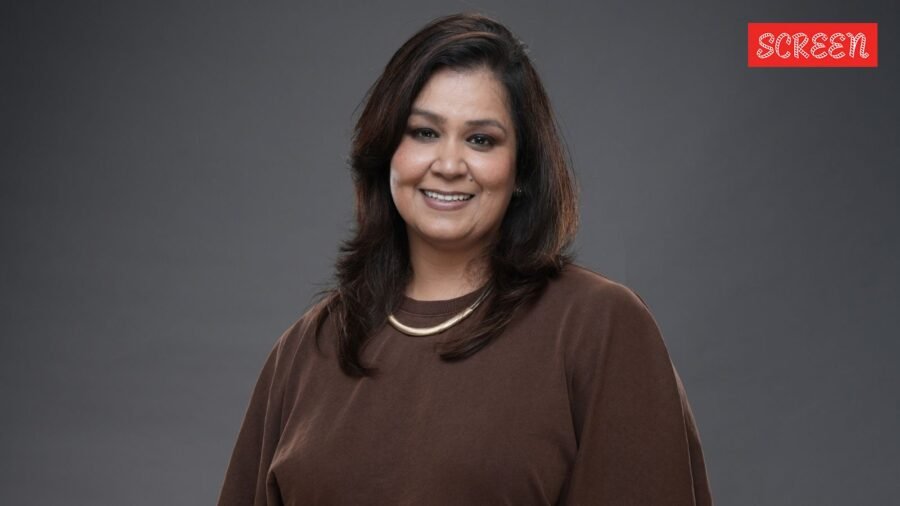
From Lock Upp: Sach Ya Sazaa and Operation Safed Sagar to India’s Got Latent, Netflix has rolled out a string of high-profile shows this year. As it gears up for The Great Indian Kapil Show 5, Mismatched 4 and several other titles, SCREEN spoke to Netflix India Series Head Tanya Bami about what goes into brining these to a wider audience.
Tanya, congratulations on the success of Netflix’s series slate this year, including Operation Safed Sagar, India’s Got Latent and Lock Upp: Sach Ya Sazaa. When commissioning a series, what criteria do you consider before greenlighting it?
Yes, it has been a great year. We started with Taskaree at the global number one position, and it has been a year with so much variety and diversity. If you just look at the year, it is very representative of where we are as an audience in India today in terms of our tastes and preferences. Our slate reflects that – there is a high-stakes, customs-based thriller in Taskaree; a real-life military operation in Operation Safed Sagar; captive reality in Lock Upp: Sach Ya Sazaa; a sports thriller in Glory; a returning fan favorite in Maamla Legal Hai; and a really sweet, lived-in romance in Musafir Cafe. Each idea is distinctly different from the previous and the next, and that’s a very important criterion for us. One of the things we were very particular about in writing was, for example, in Operation Safed Sagar – there were so many characters, but each one has found their connection, touched an emotional chord, and offered an arc for the audience to travel within this story. I always believe it is the feeling you leave people with. There are lots of stories we can tell, but the feeling you leave them with is what they actually talk about.
Story continues below.
Subscribe to see fewer ads.
When evaluating a story, what gives you the conviction that it will resonate with audiences and is worth backing?
We always tell creators, “We are your first audience.” When they come and talk to us about their ideas, their ambitions, and the storyline, the first thing we all try to do is to just listen as an audience. Operation Safed Sagar is a prime example of that. When Abhijit and Kushal met us for the first time, I remember they literally had around 200 pages of research, and the Air Force was keen to tell this story. Nothing came in the way of us converting that. It was such a compelling story. Then came a lot of conversations and discussions around what we wanted to make, how much we wanted to expand the scope of the series, and what was doable. There were so many aspects of the Air Force’s involvement that we couldn’t include because of logistical reasons, planes being decommissioned, assets being unavailable, or personnel not being accessible. So it was really about bringing the story into a form that could be told, produced, and made compelling for the audience. While the creators had a great amount of ambition and a lovely idea, it was also about how you make an idea of this scale possible. We backed them with everything we had: the VFX, the production, and the expertise needed to build world-class flying sequences. It was really about constructing it together and collaborating to make this vision and dream possible. So I think collaboration is a large piece of it. Without collaboration, that journey is incomplete.
Abhay Verma mentioned that Operation Safed Sagar used real MiG-21s and Air Force bases rather than relying entirely on CGI or simulators. What went into mounting a production of that scale, and what were the biggest logistical challenges?
Story continues below this ad
Once we had the story and the ambition laid out on paper, the Air Force understood that we were telling a very authentic and relatable story of the IAF, so they really pulled out all the stops. We shot at live locations and active Air Force bases, including Nal and Chandigarh. At one point, we had 16 to 18 MiGs lined up on a runway for us to shoot. It was just one of the most overwhelming, collaborative, and supportive experiences. They were so keen for this story to be told, and they trusted us because they saw the intention. They were also excited for Netflix to take this story to a global audience. So access wasn’t the issue. The MiGs were made fully available to us. The actual challenge was that they were about to be decommissioned, so we had to prep extremely fast to shoot what no one in the country had shot before. We are very proud to say that we were the last unit to shoot with the MiG-21s before they were officially phased out.
There were many other challenges. It was a long, fulfilling, but very tough journey. The crew shot at 16,000 feet in peak winter. You take so many things for granted in production. We thought, “Okay, technology is advanced; we can handle the snow and conditions with VFX.” But there’s a minute detail: when you walk in sub-zero temperatures, the vapor coming out of your mouth, nose, and body can never be authentically generated with CGI. So we had to shoot in peak winter conditions after heavy snowfall. I don’t know how we managed to map and control all of that. I guess we were just lucky! The real operation took place at 18,000 feet, and our crew was shooting at 16,000 feet in tough conditions. I don’t know if any other production unit has shot at those altitudes in India. But the commitment of this team was so high that they genuinely enjoyed it. You could see it in their daily interactions. They became thick as thieves. They really became the squadron they were portraying. They truly are the Golden Arrows and embodied it in great spirit as well as in character.
Lock Upp: Sach Ya Sazaa has drawn significant viewership on Netflix. What convinced you to bring the show to the platform, and did you have any initial apprehensions about it?
None whatsoever. We were very clear from the beginning that we wanted to delve into this genre of captive reality, even though there’s a huge legacy with this genre and it’s dominated by just one concept. For us, it was about finding the right concept. We feel very proud about taking a local IP like Lock Upp: Sach Ya Sazaa and scaling it to the level of an international format. Once we knew we had the right idea and the right partners like Ektaa, Malay, Neeraj, and the whole team, I knew we could definitely convert this into an OTT phenomenon. We did so much to turn things around, starting right with the casting, whether the hosts or the inmates. We really strove to have a cast that wasn’t classic reality TV; we wanted a slightly differentiated take. We wanted a very glossy take on a prison setting. We kept the grit that was in Black Warrant, but the gloss is very evident in Lock Upp: Sach Ya Sazaa, and we wanted to have that interesting look and appeal as well.
Story continues below this ad
Given the controversy surrounding the first season of India’s Got Latent, what convinced Netflix to bring Samay Raina and the show’s IP to the platform for a second season?
The idea started when we did the Laughter Day special episode on The Great Indian Kapil Show with Samay, and that episode became a landmark in itself. The Great Indian Kapil Show was a very successful show for us, and that episode, even as an isolated one, did incredible numbers. We had never done something like that before, but the way audiences responded to it was very indicative of the love that Samay has. His stand-up special right after that also tracked well. People really loved how authentically he opened up and spoke about his journey. The love for Samay is very palpable. I think if the audience appreciates and enjoys something so much, we saw an opportunity for us to bring it onto Netflix as an ad-free experience, and that was the primary thinking going into it. Of course, Samay and Netflix have a deeper partnership now. His next special, and perhaps a couple of other things, will also be on Netflix, which we are still working on. Someone who the audience loves this much was somebody that we really wanted to partner with for sure. He’s extremely talented and such a strong representative of younger audiences today that we definitely wanted him on our service. For him to bring his next special to us would be a delight for us. Latent is just the first step.
View this post on Instagram
A post shared by Netflix India (@netflix_in)
Could you share some details about the upcoming titles on Netflix’s slate?
We have Chumbak. There’s an emotional thriller called Shaquee. We recently talked about the entire ramp-up of our South film slate as well. There is a lot coming to Netflix, including Dhindora. We just finished shooting Mismatched. Since it’s the final season, we really have to do justice to it. It’s been a phenomenal year. I think it’s our best one yet. It’s our 10th year, which is a milestone for us, and I’m glad we’ve been able to commemorate it duly. Operation Safed Sagar was our offering to go deeper with India in our 10th year, and I feel so proud and happy that audiences have given us so much love, not just in India, but across the world.
Leave a Reply