Homestay: Charting a smooth path for hosts & guests in Karnataka
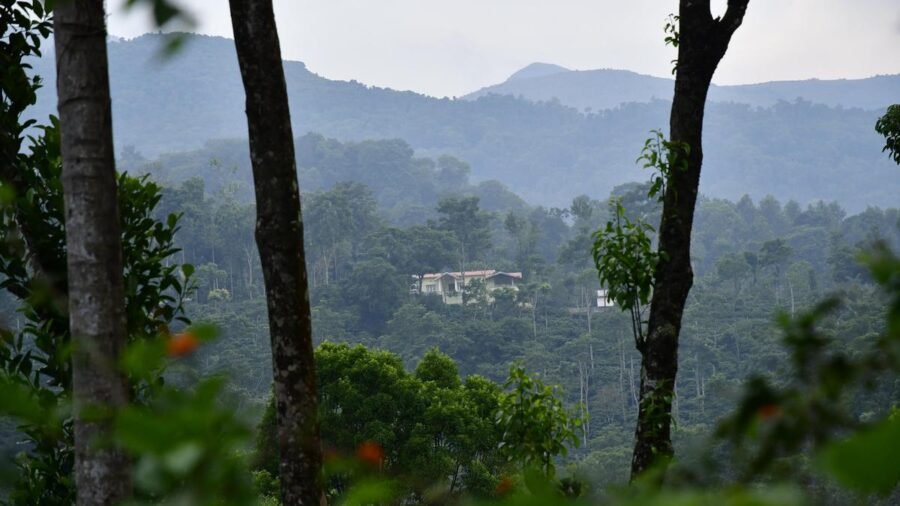
A home away from home. That is the promise of homestays for tourists travelling from other countries, States, and cities to major tourist destinations in Karnataka. Local families in these accommodations offer tourists a warm and homely atmosphere even as they introduce them to a new culture and guide them to places to visit.
Such accommodations have caught the fancy of tourists in recent years, and according to the Tourism Department officials, there are around 4,000 homestays registered in Karnataka. They are mostly concentrated in Kodagu, Chikkamagaluru, Hassan, Shivamogga in south Karnataka, and Hampi in Vijayanagara district in north Karnataka. These districts attract majority of tourists during monsoon, weekends, and holidays.
However, some untoward incidents in recent times have raised questions about the enforcement of regulations. Most recently, in June 2026, during the hearing of an alleged rape case in a Kodagu homestay, the Karnataka High Court urged the State government and the Tourism Department to frame comprehensive, multisector policies to address safety, compliance, and consumer protection concerns in the hospitality industry.
As per rules, it is mandatory for homestays across the State to register through the online portal of the Tourism Department or the Seva Sindhu Portal under the revised Karnataka Homestay Registration Guidelines, 2025.
Speaking to , a senior official from the Tourism Department said that homestays have existed in Karnataka for decades and guidelines were put in place way back in 2006-07. “Since then, the registration of homestays is mandatory. From the past two years, the process has shifted to online portal. However, after some incidents came to light and keeping safety of tourists in mind, we implemented it strictly from June 2026. The department has instructed all district commissioners, in places where homestays come up, to implement the guidelines without fail.”
Unauthorised B&Bs
Despite the guidelines by the department, thousands of unauthorised homestays or Bed & Breakfasts (B&Bs) have come up across tourist destinations in the State. Neither the homestay associations nor the department has an estimate of them, but they agree that such businesses exist.
A Tourism Department official said: “There are only 4,000 authorised or registered homestays. While we don’t have an exact figure of unauthorised homestay, tourists must avoid going to such places.”
Meanwhile, Monthi Ganesh, president, Kodagu Homestay Owners’ Association, said: “At least 2,000 homestays in Kodagu are unauthorised, which means they operate without licence.” She said that people from other States take property on lease and start homestay businesses without following guidelines and procuring licence. “We have complained several times to the police and the district administration, but it hasn’t yielded results.”
The association also goes on inspection of homestays when owners apply for a licence from the department, along with officials. At present, there are more than 2,000 homestays in Kodagu that are registered and around 1,800 of them are affiliated with the association. “The issue of unauthorised homestays came to our notice when we started receiving complaints from tourists of brokers and agents taking them to faraway places for as low as ₹1,000 per person per day.“
The association brought it to the notice of the District Tourism Committee headed by the District Commissioner of Kodagu and other industry veterans during a meeting held on September 11, 2026.
Monthi Ganesh said that every incident of a tourist being cheated, harassed, or ill-treated affects the industry. “Tourists start fearing coming to Kodagu and footfall drops. Authorised homestays are the way forward to tackle these issues.”
Somashekar S.J., District Commissioner, Kodagu, said: “We are aware of unauthorised homestays. The district administration in collaboration with hospitality industry veterans will print a booklet for tourists with a list of authorised homestays, contact numbers, and addresses. Guidelines and emergency helpline numbers will be provided in case of issues during their journey and stay.”
The scenario in Chikkamagaluru is no different. H.L. Giridhar, president of Chikkamagaluru Homestay Owners’ Association, said while around 600 are registered, which includes both homestays and B&B category accommodations, there are over a thousand that are unauthorised and open only on the weekends when the demand from tourists for rooms is high. “The reason behind making registration mandatory is to earn people’s trust and see that when any incidents are reported, the homestay owner is held responsible.”
More transparency needed
Giridhar underlined the need for a transparent process to make this possible. “When I applied for a licence a few years ago, it took three months for the entire process. Another issue is lack of uniformity in the fees charged by the departments for various processes. For instance, panchayats can charge upto ₹500 for issuing NOC though there is no such guideline. However, there are panchayats that charge ₹5,000 to ₹10,000 for issuing NOC (No Objection Certificate), which is not fair. The process of applying and getting a licence should be made easier for owners for the ease of doing business.”
He urged that the government should not encourage proliferation of B&Bs. “It will lead to homestays losing their USP of providing hospitality to guests in the presence of owner on the property. Let the government encourage more owners to run homestays in their own tourist destinations. If you commercialise the idea by allowing non-residents to enter the business, there will be competition forcing homestay owners to charge more in comparison to the existing prices,” he said.
In world heritage site Hampi too, homestays have mushroomed. In August 2026, Justice B. Veerappa, Upalokayukta, visited Hampi and directed officials to clear all unauthorised homestays located within the buffer zone and pheriperal zone of historical monuments and sites.
According to the Upalokayukta, around 250 homestays were flagged as unauthorised. He asked the District Commissioner of Koppal to take legal action against such homestays, disconnect power and water supply services, and submit a detailed report to the Upalokayukta. In his report, he highlighted how agricultural land was also used to build homestays and operate illegally.
In response to this, Dictrict Commissioner Suresh B. Itnal, Koppal district, said the authorities have stopped providing electricity, water, and other facilities to unauthorised homestays. More than 200 such homestays have shut down, he said.
Siraj, homestay owner in Anegundi adjoining Hampi, said: “In 2025, when registration was made mandatory, I tried applying online. The website was not working for almost a year. Finally, in early 2026, I got my homestay registered. Now, one of my friends who runs a homestay has applied for registration, but it has been pending since four months.
The official noted that the department has received over 1,000 applications from homestay owners in the past three to four months, but verification and issuing of licences are pending.
The official explained that homestays need to procure an NOC from gram panchayats, the Revenue Department and a clearance from the Police Department. “These three departments need to have access to one website and work in coordination whenever they go for an inspection. At present, the file moves from one department to the other manually, leading to delays in verification as the department officials are occupied with other daily issues. On the other hand, the gram panchayats have not streamlined this process online. The NOC by panchayats is given manually to owners, which is presented to the police by owners themselves. With such gaps, the process of verifying and issuing licences to homestays gets delayed,” he said.
Sakala website
To address this, the Department of Tourism is planning to bring all three departments on the existing Sakala platform.
The official said: “Whenever a homestay owner applies for a licence, the three departments must be able to upload necessary clarifications, NOC, or even objections. Finally, a district-level officer from the Tourism Department will inspect the homestay. If there are no violations, then the District Commissioner will issue the licence.”
While homestays are under the purview of non-commercial establishments, B&B category accommodations are under the purview of commercial establishments,but the nodal agency to regulate them is the Tourism Department. Recently, Tourism and Energy Minister K.J. George announced that the Karnataka government would introduce stringent regulations and separate frameworks for B&B establishments.
According to the Homestay Registration Guidelines, 2025, B&B category is a privately owned place, including buildings in farms and plantations where the owner of the establishment does not reside but an agent or an operator designated by them resides on the building premises for providing necessary services to visitors.
An official explained that the distinct frameworks for B&B are aimed at preserving the identity of genuine homestays so that it doesn’t hamper the tourism ecosystem, local economy, and business of owners running these homestays. B&B accommodations are at present registered as homestays because they function at homes with multiple rooms.
“Since B&B falls under the category of commercial establishments, they need to apply for land conversion from residence to commercial category, and agriculture to non-agriculture if it is a cultivation land. We are trying to integrate this land conversion process on the Bhoomi portal under the Revenue Department.”
At present, the department is working on various factors to streamline property tax to be levied on B&B properties, which is likely to be same as other commercial properties. The Escoms concerned will verify the electricity meter and the tariff charges will be same as it is for commercial categories. The same goes for water tariff too, the official noted, adding that a single-window system will be introduced to simplify the process. Tourism, Police, Revenue departments, besides gram panchayats and district adminstrations will come under one umbrella.
A win-win situation
Elaborating the reasons behind government encouraging homestays and B&Bs, the official said that while Karnataka’s tourism destinations attract lakhs of tourists, it is not sustainable to go on building accommodations everywhere. “The government has been encouraging homestays and B&Bs so that it is a win-win situation for local people, tourists, and the government, while preserving the authenticity of the place. It is a sustainable way of promoting tourism. Money that the homestays charge is nominal when compared to resorts or hotels.”
A senior official said that once the single-window system for registration is put in place, the department will compile a comprehensive list of registered places, and link them with Google Maps and booking websites. “Whenever tourists check out the places, it must indicate the registration and take them to the genuine list of homestays under our department.” The department has plans to sync this data with the Police Department as well as respective district authorities.
Ajit Das, a tourist who loves to explore places during weekends, said: “When I look to book homestays, many private websites show addresses and places, but there is no guarantee if they are licenced. If the Tourism Department launches a website where it has a list of authorised homestays, it will ease the process of booking for tourists. It will also greatly help solo women travellers.”


VIT-AP lays focus on AI, quantum and deep-tech research
By Sohail Khan · 18 Sep

Leave a Reply