Almost every day of monsoon: How human activity altered Mumbai climate
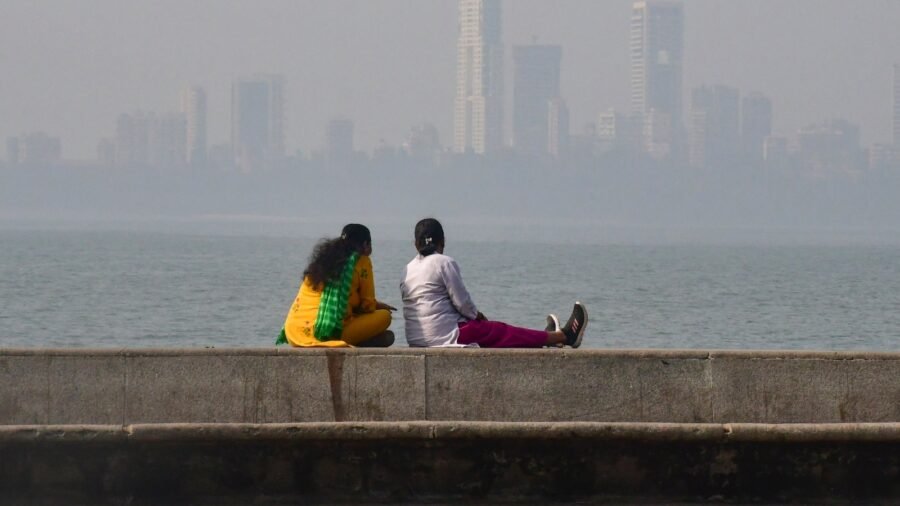
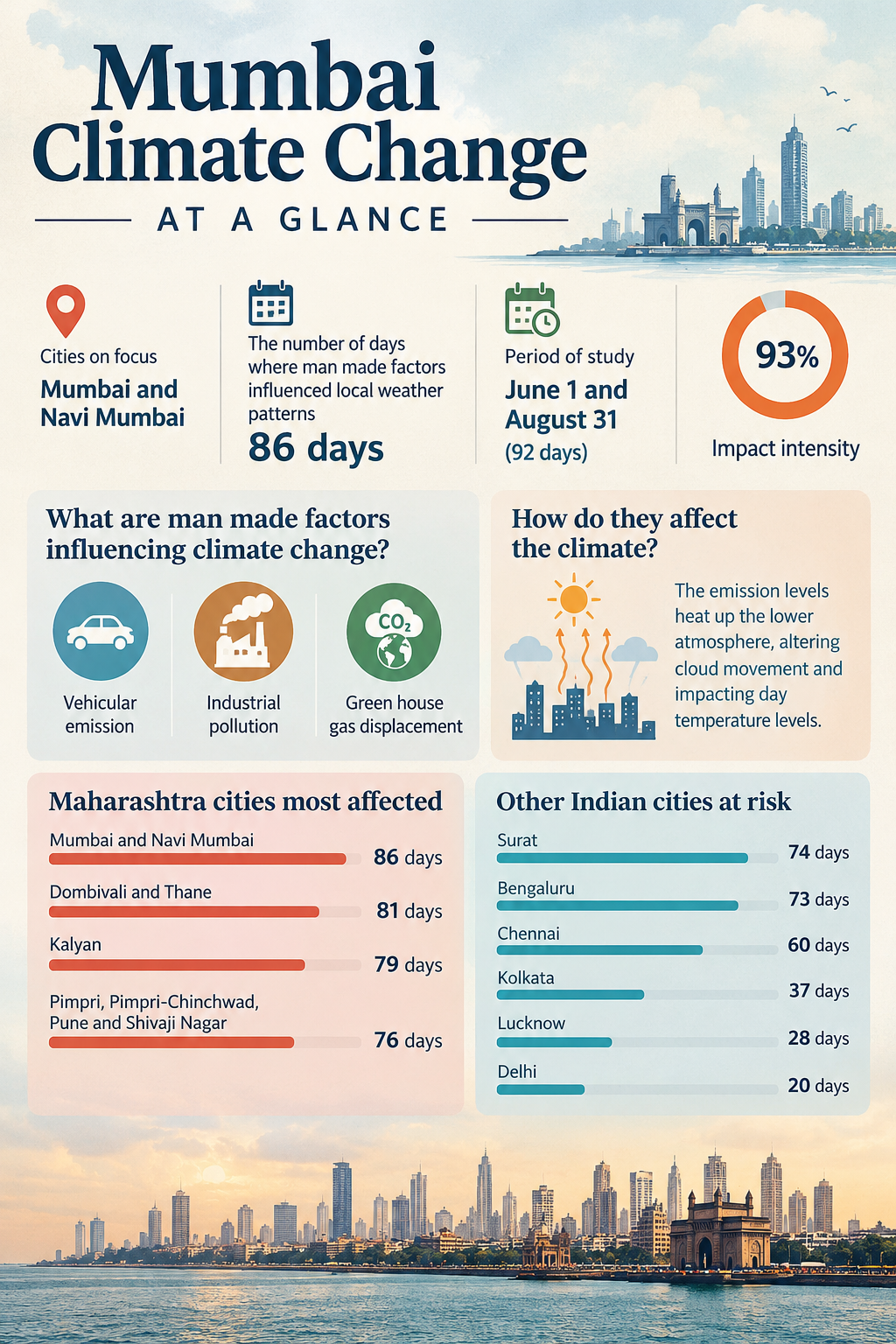
A recent study found that on 86 out of 92 days between June 1 and August 31, human activity, such as vehicle and greenhouse gas (GHG) emissions, influenced local weather patterns in Mumbai and Navi Mumbai, contributing to climate change.
The study indicates that during the specified period, the cities recorded extreme heat and rainfall that were directly influenced by man-made factors that contribute to climate change.
The report also shows that after Mumbai and Navi Mumbai, districts in the Mumbai Metropolitan Region (MMR), including Dombivali and Thane, had as many as 81 days affected by human activity, followed by 79 in Kalyan and 76 days each in Pimpri, Pune and Shivaji Nagar.
Story continues below.
Subscribe to see fewer ads.
Furthermore, the study stated that out of the 86 days, Mumbai and Navi Mumbai recorded extreme heat days on 28 days.
Of the 59 analysed cities, the top nine cities featuring in the list were from Maharashtra, with the MMR region recording the most days where significant weather patterns, such as temperature and rainfall, were driven by human activity.
The report, published by Climate Central, a US-based climate research organisation, comes weeks after the United Nations published a study highlighting Mumbai’s growing vulnerability to rising sea levels.
Notably, the months coincide with Mumbai’s monsoon season, when the region usually cools down due to incessant rains. However, in 2026, Mumbai recorded deficit rainfall in June and August, but surpassed its average quota in July.
Story continues below this ad
In the latest report, scientists used a climate shift index (CSI) to identify the impact of climate change on daily temperatures. By analysing temperatures and weather patterns, the scientists placed cities between a CSI level of zero-5 – zero being the lowest impact and 4 and 5 showing a severe impact.
For Mumbai, the average markings ranged between 4 and 5 throughout this period. During the period, Indian cities recorded an average increase of 0.7 degrees in day temperatures.
Speaking to , Mahesh Palawat, climate scientist and meteorologist, said that the warmer temperatures during monsoon months were caused directly by El-Niño – a climate pattern that warms the surface waters of the central and eastern Pacific Ocean.
However, man-made climate change has played a major role in altering the current rainfall pattern.
Story continues below this ad
“The El Niño effect was very strong in India this year. Due to this factor, every state in the country has recorded uneven rainfall distribution, which has led to a rise in temperature between June and August. This factor was further aggravated by man-made issues like vehicular emissions and industrial practices, which contribute to the increase in local temperatures,” Palawat told Express.
Another concern for Indian subcontinent
Palawat said there is another case of concern for the Indian subcontinent. Earlier, during the monsoon, there was an even distribution of rainfall. Data now shows that in the last 4-5 years, Mumbai has recorded heavy downpours where a single day’s rainfall totals 100-200 mm.
“This phenomenon is mainly caused by the absence of Alto Strauss Cloud. These clouds would exist 800-1,000 feet above the surface and would create consistent drizzle over the cities, making rainfall uniform. However, due to factors like industrial emissions and vehicular pollution, the lower atmosphere is getting heated up, which is affecting the formation of these clouds. Therefore, over tropical regions like the Indian subcontinent, this cloud is simply non-existent,” Palawat added.
The report also states that Asia has the world’s largest population exposed to at least 30 risky heat days attributable to climate change, affecting 2.8 billion people, or 58 percent of the continent’s population. India alone accounted for 117 million people exposed to at least 30 such days — the largest country-level population in the analysis

Asian Games 2026: India’s Star-Studded Cricket, Hockey And Kabaddi Teams Eye Gold In Japan
By Sohail Khan · 18 Sep

Leave a Reply