Heart attack symptoms when you’re alone: What to do in the first few minutes
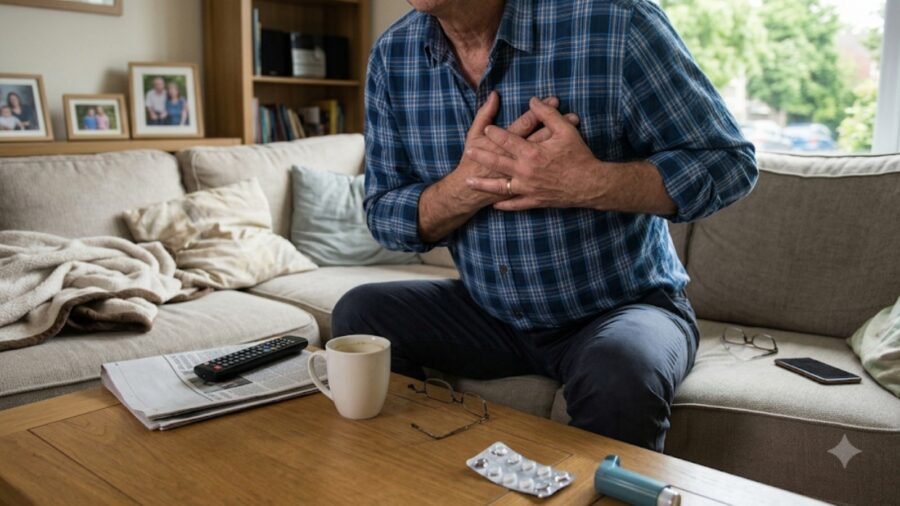
A suspected heart attack is an emergency, and being alone at home can make the situation more frightening. But the first few minutes are important, and trying to figure out the cause of your symptoms yourself can waste valuable time.
“Do not wait for the symptoms to become severe. Call emergency medical services immediately,” says Dr Parin Sangoi, Consultant Interventional Cardiologist, Wockhardt Hospitals, Mumbai Central.
Here is what to do if you are alone and think you could be having a heart attack.
Story continues below.
Subscribe to see fewer ads.
1. Call emergency services first
Do not wait to see whether the discomfort goes away on its own.
“Heart attack symptoms can include pressure or heaviness in the chest, but breathlessness, cold sweating, nausea, dizziness or discomfort in the arm, shoulder, back, neck or jaw can also be warning signs,” Dr Sangoi says.
If you experience symptoms that could indicate a heart attack, call your local emergency medical service immediately. “The sooner the blocked artery is treated, the more heart muscle can potentially be saved,” he adds.
2. Sit down and rest
Once you have called for help, sit down somewhere safe and avoid unnecessary movement.
Story continues below this ad
Dr Sangoi recommends keeping your phone with you and, if possible, unlocking the door so emergency responders can enter quickly.
“Do not drive yourself to the hospital. While waiting for medical help, sit down and rest rather than trying to get yourself there,” he says.
3. Don’t let medication delay the emergency call
If you have medication prescribed for angina, such as nitroglycerin, take it only according to the instructions already given to you by your doctor.
“Call for help first. Medication should never delay the emergency call,” says Dr Sangoi.
Story continues below this ad
The aim is not to try to manage a possible heart attack on your own, but to get professional medical care as quickly as possible.
 A heart attack can trigger cardiac arrest, but the two conditions are not synonymous
4. What about aspirin?
“Aspirin can be useful in a suspected heart attack, but it is not suitable for everyone,” Dr Sangoi explains.
If an emergency operator or doctor advises you to take aspirin, follow their instructions provided you do not have a known aspirin allergy or another contraindication.
“Getting medical care quickly is the priority, rather than trying to manage the episode at home,” he adds.
Story continues below this ad
5. Don’t assume it’s acidity or anxiety
One of the biggest mistakes is waiting because you think the discomfort is caused by gas, acidity or anxiety.
“The most dangerous mistake is assuming that the discomfort is acidity, gas or anxiety and waiting for it to pass,” says Dr Sangoi. Heart attack symptoms can vary from person to person, and it isn’t possible to reliably distinguish the cause at home.
6. Avoid these common mistakes
If you are alone and experiencing possible heart attack symptoms, Dr Sangoi advises against:
* Driving yourself to the hospital
* Walking around or exercising
* Taking several medicines on your own
* Using home remedies to settle the symptoms
* Spending time searching online to determine whether it is ‘really’ a heart attack
* Waiting for symptoms to become severe before seeking help
Story continues below this ad
“You cannot reliably make that distinction at home,” Dr Sangoi says.
7. If you become unresponsive
“If you become unresponsive and stop breathing normally, CPR and an automated external defibrillator, if available, may be needed,” says Dr Sangoi.
‘Heart attack’ has been trending on Google for the past 24 hours.


C Raja Mohan: The ghosts of 1945 are being recruited for today’s contest over Asia
By Sohail Khan · 29 Sep

Leave a Reply