In India’s battle against obesity, food labels could be one of the most potent weapons
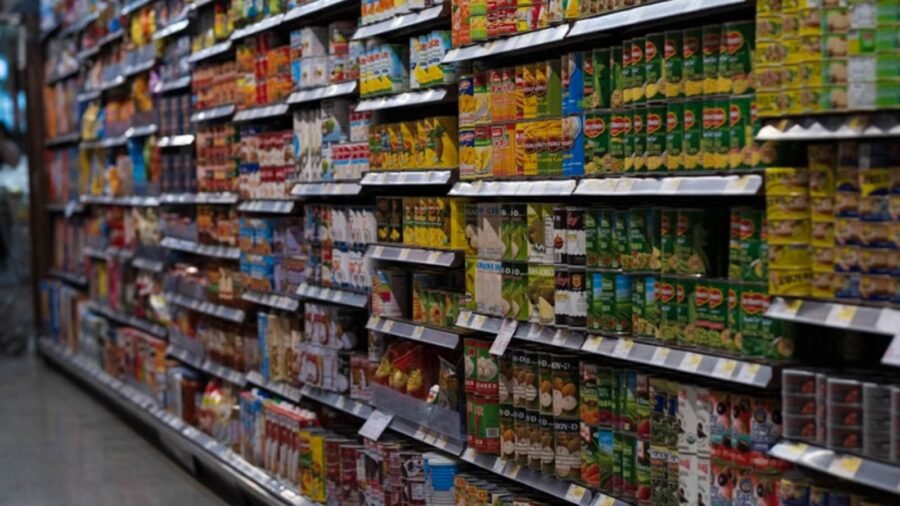
The Supreme Court of India, in response to a public interest litigation, has ordered the Union government to implement, through the Food Safety and Standards Authority of India (FSSAI), a front-of-pack labelling (FOPL) regime of food warning labels on packaged products. In its most recent affidavit, the FSSAI has proposed a single-phase approach with a red hexagon on a white square background to warn consumers when packaged foods are high in fat, sugar, or salt (HFSS).
While HFSS concerns have been rising for years now, the most recent trigger has been the rising obesity levels reported by the National Family Health Survey-6 (2023–24). Compared to the previous round of the survey in 2019-21, it was up among men in the 15-49 years age group from 23 to 27 per cent and among women of the same age group from 24 to 31 per cent. Monthly per capita expenditure on processed foods, reported by the Household Consumption Expenditure Survey, increased from 7.9 to 9.8 per cent among rural households and from 9 to 11.1 per cent among urban households between 2011-12 and 2023-24.
Advertisement
A decade earlier, an expert group was set up under the directions of the High Court of Delhi to recommend regulatory limits of fat, sugar or salt in the manufacture and sale of foods as well as their labelling requirements. It had called upon the FSSAI to strengthen labelling regulations with complete and transparent information on the amount of fat, sugar and salt and recommended daily limits.
With a rise in diet-related metabolic disorders and non-communicable diseases, nutrition labelling has gradually emerged as a critical policy intervention. The World Health Organisation (WHO) advocates FOPL over the traditional (mandatory) back-of-pack nutrition tables. Among FOPL systems, the traffic-light labelling system (TLS) uses colour codes (red/amber/green) to signal “high”, “medium”, or “low” levels of key nutrients and offers two advantages: A simpler recognition and decision-making regime by buyers/consumers and incentivising product reformulation by the food industry. The caveat: Such decisions are shaped by label design, consumer demographics, and retail environments.
The WHO defines commercial determinants of health (CDoH) as private sector activities that affect people’s health, directly or indirectly, positively or negatively. It puts HFSS foods in the same basket as tobacco, alcohol and fossil fuels that account for an estimated one-third of global deaths and, at the same time, comprise large corporations with extensive global supply chains and phenomenal profits who “can – and do – exert considerable influence over political decisions, and have successfully impeded pro-health policies.”
Advertisement
An analysis of the decade of 2011-21 conducted by the WHO and the Indian Council for Research on International Economic Relations (ICRIER) found that the ultra-processed food (UPF) sector, which is often HFSS, grew at a compound annual growth rate (CAGR) of 13.37 per cent in retail sales value. HDFC reported that the ready-to-eat/ready-to-cook (RTE/RTC) sector is expected to grow at a CAGR of 12.3 per cent and the Frozen Foods sector at 18.1 per cent between 2024 and 2029. In absolute terms, India’s convenience food market is currently valued at about Rs 80 billion, and the packaged food industry is projected to grow from Rs 10,180 billion in FY 2024 to Rs 17,120 billion by FY 2029.
A study published in 2022 in The Lancet Regional Health – Southeast Asia documented industry interference in four countries in Southeast Asia — Malaysia, Thailand, the Philippines, and Viet Nam — that resulted in delayed and weak FOPL systems coupled with inadequate monitoring and enforcement. Closer to home, Sri Lanka introduced the TLS in 2016 for sugar-sweetened beverages, a sweet beverage tax in 2017, expanded the TLS to HFSS in 2019 and rolled out a comprehensive National Food Safety Policy, including Food (Labelling and Advertising) Regulations, earlier this month.
In the earlier phase of the ongoing litigation, activists had termed the FSSAI move to label only when two elements are high as an “industry-friendly loophole” and filed formal objections in court. A recent Reuters report suggests that the FSSAI “buckled after a tense March meeting with industry executives, who argued that such warning labels were confusing and ineffective” and quoted a Coca-Cola executive that “it is ‘very simplistic’ to believe that a consumer who doesn’t already read ingredient lists ‘will be so informed by seeing a symbol or an icon on the label’”.
We are entering a point in this litigation and discourse where commercial and industry actors tend to respond through structural, instrumental, and discursive pathways to influence regulatory scenarios with a slew of tactics — challenging unfavourable science, reputation management, market manipulation and litigation. The Supreme Court will need to set the bar high in the interest of people’s health and future generations.
The writer is Chairperson, Centre of Social Medicine and Community Health, Jawaharlal Nehru University. Views are personal


Stocks down again — but what are the outliers in India’s share market slide?
By Sohail Khan · 29 Sep
Cash transfers alone cannot tackle the problem of educated unemployment
By Sohail Khan · 29 Sep
Leave a Reply