Rabbit vs hare: Why one runs and the other hides
Story continues below.
Subscribe to see fewer ads.
Size and body structure
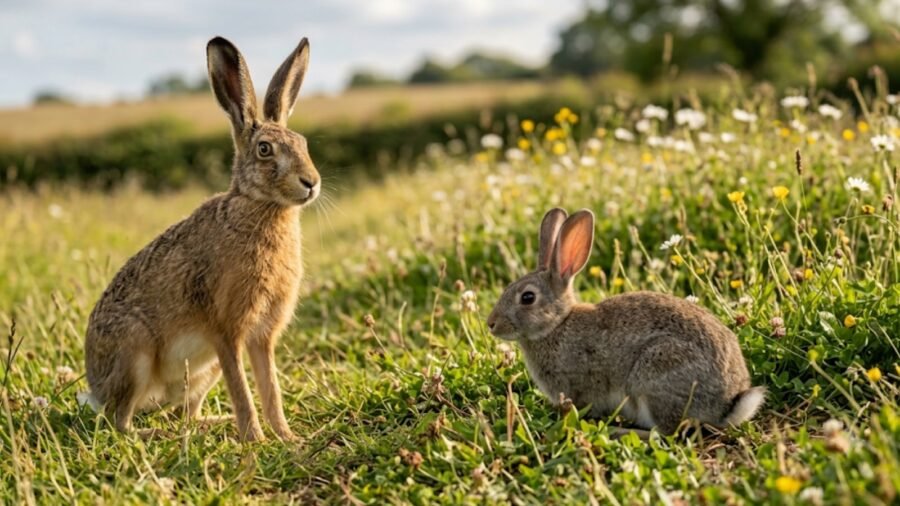
One of the most noticeable differences is their overall build. Hares are bigger and leaner, with bodies built for high-speed running. Rabbits, by contrast, tend to be smaller and rounder.
“The body proportions are a useful clue. Hares have a more elongated, athletic build, with particularly powerful hind legs and larger feet. Rabbits have shorter hind legs in proportion to their body,” says Dr Sharma.
Look at their ears
“Hares typically have very long ears, often with distinctive black tips, while rabbits have relatively shorter and more rounded ears,” Dr Sharma says.
Story continues below this ad
These long ears are not merely a visual difference. They are part of the hare’s adaptation to open environments, where keen senses help detect potential threats.
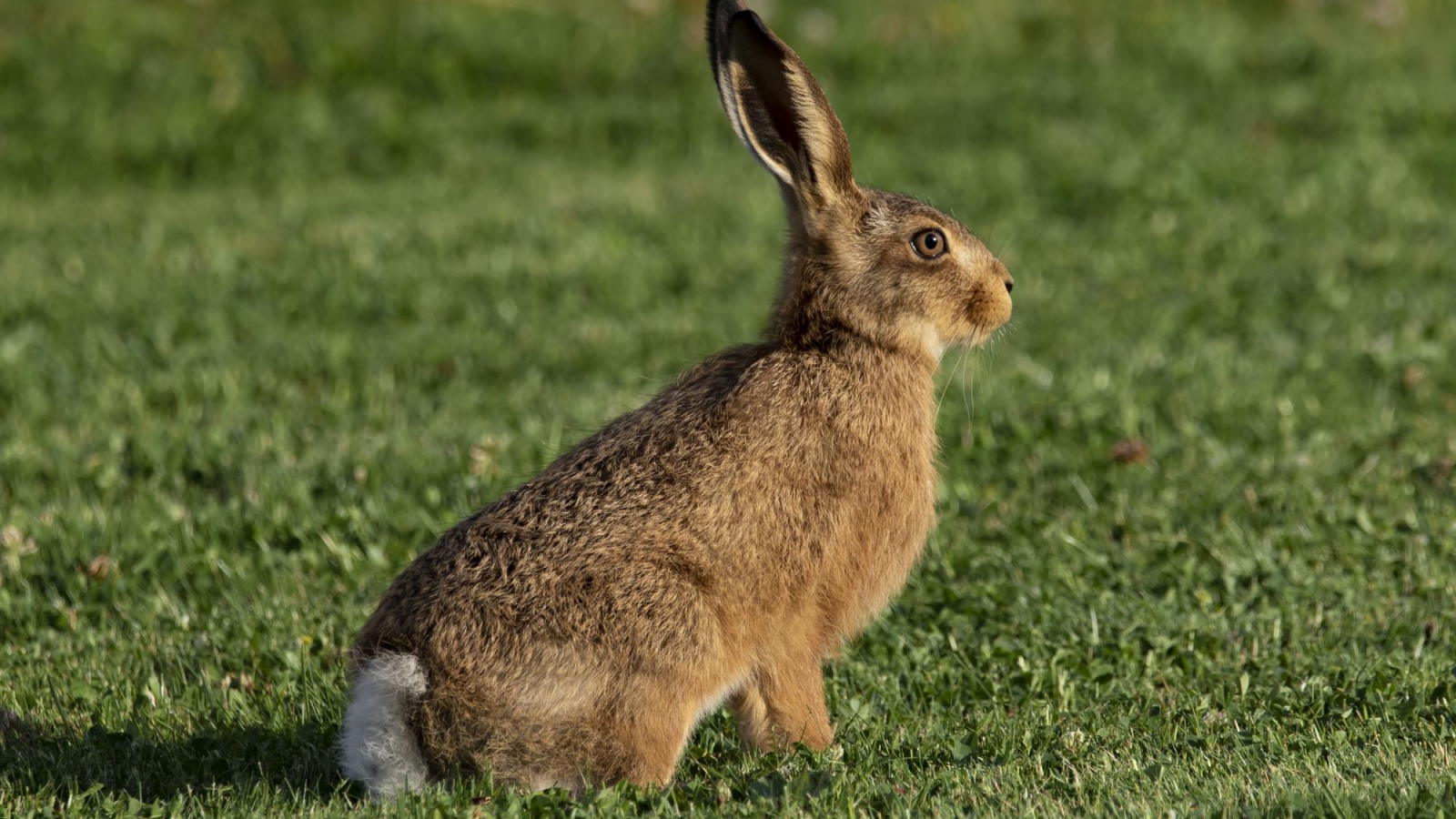 Hare vs rabbit
Where do they live?
“Hares are usually associated with open habitats such as fields and meadows. They rest in shallow depressions on the ground, sometimes called ‘forms’, rather than living in underground burrows. Rabbits are more closely associated with areas that provide plenty of cover and, in many species, live in burrows or warrens,” explains Dr Sharma.
One exception: some rabbit species, such as cottontails, do not typically use extensive burrow systems.
Hares run, rabbits hide
Their responses to danger also differ. “Hares are essentially solitary runners. When threatened, they can rely on their long, powerful hind legs to sprint across open ground. Rabbits are more often hiders and tend to dash towards vegetation, shelter or a burrow when they sense danger,” Dr Sharma says.
Story continues below this ad
This difference in behaviour is closely linked to their habitats. A hare living in open country has fewer places to hide, so speed becomes an important defence mechanism. Rabbits can take advantage of vegetation, rocks, burrows and other forms of cover.
Their fur can differ too
“Hares can show more noticeable seasonal changes in their coat, depending on the species and environment. Rabbits generally have softer grey-brown fur with less dramatic seasonal variation,” says Dr Sharma.
Their babies are very different
Perhaps one of the most striking differences appears at birth. “Hares have a gestation period of roughly 42 days, and their young, called leverets, are born relatively well developed. They are furred, have their eyes open and are mobile soon after birth,” explains Dr Sharma.
Rabbits have a shorter gestation period of about 30–31 days. Their young, known as kits, are born hairless, blind and largely helpless. They remain in nests and depend on their mother for care.
Story continues below this ad
“This difference reflects their contrasting lifestyles. A young hare needs to be capable of moving and functioning relatively quickly, while rabbit kits develop inside the protection of a nest,” Dr Sharma adds.
If you spot one outdoors, consider these clues:
* Large body + very long, often black-tipped ears + open field + no obvious burrow: likely a hare.
* Smaller, rounder body + shorter ears + near a garden, hedgerow or dense cover + tendency to retreat into a hole: likely a rabbit.
“Size, ear length, leg structure, habitat and escape behaviour together provide a much better identification than any one feature alone,” Dr Sharma says.
Explore more captivating stories about pets and animals here, and make us your daily stop for the latest from the animal kingdom.

Cash transfers alone cannot tackle the problem of educated unemployment
By Sohail Khan · 29 Sep
Amid calls for ‘pacing,’ a new Nvidia safety tool to stop AI agents from going rogue
By Sohail Khan · 29 Sep

Leave a Reply