From arranged to co-piloted: How Indian parents are joining their children’s search for love
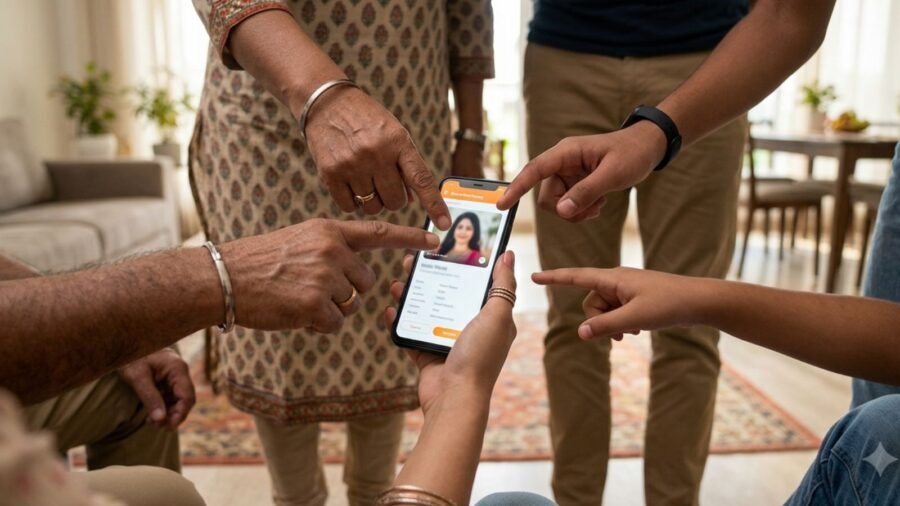
For much of the past two decades, Indian marriage has been framed as a binary choice: either two people fell in love and built a life on their own terms, or their families found a match, and the couple built a life shaped by family expectations.
But a growing number of Indian matrimony or dating apps now let parents and their children jointly manage a single account, swiping, chatting, and shortlisting matches together instead of one person handling it alone. But this shift works only because both sides are choosing to do it together. Parents aren’t forcing their way into the dating dynamic; the individual isn’t just tolerating it, but accepting it. Each side gets something out of the arrangement that solo dating didn’t give them.
According to experts, parents becoming ‘co-pilots’ is a curious contradiction in modern relationships. “Today’s young adults might enjoy much greater freedom in selecting their partners, but many are still closely tied to their families, both emotionally and practically. So, while parents may not be literally at the wheel, they can still influence the way the relationship is driven.”
Story continues below.
Subscribe to see fewer ads.
The shift
Anirban Banerjee, interim CEO, Flutrr says, “On major matrimonial platforms, the share of profiles created and managed by the individual themselves has climbed sharply over the past decade, while parent-managed profiles have fallen by a similar margin. This is not a small shift. It marks a change in who does the searching. At the same time, a majority of users, a large share of whom are women, still say that having their family involved makes the process feel less stressful, not more controlling.”
That combination is easy to miss if the only lens available is ‘independent’ versus ‘arranged’. The numbers describe a process where the person leads the search, and the family supports the decision, rather than the other way around.
This helps explain why the strict version of arranged marriage, where a child has little to no say, has been declining steadily. “Surveys tracking this over the past several years show that fully parent-directed matches have dropped meaningfully, while a hybrid model, often called joint arranged marriage, now accounts for the largest share of unions,” says Anirban. In this model, a person searches, filters, and has real conversations before presenting a match to the family for review rather than approval. The distinction matters because it changes what parents are actually doing. They are no longer the ones deciding who is right. They are doing due diligence on a decision already made emotionally.
Story continues below this ad
Why both generations are choosing to co-pilot
Dr Chandni Tugnait, psychotherapist, Gateway of Healing says, “Co-piloting doesn’t mean young Indians have lost autonomy. It means both generations found a version of dating that shares the risk and the decision fatigue, instead of leaving either person to carry all of it alone”
Here are a few reasons she suggests why both generations choose to co-pilot:
- Apps built the role: Several matrimony platforms now offer joint-use features, letting parents view matches or messages alongside the person they’re helping, rather than acting entirely on their behalf. That structural shift made shared involvement easier and more natural for families who already leaned that way.
- Swiping fatigue from dating apps: After months of matches that go nowhere, many young daters genuinely stop trusting their own judgment on apps, and start wanting someone else’s eyes on the decision. Handing a parent partial control isn’t defeat. For many, it’s a relief from decision fatigue that solo swiping never solved.
- It buys safety and peace: For many women especially, family involvement upfront reduces the risk of an unsafe match and avoids a much harder conversation later, introducing a partner the family was never consulted on. Getting buy-in early is often easier than seeking approval after the fact.
- Self-created still means supervised: Even when the individual creates their own profile, parents frequently stay closely involved anyway, reviewing conversations from just behind the screen. The appearance of independence often hides an arrangement both sides have quietly agreed to.
 Parents and their adult children are increasingly exploring matrimonial matches together, creating a new model of shared partner search
When it gets problematic
Parents offer perspective, emotional support and practical help, especially at major life transitions. The trouble starts when help becomes interference in decisions which are really the couple’s own. Citing an example, Damini Grover, Counselling Psychologist, author and life coach, says, “If one partner immediately starts to discuss every disagreement in detail with their parents, the conflict is no longer between two people. The couple may work it out, but the parent can still carry resentment or judgment toward the partner. Similarly, if the couple is repeatedly asked to seek parental approval for money, living arrangements, holidays or parenting decisions, they may find it hard to develop their own identity as a unit.”
It is also a key difference between seeking advice and outsourcing decisions.
Story continues below this ad
“Emotional adulthood doesn’t require that you cut your parents out of your relationship. This means being able to hear what they have to say without automatically allowing it to determine your choices,” says Damini.
Experts say that a healthy relationship with parents requires both connection and boundaries. Parents can be helpful passengers on the trip, but if a couple always needs a third person to work out conflicts, make decisions, or validate choices, they might never learn to navigate the relationship on their own.

Letters to The Editor — September 17, 2026
By Sohail Khan · 16 Sep
China’s strategy amid West Asia’s security realignment
By Sohail Khan · 16 Sep
81-year-old grandmother travels to Alaska: Her healthy-ageing advice
By Sohail Khan · 16 Sep
Leave a Reply