US Fed Rate Hike: Why Wall Street expects more hikes and what it means for stocks
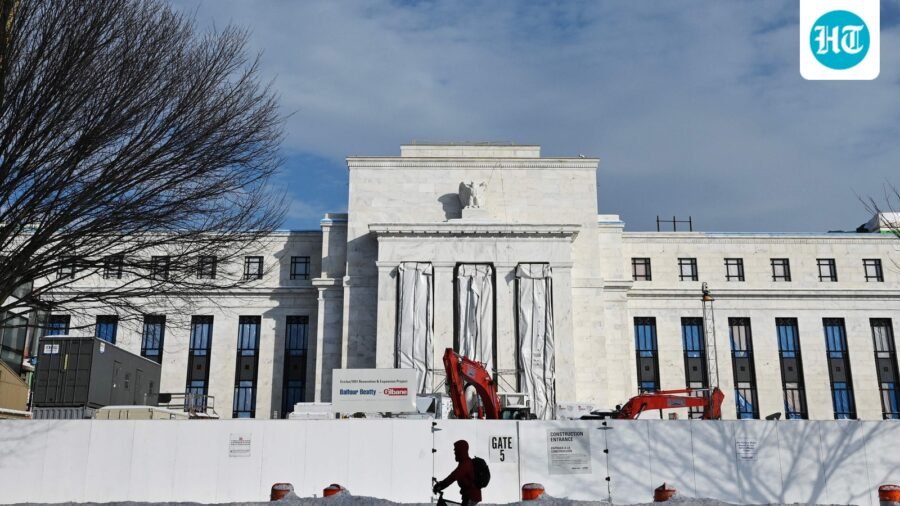
US Fed Rate Hike: Wall Street expects higher rates as inflation and oil prices add pressure on the Fed.
Published on: Sep 16, 2026, 23:43:04 IST
Prefer HTon Google
Share via
Copy link
Wall Street now expects the Federal Reserve to raise interest rates on Wednesday. Traders are giving the Fed more than a 90% chance of a 0.25 percentage-point rate hike, according to the CME Group’s FedWatch tool. If the hike happens, the federal funds target range would move to 3.75%-4%.
Market expectations have changed significantly in just one month. About a month ago, traders saw only a 36% chance of a rate hike. At that time, investors were expecting softer inflation data, while Fed Chair Kevin Warsh had not committed to a more hawkish path, keeping expectations for tighter policy under control.
Why Fed rate hike is expected
Warsh’s comments at the Jackson Hole symposium helped change the market view. His remarks at the Fed’s annual meeting in Jackson Hole, Wyoming, were followed by a shift toward expectations of higher rates. CNBC reported that Warsh’s August 28 comments helped turn the tide in rate-hike expectations.
Deep Dive
Powered ByAsk
Fresh inflation data added to the case for higher rates. New inflation numbers were more worrying for investors, while the US labour market also showed signs of becoming stronger. CNBC reported that the latest inflation data and a firming labour market helped strengthen expectations for a Fed hike.
Oil prices add inflation pressure
Higher oil prices are creating another inflation problem for the Fed. Crude oil has moved back above $100 a barrel as the Iran conflict affects the market. More expensive oil can increase costs across the economy and make it harder for the Fed to bring inflation down. CNBC linked the recent rise in oil prices to additional pressure on the central bank to act.
Morgan Stanley has also changed its forecast for Fed policy. The bank previously expected no more rate hikes this year, but it now expects two hikes. Morgan Stanley expects one hike this week and another in December. Morgan Stanley economists said the change was partly based on Warsh’s public comments, higher oil prices, inflation linked to artificial intelligence and the broader market shift toward expecting rate hikes.
Morgan Stanley said the Fed could risk losing credibility if it does not raise rates. Michael Gapen, chief US economist at Morgan Stanley, said not hiking could increase concerns about the Fed’s credibility and push up longer-term risk premiums. Gapen made the comment in a Morgan Stanley note on Monday.
Investors will also closely watch the Fed’s new economic projections. Along with the rate decision, the central bank is updating its Summary of Economic Projections. The document will give fresh forecasts for inflation, unemployment and gross domestic product (GDP). The Federal Reserve’s projections also include the famous dot plot, which shows where Fed officials expect interest rates to go.
What Fed hike means for stocks
Stocks could initially fall after the Fed raises rates. HSBC expects another hike in December and said stocks may come under pressure at first. However, the bank does not expect that weakness to necessarily continue for a long period. HSBC head of Americas equity strategy Nicole Inui wrote this in a Tuesday note.
Past rate-hike cycles show that the S&P 500 often struggles at first and then recovers. HSBC said the S&P 500 typically dips initially during rate-hike cycles before gradually recovering. In smaller rate-normalisation cycles such as 1997 and 2016, stock-market performance generally improved around three to six months after the first hike. HSBC’s analysis cited historical rate-hike cycles.
Why tech stocks may fall
Technology stocks have historically been more sensitive to rate hikes. DataTrek Research said technology stocks generally take a hit after the Fed starts raising rates, although the weakness has often been temporary. The Nasdaq is made up of about 60% technology stocks, making it particularly sensitive to changes in interest rates. DataTrek Research provided the historical analysis.
The Nasdaq fell in the month after a rate hike in five of the past six hiking cycles. In four of those five cycles, the decline became worse three months after the first hike. However, the picture improved over a longer period: the Nasdaq was higher six months later in three of those cases. DataTrek Research analysed the Nasdaq’s performance across previous rate-hiking cycles.
DataTrek is warning that the current combination of high oil prices and heavy AI spending could create extra risks for tech stocks. Nicholas Colas, co-founder of DataTrek Research, said elevated oil prices could hurt economic growth, affect the cash flows of major cloud companies and reduce confidence in AI capital spending. Colas made the comments in a DataTrek note.
S&P 500 Fed day losses
The stock market has already had a difficult pattern on Fed decision days this year. The S&P 500 has fallen on each of the five Fed decision days in 2026, with an average decline of about 1.5% on those sessions. Bespoke Investment Group highlighted the streak.
The key focus for investors is therefore not just today’s expected 0.25-point hike, but what comes next. Markets are already pricing in the possibility of another increase in December, while investors will closely examine the Fed’s new inflation, unemployment, GDP and interest-rate projections for clues about the future path of policy. HSBC, Morgan Stanley and the CME FedWatch data all point to increased market attention on the path of rates beyond this week.
See Less

Kilmar Ábrego Garcia is set to be back in court as he battles deportation to Liberia
By Sohail Khan · 7 Oct
Former German spy chief arrested for attempted treason, obtaining state secrets
By Sohail Khan · 7 Oct