CCTV is no cure for weak drug regulation
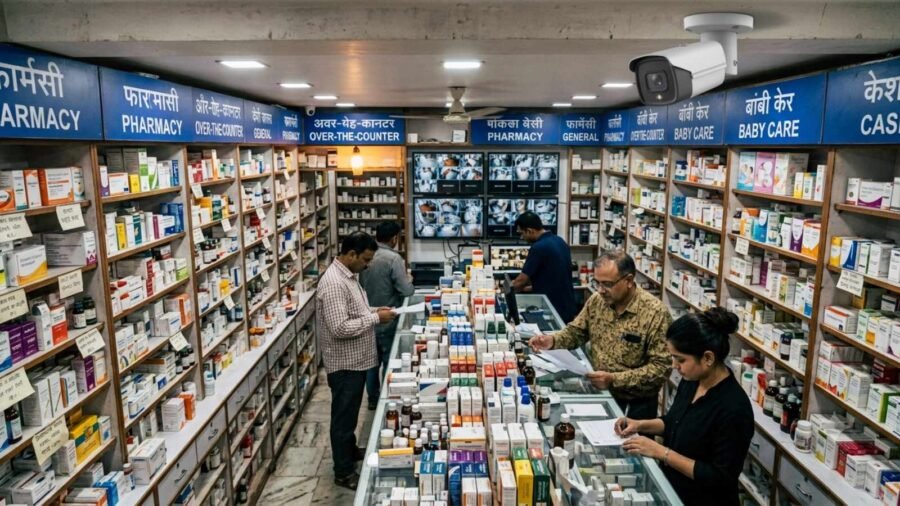
The Union Ministry of Health and Family Welfare has started a process to allow the sale of prescription drugs only under CCTV surveillance across the country by early 2027. On the face of it, this may look like an innovative solution to a long-pending problem. But it also opens a Pandora’s box.
There are obvious advantages. A camera can establish whether a prescription was presented, whether a particular medicine was handed over and when a transaction took place. It could help drug inspectors investigate complaints against pharmacies repeatedly selling prescription medicines without prescriptions. For Schedule H1 and X medicines, a stronger audit trail could help prevent diversion and misuse. The government’s intention is clear: Use a relatively simple technology to make prescription-drug enforcement more transparent and accountable.
Advertisement
But this is precisely where the conversation should become more uncomfortable. A pharmacy is not just another retail outlet.
A camera at a chemist can record somebody buying an antidepressant, an anti-epileptic, an HIV medicine, a fertility drug, an abortion pill, medication for sexual health, cancer treatment, psychiatric drugs or medicines for an infectious disease. The combination of a face, pharmacy, time and transaction can reveal an extraordinary amount about that person’s private life.
If the intention is specifically to tackle diversion and illegal sale of high-risk medicines, why should every prescription transaction become a subject of video surveillance? A person buying an antibiotic, an antihypertensive or an anti-diabetic medicine is not necessarily involved in a high-risk transaction merely because a prescription is required.
Advertisement
There is another limitation. A camera cannot tell whether a prescription is genuine. It can show that a piece of paper was handed across a counter. CCTV may document a transaction without solving the underlying regulatory problem.
Then comes privacy. Consider what three months of footage could mean. A person visits the same pharmacy every month. Their face is recorded each time. The pharmacy knows the medicine. The date and time are captured. If such recordings can be accessed, copied, linked to other databases or processed through facial-recognition systems, the footage becomes a potential map of a person’s health-related behaviour.
This raises questions the government needs to answer before the proposal becomes law.
Who can access the footage? Can a drug inspector access it? Can the police demand it? Can another government department obtain it? Can it be used for purposes unrelated to drug regulation? Can a citizen find out whether footage concerning them has been accessed?
The Supreme Court’s privacy jurisprudence has emphasised legality, necessity and proportionality when fundamental rights are restricted. The government needs to demonstrate not simply that CCTV might be useful, but that blanket surveillance of prescription transactions is necessary to achieve the regulatory objective and that a less intrusive method would not work equally well.
India already has prescription requirements, registers, licensing conditions, inspections and specific rules governing Schedule H, H1 and X medicines. If illegal sales are occurring, the first question should be whether the existing regulatory machinery is adequately inspecting pharmacies and acting against violations.
There is a danger in confusing the collection of more data with better regulation. Before the camera enters the chemist, the government needs to answer a more fundamental question: Who will be watching the watcher?
Shahul is the author of Heavy Metal (2023) and Vaccine Nation (2025). His latest title is The Silent Syndicate: How Big Finance is Destroying India’s Healthcare


ECINET, ERONET: What are the Election Commission’s electoral roll systems?
By Sohail Khan · 29 Sep

Leave a Reply