104 and walking again: What made this centenarian a candidate for double knee replacement
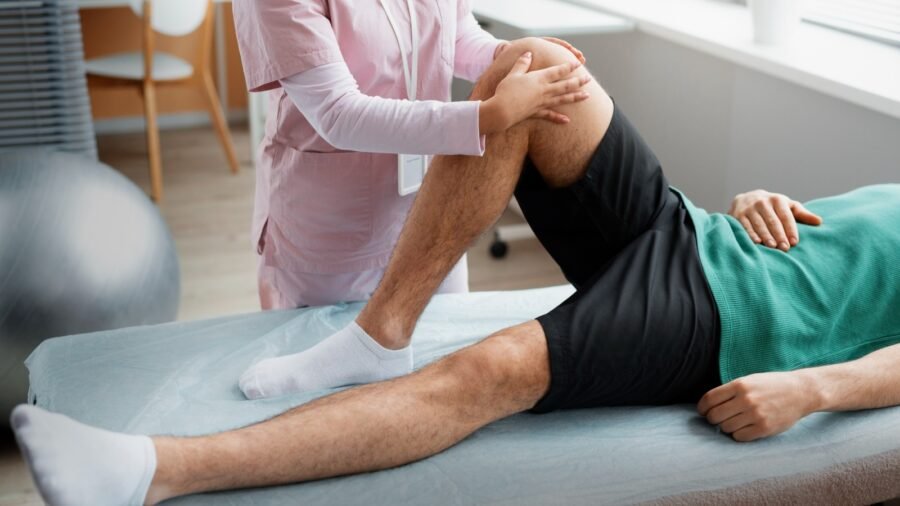
Orthopaedic Dr Sanjeev Jain once performed a double joint surgery on a 104-year-old Saudi man. Sharing details, he said, “You won’t believe, a patient came to me 3-4 years ago from Saudi Arabia. The patient was brought in on a bed, actually. Both his sons wanted their father’s knees to be pain-free in bed; even if he didn’t walk, they were okay with the surgery.
“His bones were so strong that I was surprised that I was replacing both knees of a 104-year-old man in a single day. And that patient went back to Saudi while walking,” he told CurlyTales.
The case raises an important question: Can someone in their 90s or even 100s safely undergo a major procedure such as bilateral knee replacement? According to Dr Gazanfar Patel, Senior Consultant Orthopaedic Minimal Invasive/Robotic Joint Replacement and Sports Medicine Specialist, Wockhardt Hospitals, Mumbai Central, the answer depends on much more than age.
Story continues below.
Subscribe to see fewer ads.
Age alone does not determine surgical fitness
“Age by itself should not be the deciding factor for major surgery,” said Dr Patel. “In a very elderly patient, we look at the person’s overall physiological health and functional status rather than simply the number of years they have lived.”
Before considering bilateral knee replacement, doctors would assess several factors, including heart and lung function, kidney health, diabetes and blood pressure control, nutritional status, mobility and cognitive function. They would also consider whether the patient is likely to cope with rehabilitation after surgery.
 When is a knee surgery needed (Source: Magnific)
Frailty matters
“Frailty is particularly important,” Dr Patel explained. “A 90- or 100-year-old who is independent, mentally alert, nutritionally well and physically active may tolerate surgery better than a much younger person with multiple uncontrolled health conditions.” This means two people of exactly the same age could have very different levels of surgical risk.
Story continues below this ad
Why bilateral knee replacement needs careful consideration
“For bilateral replacement, the surgical team also has to consider whether doing both knees together is appropriate or whether staging the procedures would be safer,” Dr Patel said.
The decision therefore has to be individualised. “A detailed pre-operative assessment involving the orthopaedic, anaesthesia and medical teams is essential,” he added.
How does bone strength affect knee replacement?
Dr Jain’s description of the 104-year-old patient’s “very strong” bones is also relevant. Bone quality can influence how well a knee implant is supported.
“Good bone quality is a major advantage in knee replacement, particularly in very elderly patients,” Dr Patel said. “Strong bone provides better support for the implant and can reduce concerns such as fractures around the implant or poor fixation.”
Story continues below this ad
However, getting older does not necessarily mean that everyone will experience the same degree of bone loss. “Bone health does not necessarily deteriorate to the same degree in everyone with advancing age,” he said.
Can bone health be maintained into old age?
Dr Patel recommends adequate calcium and vitamin D, regular weight-bearing or resistance exercise, maintaining muscle strength, consuming enough protein and avoiding smoking.
For older adults, screening for osteoporosis can also be important, particularly when there are risk factors such as previous fractures or significant loss of height.
“Even at an advanced age, good bone density and muscle strength can contribute to better surgical recovery,” Dr Patel said.
Story continues below this ad

Diljit Dosanjh has made Punjabiness a global expression of pride
By Sohail Khan · 19 Sep
At Asiad, all that glitters isn’t gold
By Sohail Khan · 19 Sep

Leave a Reply