Pratap Bhanu Mehta writes | Graham Bill is America confusing its power with virtue — yet again
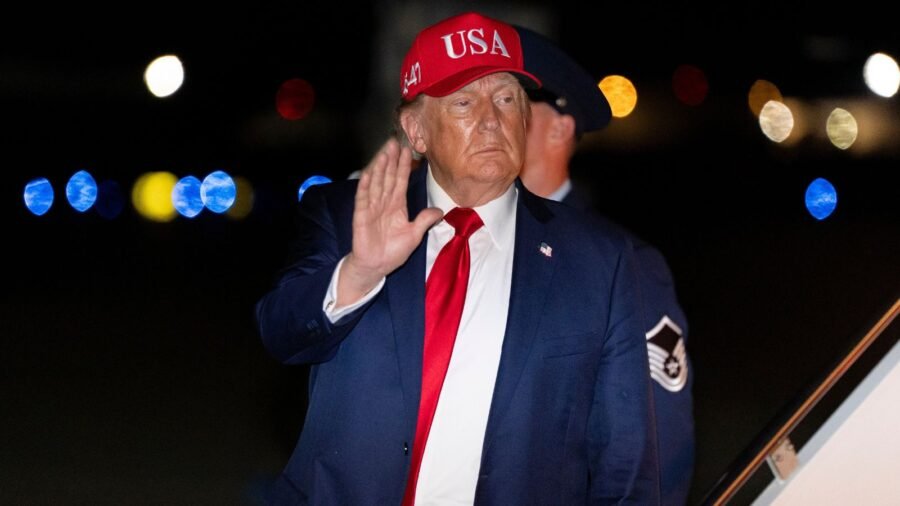
The Graham Bill, targeting India and China for oil purchases from Russia, is a grotesque exercise in selectively applying international morality. The problem with the Bill is not just that it targets third countries with sanctions. It is that it once again enacts American imperial privilege. Even if you believe that Russia is the aggressor in Ukraine and the mistakes of the West do not justify, in any measure, Russia’s casus belli; even if you have no sympathy for Iran’s regime; even if you think China and India should play a different and more proactive role in ending the wars in Russia and Ukraine, you should find the Graham Bill obscene.
The most disconcerting part of the Bill is what it puts on full display about American democracy. The war on Iran is unpopular in the US. Criticism of Donald Trump’s conduct of the war is quite vocal. The war has caused immeasurable disruption to the global economic system. Its secondary security and political effects are playing out, plunging an entire region into instability and conflict. Yet, the American political system does not seem to have the means to hold its own President accountable for these consequences. It is a pathetic attempt to convert the failure of democratic accountability at home into a form of imperial privilege over the rest of the world.
Advertisement
The fact that this is being done with bipartisan consensus is an indictment of American democracy. The US Congress sees it as fit to discipline other countries, who were never consulted about the conduct of war, more than it does to hold its own executive accountable. Congressional abdication in the conduct of the Iran war has been apparent from day one. Trump, the individual, may be an aberration. But the caprice and conceit of executive power in the US is not. America has been conducting wars by the nihilism of executive fiat. Congress just strengthened it. In doing so, it also put a question mark on its own representative status, in letting down the American people. By externalising the blame for the war in Ukraine onto India and China without corresponding pressure on Trump to end at least the one war he can easily end — Iran — American democracy has dealt a blow to itself.
The US, in contravention of all international decency, claims the authority to punish any third country that had no role in starting the war, that is not consulted in the conduct of the war, and bears the collateral costs of the war. But it leaves the US and its own conduct of actual war outside of the framework of any accountability. The Bill seeks to preserve exemptions for the US’s imports of low-enriched uranium, as if the US cannot bear the cost of those import restrictions, while poor countries around the world are expected to put up with rising energy costs. There is a kind of shamelessness here that is astonishing. But the Europeans have been equally selective in where they seek to apply principles of international law, privileging the war in Ukraine over other wars, including Iran.
Senator J William Fulbright had made famous the phrase “Arrogance of Power” as a characterisation of American foreign policy. The arrogance was at many different levels. America confused its power with its own virtue. American power always acts as if it is self-legitimating; only others need to account for themselves. American power can carve out exceptions for itself. And its excessive pride will never prompt it to move to self-restraint or even admit defeat for the sake of peace. American power also translates into epistemic delusions about how the rest of the world actually functions.
Advertisement
The Graham Bill is nothing but a legislative imprimatur on this arrogance of power. But it is also deeply delusional. It displays the classic mistake of thinking that America can, in the final analysis, determine the political choices of large countries. Ukraine and Iran have shown why the practice of sovereignty still matters. The US will not achieve global stability by arm-twisting major powers like China and India through the threat of sanctions. If anything, Congress should be censuring Trump for his failures. It would also do well to remember Fulbright’s words: “When we violate the law ourselves, whatever short-term advantage may be gained, we are obviously encouraging others to violate the law; we thus encourage disorder and instability and thereby do incalculable damage to our own long-term interests.”
This column has argued that the initial strategy of trying to placate America was a big mistake. A closer America-India relationship is a desirable outcome. But to fail to learn the lessons about the imperial and arbitrary conduct of the American executive, now implicitly ratified by Congress, was delusional. This is something the American lobby in India fails to acknowledge. It pathologises criticism of the American state as anger, not as a matter of principle. More deeply, even in our response, we have failed to articulate the principles at stake. We have said ad nauseam, at a high level of abstraction, that this is not the era of war. In the Ministry of External Affairs’ response, we have drawn the bright line that the well-being of 1.4 billion people cannot be held hostage to American whims. But our response is weakened by two things. The first is a strong counter-discourse that we need to keep offering concessions to stay in the game in Washington and calibrate our position to not draw Trump’s ire. The second is the inability to plainly name the violation of principles at stake in all these wars — Ukraine, Gaza, now in Iran, and the wider region.
Strategic autonomy requires having to go beyond a pinched-up and narrow conception of our interests. Placating the US with tactical accommodation will be a sign of weakness. We should not enact a weaker version of the narcissism of American power than Congress has just confirmed.
The writer is contributing editor,

Diljit Dosanjh has made Punjabiness a global expression of pride
By Sohail Khan · 19 Sep
At Asiad, all that glitters isn’t gold
By Sohail Khan · 19 Sep
40 Years Ago, Rajiv Gandhi said no to Gorkhaland
By Sohail Khan · 19 Sep
Leave a Reply