Unimpeded trade needs IPMDA as the answer
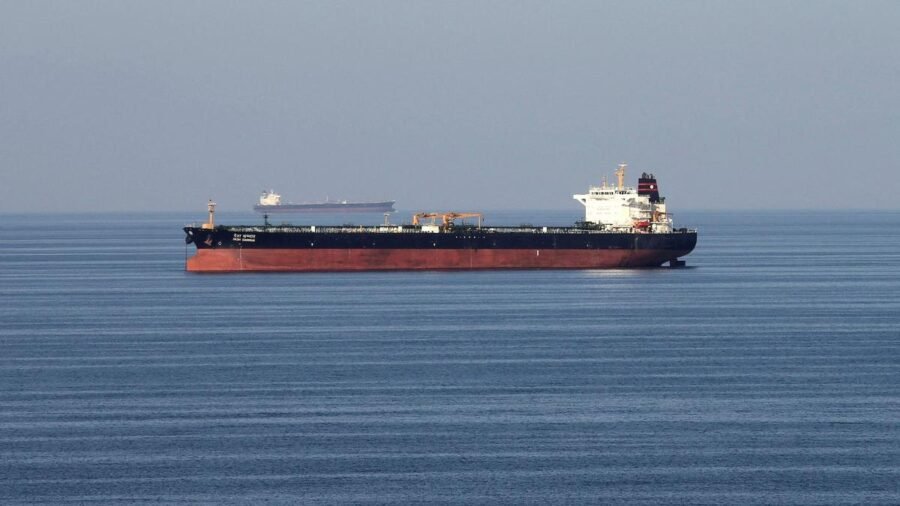
Despite the diplomatic difficulties in United States-India relations due to mounting sanctions, it is increasingly clear that Washington needs regional powers such as New Delhi to support common global interests and values. Amid the U.S. visa issues for Indians and the energy crisis stemming from the war in West Asia, Indian and U.S. Foreign and Commerce Ministers have underscored the need for reciprocal trade and energy agreements. While the prime objectives in the present relations are clear, the strategy needs renewed focus on maritime domain awareness (MDA), which is crucial for the ‘unimpeded trade’ and has been unequivocally agreed to by both sides.
The Indo-Pacific is a trade artery
The West Asia crisis has demonstrated that the Indo-Pacific is not only a crucial geostrategic location for India and the U.S. but also for the rest of the world. Geoeconomically, it is the circulatory system of the global economy, a vast maritime corridor through which nearly $7 trillion in trade flows annually, connecting energy producers in the Persian Gulf to manufacturing hubs in East Asia and consumer markets across the Americas. Some of the world’s busiest maritime chokepoints, the Straits of Malacca, the Lombok, and the Sunda, Hormuz, Bab-al-Mandeb, and Mozambique channels sit squarely within its waters, crucial for both energy and container supplies. Yet, this indispensable artery of global commerce is increasingly being threatened by a convergence of state-sponsored coercion, illegal maritime activity, and a dangerous surveillance gap — geographically, jurisdictionally and institutionally — that even the U.S. is finding challenging to address alone.
The Indo-Pacific Partnership for Maritime Domain Awareness (IPMDA) launched under the Quad framework in 2022, represents the most credible multilateral architecture yet devised to address this problem. It is a practical, technology-based mechanism for sharing near-real-time maritime data across partner nations to detect, deter, and respond to threats to the free flow of trade. And its full operationalisation is anchored in robust U.S.-India cooperation under Quad (India, Australia, Japan, the U.S.), which is now a strategic imperative. At the technological level, in 2025, India has already purchased SeaVision technology from the U.S., which includes software enhancements, training, and logistical support necessary for mutual MDA cooperation.
A surveillance deficit
The Indo-Pacific suffers from a persistent and widening maritime surveillance deficit. As a multilayered technological assimilation, MDA provides an effective understanding of the maritime domain and its impacts on security, safety, the economy, and the environment.
Across the broader waters of the Indian Ocean, which connect to the South China Sea and the Western Pacific, hundreds of vessels routinely disable their Automatic Identification System (AIS) transponders — a phenomenon analysts call “going dark” — likely to evade sanctions, conceal cargo, and cause safety and environmental threats. Such vessels may also be engaged in smuggling or ship-to-ship transfers of contraband. Many smaller fishing vessels fall outside mandatory AIS transponder carriage requirements, and depending on the applicable national and international regulatory framework, they are also found engaged in illegal fishing practices in other nations’ waters or even at high seas. This depletes regional stocks and undermines the food security of littoral states.
Furthermore, as witnessed in recent times, non-state as well as state-affiliated actors are conducting grey-zone operations designed to intimidate and coerce, while escaping any legal or conventional military response. The Quad’s Indo-Pacific Maritime Surveillance Collaboration 2026 (IPMSC), under the IPMDA architecture, is as elegant in its pragmatism as in its cooperation, based on a shared understanding that no country can monitor the vast oceans alone. By integrating data from commercial satellite-based radio-frequency monitoring, radar fusion, and existing partner-nation sensor networks, and sharing it with like-minded partners, it creates a layered, near-continuous picture of maritime activities.
The beneficiaries
For the U.S., regional cooperation in the Indian Ocean is essential if it aims to focus on its immediate neighbourhood in the Pacific and the Atlantic. For India, its Information Fusion Centre-Indian Ocean Region (IFC-IOR), established in Gurugram in 2018, is a natural institutional complement to IPMDA’s regional hub architecture. IPMDA is precisely the kind of arrangement that respects India’s sovereignty while amplifying its reach. With the basics already in place, U.S.-India cooperation is necessary but not sufficient.
The full potential of IPMDA/IPMSC will be realised only through the active participation of existing Quad partners as well as the Association of Southeast Asian Nations (ASEAN) partner states, the Pacific Island nations that constitute critical maritime corridors. The European Union, which has upheld the importance of free and open trade since the Hormuz crisis, signals an appetite for engagement that Washington and New Delhi must cultivate.
The contributions and benefits of IPMDA/IPMSC for smaller, capacity-constrained partners, such as Bangladesh, the Maldives, the Seychelles, Sri Lanka, and Fiji, are significant. These countries have independent surveillance infrastructure, but their waters are frequently exploited because these systems remain ineffective at addressing maritime crimes beyond their jurisdictions. This provides an opportunity for collaboration.
The strategic environment in the Indo-Pacific has systematically dismantled the assumption that open trade is unilaterally sustainable. The freedom of navigation upon which global supply chains depend is increasingly contested, and such contestation, unrebutted, has become precedent in recent years. In a region where coercion has increasingly become the currency of power, transparency must present itself as a form of deterrence.
Pooja Bhatt teaches maritime geopolitics at the O.P. Jindal Global University
Sea level rise: Can a country retain its statehood even if it loses its territory?
By Sohail Khan · 28 Sep
No fuel without PUC in Delhi: What this certificate says about your vehicle
By Sohail Khan · 28 Sep