The Jat, non-Jat fault line in Haryana
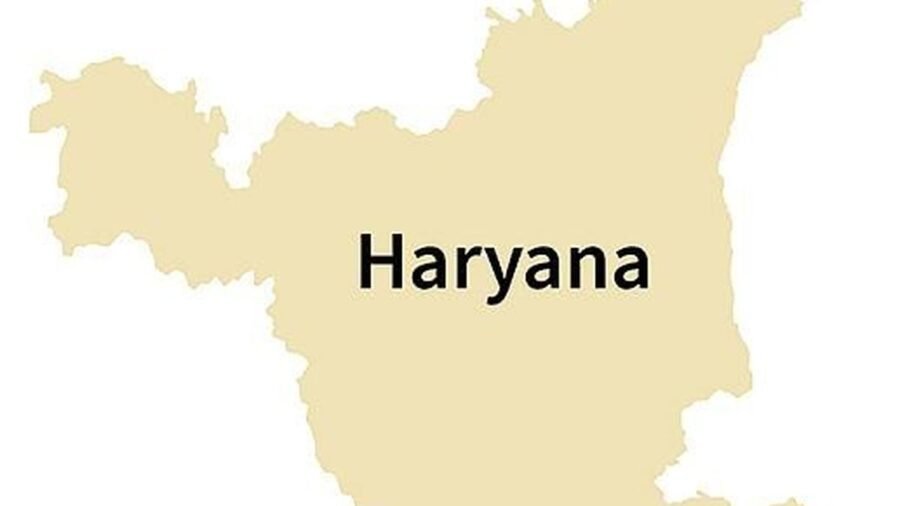
The controversy over Haryana Bharatiya Janata Party (BJP) president Archana Gupta’s reference to a “vishesh varg” (particular class) in the context of government jobs has once again brought the State’s deeply entrenched Jat versus non-Jat political fault line to the centre of public debate.
At a press conference in Panipat on August 11, Ms. Gupta said that the previous Congress and Indian National Lok Dal (INLD) administrations facilitated government appointments for a “particular class”. Opposition parties immediately construed the remark as a reference to Jats as both governments were headed by Jat Chief Ministers. They accused the BJP of deliberately reviving the Jat, non-Jat divide for political consolidation.
The Jat, non-Jat question
The BJP, which formed a government on its own in Haryana for the first time in 2014 and secured a historic third consecutive term in 2024, has faced similar allegations for much of the past decade. Its critics contend that the party has sought to consolidate non-Jat voters — particularly Backward Classes (BCs) and upper castes — against the State’s influential Jat community.
Ms. Gupta’s subsequent clarification attempted to shift the focus from caste to the alleged role of middlemen in government recruitment. She said the “vishesh varg” remark referred not to any caste but to intermediaries who, during the Congress and INLD governments, allegedly helped candidates secure jobs through recommendations and bribes. According to her, such middlemen have been rendered “jobless” under the BJP government, with recruitment now being based on merit and not recommendations.
The clarification, however, did little to contain the controversy. The Congress and the two Chautala-led parties — the Jannayak Janta Party and the INLD — have sought to portray the BJP as anti-Jat and anti-farmer. The INLD has been particularly aggressive. Party convenor Sampat Singh approached the Hisar police seeking registration of an FIR against Ms. Gupta under provisions of the Bharatiya Nyaya Sanhita relating to public tranquillity and caste-based enmity. Further, INLD president Abhay Chautala mocked Ms. Gupta’s assertion that she was a daughter of the “Jat Samaj”.
The exchange is revealing of the political sensitivity surrounding caste in Haryana. Ms. Gupta’s attempt to underline her Jat lineage can be read as an indication that, despite the BJP’s gains among non-Jat communities, the party cannot afford to be seen as detached from the Jat community, particularly in rural and farming constituencies.
BJP’s evolution in the State
The BJP’s own evolution in Haryana helps explain this sensitivity. After coming to power in 2014, the party initially sought to project an inclusive Haryana identity through slogans such as “Haryana Ek, Haryanvi Ek” (One Haryana, One Haryanvi). It also appointed Jat leaders Subhash Barala and Om Prakash Dhankar successively as State party presidents to broaden its appeal. Over time, however, the BJP increasingly consolidated its support among non-Jat communities, with the shift becoming more pronounced ahead of the 2024 Assembly election. Meanwhile, the Congress and the Chautala-led parties retained a stronger base among Jats. This divergence has made the Jat, non-Jat divide a visible feature of Haryana’s electoral politics.
The jobs controversy has an additional dimension because government employment carries unusual political and socio-economic weight in Haryana. The BJP has repeatedly highlighted its record of selection on merit as an important achievement. The Opposition, however, has sought to turn the same issue against the government by pointing toward allegations of paper leaks, recruitment-related controversies and unemployment among young people. In doing so, it is attempting to move the debate away from BJP’s claim of transparent recruitment and towards the question of whether the State has created sufficient job opportunities.
The controversy therefore exposes a larger contradiction in Haryana politics. The BJP may continue to benefit electorally from a broad non-Jat coalition, but it cannot ignore the political weight of the Jat community. At the same time, the Opposition has every incentive to keep the binary alive, particularly when it can connect caste identity with questions of farmers and government employment.

How South Africa’s new exchangeable pitches could shape the 2027 Cricket World Cup
By Sohail Khan · 28 Sep
The mindset shift Virat Kohli is talking about: ‘Promised myself…to play more freely’
By Sohail Khan · 28 Sep
Safe and healthy workplace as a legal right: Does the OSH code deliver?
By Sohail Khan · 28 Sep