Rajinikanth, a secret Chennai park, and a Gandhi impersonator
The best stories in journalism are not necessarily the ones that begin with a strong pitch, or take hours of research and painstaking reporting; sometimes, they are the ones that a reporter simply discovers along the way.
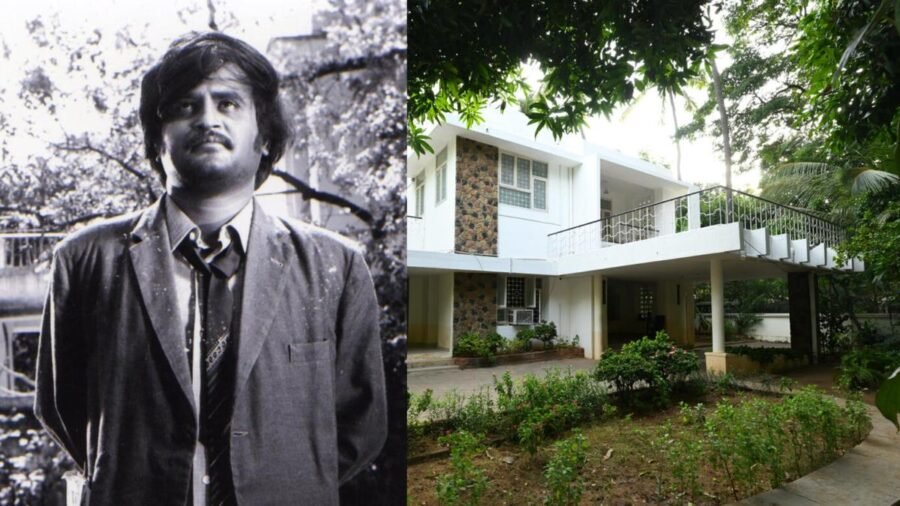
Recently, I challenged myself to find the place where actor Rajinikanth had shot his first film, Apoorva Raagangal, in 1975. Tamil cinema fans will remember the iconic shot of the newcomer pushing open a gate and striding into a house — almost as if announcing his arrival in filmdom.
I was determined to find this gate and the house.
Armed with a few clues from old-timers, I managed to find it at a dead-end street in a quiet Adyar neighbourhood. The gate had changed, but the house was spectacularly intact, almost exactly as it had appeared in the old Tamil film starring Rajinikanth and Kamal Haasan. We spoke to the owners and shot a video in which I mimicked the way Rajinikanth strode in, standing at the exact same place.
Rajinikanth's 'Apoorva Raagangal’ house
50 years of Rajinikanth: Inside the Adyar house where the Superstar’s debut, ‘Apoorva Raagangal’, was shot
Story done, I was ready to head out when I chanced upon a small gate on the opposite side. It looked like the entrance to a park, but seemed deserted. Curious, I walked in, only to discover a walk-through park along the Adyar river. It was one of the most beautiful sights I had seen in Chennai, a city I have lived in for over four decades.
In some strange way, the wooded trail and quiet pathway felt like they belonged to me. Ever since this discovery, I’ve dragged along all my favourite people to experience it and take a stroll. I wrote about it too, while refusing to divulge the exact location lest it become too crowded.
Another time, a visit to a popular landmark led me to a story I wasn’t looking for. On a boring weekend afternoon, after a Sunday nap, my daughter pestered me to take her out. We decided to head to the Marina Beach for some fresh air and to try our hand at balloon shooting. As we strolled towards the sea, something odd caught my attention: a man dressed as Mahatma Gandhi, his body covered in silver paint, standing completely still. He would occasionally wave at children, but otherwise he looked like a statue. He had a box in front of him and even a QR code stuck to his trousers for those who preferred digital payments.
I asked him for his number and he mumbled something in Telugu. Days and many conversations later, with the help of a translator, I wrote about this man from Khammam in Telangana who dresses as Gandhi.
He said with regret that people were forgetting Gandhi and this was his way of reminding them about the father of the nation. This was also one way in which he was saving up for his daughter’s wedding.
The same happened in Varanasi, where a casual stroll along Assi Ghat led me to a unique training ground for gusthi wrestlers. Before long, another story fell into place: I found that many young boys and girls go to the ground for strength training and learn gusthi in order to participate in local tournaments. Varanasi may be known for its spirituality, but physical fitness too is deeply woven into its culture.
One of the cardinal rules of life, and perhaps even more so in journalism, is to be curious, not judgmental. Curiosity is often the starting point for stories that reporters never set out to find.
As a journalist, it’s not always about finding a story; sometimes, it’s about allowing the story to find you.

Light on truth: on the Tamil Nadu G.O. and RTI
By Sohail Khan · 29 Sep
Tackling food loss and waste — India’s opportunity
By Sohail Khan · 28 Sep
Revisiting the farmer question
By Sohail Khan · 28 Sep