‘My skin has not always been like this’: Mira Kapoor recalls battle with post-makeup acne

Mira Kapoor candidly confesses that she has struggled with post-makeup acne for years: a few hours of glam that leaves weeks of acne, congestion and the dreadful marks in its wake. Sharing real pictures of post-shoot and post-event days, the entrepreneur detailed her experience with post-makeup breakouts:
‘My skin has not always been like this. It’s actually very sensitive to lots of different ingredients, which causes my skin to get congested very easily. So, even when I’m going for an event or a shoot, I’m just dreading the next three or four days because something is going to pop up,” Kapoor shared in her latest Instagram video. “And then it takes weeks to bring the acne down, to get your skin feeling back to normal again. That is what happens with conventional makeup. It ruins your skin barrier,” she further elaborated.
According to Dr Swetha Sridhar, assistant professor, Dermatology Department at Bowring Hospitals, adult-onset acne is surprisingly common, especially in women after age 25. But she believes that makeup itself isn’t the villain; pore-clogging formulas and poor removal are.
“Using non-comedogenic, fragrance-free products and double-cleansing before bed can help reduce flare-ups,” she said. When it comes to practical steps, Dr Sridhar suggested managing stress, maintaining a balanced diet low in refined carbs, avoiding picking at pimples, and sticking to a gentle skincare routine with actives like salicylic acid or niacinamide. Consistency and not drastic elimination work best, she added.
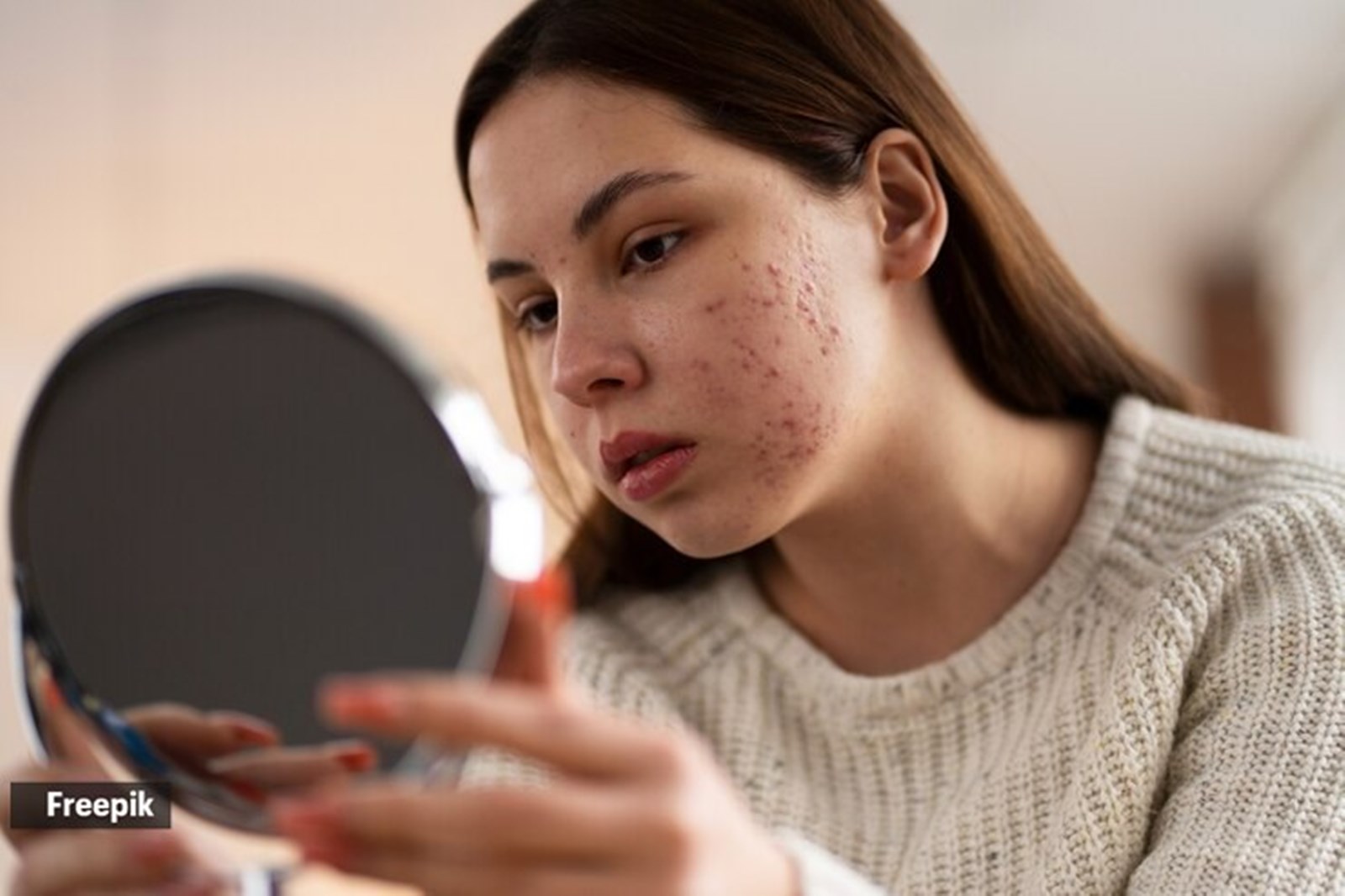 Persistent inflammation damages skin’s collagen and can leave permanent scars. (Freepik)
What are some other triggers of acne?
Dr Sridhar said hormonal fluctuations play the biggest role — androgens (male-type hormones present in both sexes) can stimulate oil or sebum production, clogging pores and feeding acne-causing bacteria. “This can happen during the menstrual cycle, pregnancy, post-partum, or perimenopause. Even stress raises cortisol, which indirectly boosts androgen activity.”
Lifestyle factors also contribute to the mix. Dr Sridhar elaborated that high stress, poor sleep, certain medications (like steroids or anticonvulsants), and skincare products that aren’t non-comedogenic can worsen breakouts. Genetics matter too. “Someone acne-free as a teen can still develop adult acne if their hormones or environment shift,” she pointed out.
Story continues below this ad
In most cases, diet does not cause acne but helps exacerbate the problem. “High-glycemic foods (white bread, sugary drinks) and some dairy products may raise insulin-like growth factor-1 (IGF-1), also stimulate sebum production and inflammation,” she said.
Nip it in the bud
Acne is usually associated with puberty and teenage, but Dr Sridhar said that the lasting impact of acne in teens can follow you well into adulthood. “Persistent inflammation damages skin’s collagen and can leave permanent scars and post-inflammatory hyperpigmentation. Untreated acne can also affect self-esteem and mental health,” she said. To combat these issues, she recommended early, tailored treatment — from topical retinoids and benzoyl peroxide to oral medications for moderate to severe cases. “In adults, treatments often combine hormonal therapy (like spironolactone), prescription retinoids, and gentle skincare,” she said.

Expert explains: Why is Kenyan President William Ruto targeting Indian companies?
By Sohail Khan · 7 Sep
FSSAI hing alert: How to make your own asafoetida powder that lasts a year
By Sohail Khan · 7 Sep
Taapsee Pannu’s Gandhari diet: What she ate for strength, stamina and recovery
By Sohail Khan · 7 Sep