A woman’s place in the city

Just who do cities belong to?
Published on: Sep 7, 2026, 08:00:19 IST
Prefer HTon Google
Share via
Copy link
Shot in the city that is home to the dargah of Khwaja Moinuddin Chishti, Ana Sagar and a Brahma temple, the roughly six-minute film asked an existential question: Where are the girls in Ajmer?
Ajmer ki ladkiyan kahan hai, is a question that could be asked of any of India’s cities. Women make up roughly half the population but even a cursory look around the streets, bus stops, parks, markets, tea stalls—any public space, really—would lead one to wonder, where are the women? Inhabiting a city and being visible in it are two very different things.
So where are the girls? The question is not innocuous but comes loaded with political meaning: What does it take to make a city feel like it belongs to everyone? Where do young women go to in the evening? Where do they hang out? Is there space in their city for them to do so? Or are they kept indoors, helping mothers with housework—because that is a woman’s real job?
In Ajmer, three young women, Santra Chaurathiya, Renu Chaudhary and Nameera Pathan, decided to venture out with a camera to explore whether there was space for young women in their city. Just picking up a camera and exploring the streets and the nooks and crannies of their city looking for young women to interview became a way to reclaim the city, said Nameera. People stared. Shopkeepers asked questions. But the girls remained undeterred.
This quest by three young women up and about in the unseen city became a short film. They speak to other young women who feel safe inside their schools but find commuting by bus fraught as men leer, brush past them, or even touch them inappropriately.
In alleys, groups of men hang out together, drinking. “We go to schools, colleges, tuition, jobs, markets, our friends’ homes,” said one of the interviewed girls. “But everywhere there is a sense of foreboding: Which route to take, what time to go, how to ensure that you’re not the only girl on the bus you board.”
A journey becomes not just about covering distance but about constantly being alert, ready to adjust and rearrange plans when something doesn’t feel quite right.
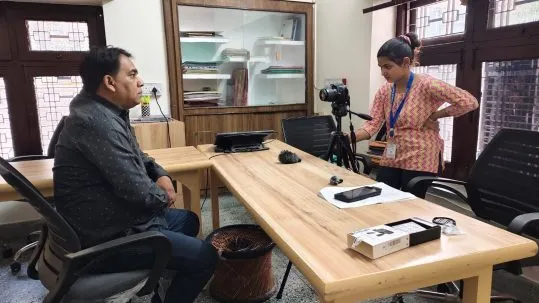
Families make rules out of fear, for the safety of their daughters. We’ve all grown up with them: Don’t stay out late. Stay at home. Don’t take that route. Don’t hang out with that boy. “We are brought up to believe that girls ought to have restrictions,” said Sylvester Ariel of the Mahila Jan Adhikar Samiti.
The idea for the film was born during a fellowship with Cities for Youth, a programme run by Safetipin, a social impact organisation working towards building safe and equitable cities.
Sometimes, all it takes is one girl to break the rules. Sangeeta, a delivery gig worker is an unusual sight in Ajmer. Her family was aghast when she took up the job—is this even a proper job, they wanted to know. Even now, customers ask her why she chose this line of work, why she’s delivering their parcel late in the evening. “But I will keep doing this because I love my work,” she said.
Sangeeta persisted. Now, seeing her doing the work, two more girls have started working as delivery service agents in the city.
The importance of mobility
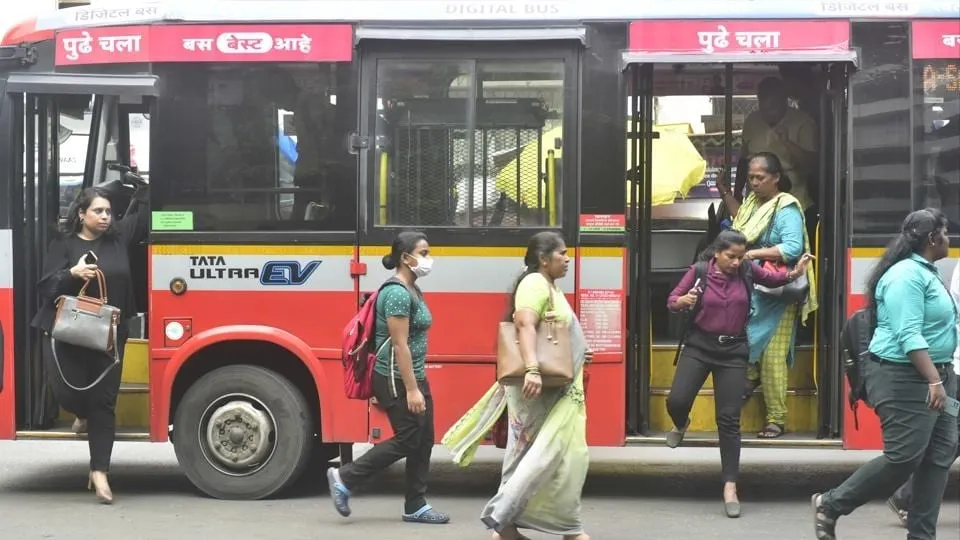
Screened during a two-day summit, Shaping our Cities, organised by Safetipin on August 26 and 27 in New Delhi, Ajmer ki ladkiyan establishes mobility as fundamental to daily life.
Without access to safe and affordable transportation, women cannot leave the house to seek employment. Girls continue to drop out of secondary school because their schools might be located far from their homes and there might not be reliable transportation to get them there.
Free bus rides in states including Delhi, Tamil Nadu, Punjab, and Karnataka have certainly been a game-changer for women who earlier could not afford, or were unwilling, to pay the fare to get to work. Now that the rides are free, their families are more willing to let them to look for jobs, seek medical attention, or take admission in colleges further away from home
But new challenges present themselves. Women’s ridership has certainly increased but problems relating to overcrowding, last-mile connectivity and safety persist. Is the walk to the bus-stop on a well-lit, safe street? Is the bus-stop itself safe? “When policy focuses only on assets and ride metrics rather than journeys, it can make individual parts safer while leaving the overall experience uncertain,” writes Sonal Jaitley, an associate with MicroSave Consulting, in . “When women can travel safely, they gain access to more than destinations. They gain access to work, education, health care, and the freedom to make choices about their own lives.”
Kalpana Vishwanath, co-founder of Safetipin agrees. “We need to move from the language of protection to one of rights. The question of who the city belongs to is fundamentally a question about citizenship, of living a life without fear, a life where you are not denied opportunities and where your behaviour and movement are not controlled.”
It’s a life where you don’t have to go out seeking women, because they are there everywhere participating fully in the life of the city.
Get Current Updates on India News, Elections 2024, Lok sabha election 2024 voting live , Karnataka election 2024 live in Bengaluru , Election 2024 Date along with Latest News and Top Headlines from India and around the world.
See Less

Good foundation: on India’s strong industrial growth performance
By Sohail Khan · 1 Oct
Bitter pills: on Court’s intervention, drug pricing
By Sohail Khan · 1 Oct
Household debt, financing today against tomorrow
By Sohail Khan · 1 Oct