‘I’m 44 and diabetic: Can I regain muscle lost due to uncontrolled diabetes?’

Uncontrolled blood sugar also comes with many other health effects. One plausible consequence is muscle loss, which a 44-year-old discussed on the online forum Quora, sharing his experience and seeking advice.
“I’m 44 and diabetic. My blood sugar was uncontrolled for a long time, and during that period I lost a lot of muscle mass. Now my glucose levels are under control — but can I regain the muscle I have lost?”
We dug deeper to separate a medically accurate answer from misleading digital noise. Turns out muscle lost during prolonged periods of uncontrolled diabetes can often be regained. But simply bringing blood sugar back under control may not be enough — rebuilding muscle also requires adequate nutrition and regular strength training.
Story continues below this ad
In a conversation with indianexpress.com, Dr Vineeta Singh Tandon, Senior Consultant – Internal Medicine, ISIC Multispeciality Hospital, explains how someone in this situation can work towards regaining lost muscle and when continued weight or muscle loss needs medical attention.
Why does uncontrolled diabetes cause muscle loss?
“When blood sugar levels remain high, the body may start breaking down muscle for energy,” Dr Tandon explains.
When glucose cannot be used effectively by the body’s cells, the body may turn to other energy sources, including muscle tissue. This can contribute to weight loss, weakness and a gradual reduction in muscle mass.
Story continues below this ad
However, this does not necessarily mean the muscle is lost permanently.
 Resistance exercises such as weight training, resistance bands, or bodyweight exercises 2–3 times a week can help rebuild muscle (Pexels)
“In many cases, muscle mass lost due to uncontrolled diabetes can be regained once blood sugar levels are brought under control,” Dr Tandon assures.
“After achieving good diabetes control, the body can start rebuilding muscle, especially when supported by regular exercise, adequate protein intake and proper nutrition.”
The process takes time, so someone should not expect muscle mass to return immediately after their blood sugar improves.
Story continues below this ad
So, how can you rebuild the lost muscle?
According to Dr Tandon, three things are particularly important: keeping blood sugar under control, strength training and eating a balanced diet.
Resistance exercise is especially useful because it gives the muscles a reason to grow stronger. This can include weight training, resistance bands or bodyweight exercises such as squats and modified push-ups.
“Resistance exercises such as weight training, resistance bands, or bodyweight exercises 2–3 times a week can help rebuild muscle.”
Someone who has lost considerable strength or has not exercised for a long time should start gradually rather than immediately lifting heavy weights.
Story continues below this ad
Walking or other aerobic activity can also be included. Besides improving overall fitness, regular physical activity can improve insulin sensitivity and help the body use glucose more effectively.
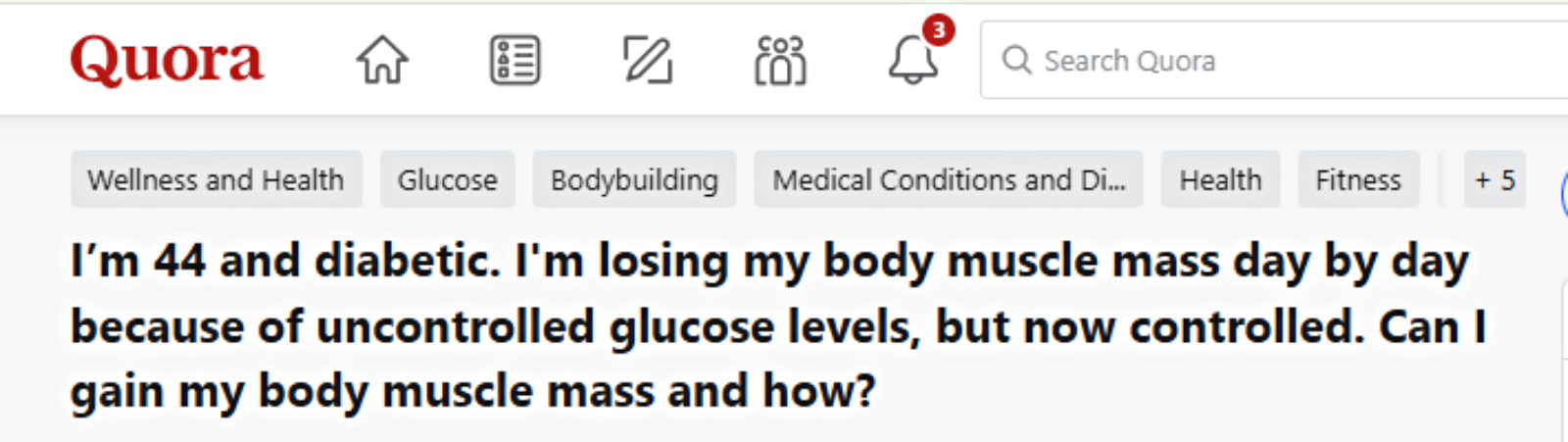 Screenshot of the Quora query
How much protein should you eat?
Adequate protein is another important part of rebuilding muscle.
“Most adults aiming to regain muscle benefit from around 1–1.2 grams of protein per kilogram of body weight daily, sometimes more under medical guidance,” says Dr Tandon.
For example, a person weighing 70 kg would need roughly 70–84 grams of protein a day at this range.
Story continues below this ad
Protein does not have to come from supplements. Everyday foods such as “eggs, fish, chicken, paneer, dal, soy and Greek yoghurt” can help meet protein requirements.
However, there is one important precaution for people with diabetes. If someone has kidney disease or diabetic kidney complications, they should not substantially increase their protein intake without discussing it with their doctor.
What if the blood sugar is controlled but the muscle loss continues?
This is something that should not be ignored. If blood sugar has been brought under control but a person continues to lose weight or muscle, there could be another reason behind it.
“Continued muscle or weight loss despite good sugar control should not be ignored,” Dr Tandon cautions while revealing that possible causes include not eating enough calories or protein, thyroid disorders, vitamin deficiencies, digestive problems, medication-related issues or another underlying illness.
Story continues below this ad
A medical evaluation becomes particularly important if the person continues to lose weight, experiences worsening weakness, fatigue or poor appetite, or notices a persistent decline in strength.
The aim is to identify and address the underlying cause rather than assuming that the previous diabetes-related muscle loss is solely responsible.
 Include protein-rich foods like eggs, fish, chicken, paneer, dal, soy, and Greek yogurt in daily meals (Ai generated image)
Don’t focus only on the sugar reading
For someone recovering from prolonged uncontrolled diabetes, getting blood sugar under control is an important first step — but muscle health deserves attention too.
“Muscle health is just as important as blood sugar control in diabetes,” says Dr Tandon. Maintaining muscle can support strength, mobility, metabolism and overall quality of life.
Story continues below this ad
Along with adequate protein and regular exercise, she recommends paying attention to sleep, hydration and nutritional deficiencies such as vitamin D, where appropriate.
A personalised plan from a doctor and dietitian can help determine how much protein and food the person needs and what type and intensity of exercise is appropriate.
So, if you’re 44 and have lost muscle during a period of uncontrolled diabetes, don’t assume that the loss is permanent. Once glucose levels are controlled, the body can rebuild muscle — but it needs the right combination of progressive strength training, adequate nutrition and protein, along with continued diabetes management.

What are IRDAI’s proposed insurance reforms, why have they hit insurance stocks?
By Sohail Khan · 26 Sep
5 animals a tiger may think twice before attacking
By Sohail Khan · 26 Sep