How the sugar crisis has put a tax on Bengali happiness
By Bijetri Pathak
There’s an odd question hidden away in the current sugar crisis in India, one that’s not strictly about sugar: What happens to a culture when one of its lower-cost languages of affection becomes a costly one?
Advertisement
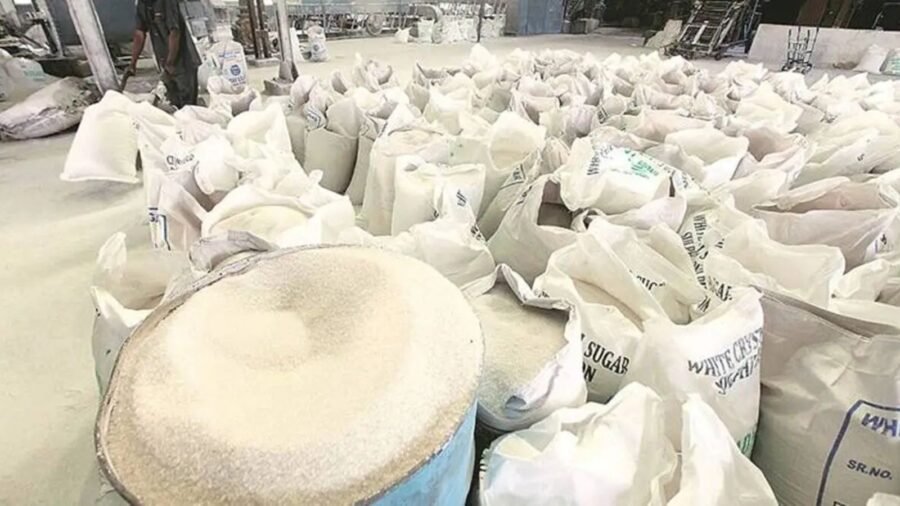
Domestic sugar prices have jumped nearly 40 per cent in two months. The government has responded the way governments do — by waiving import duty, extending duty-free imports of up to 10 lakh tonnes of raw sugar until October 31, and warning bulk buyers against hoarding more than 15 days’ stock ahead of the festival season. Ordinarily, this is a business-page story that dies with the news cycle. But sugar isn’t ordinary anywhere the way it is in Bengal.
Think about what a box of sweets means in a Bengali household. It appears for a new job, a good exam result, a wedding, a birth, a puja, even an election win. It’s a language — a cheap one, which is precisely why it’s so universal. Handing over the box says what doesn’t need saying aloud. So when sugar gets more expensive, the damage isn’t confined to the kitchen. Most people just see a rosogolla priced at 15, 20, or 25 rupees — not the chhana, fuel, labour, and rent stacked beneath that number.
The shock moves quietly through that chain, just as mishti shops gear up for their busiest months. This isn’t really a story about commodities anymore — it’s about class. Almost nobody worries whether Bengalis can still afford a rosogolla; most can. The real question is whether everyone can still take part, equally, in the rituals that hold Bengali life together.
Advertisement
A few extra rupees mean nothing to a well-off family. For someone with less, it might mean fewer boxes ordered for a wedding, or a neighbour quietly left out this year. We generally track inequality through income, housing, healthcare. We’re much worse at noticing who can still show up, sweet box in hand, to moments meant to signal belonging.
Call it cultural inflation, or a tax on participation rather than income. It won’t make headlines. It just shows up as a smaller box for an aunt, or an invitation quietly not sent because the gesture that goes with it has become harder to afford.
Bengal has been here before, in harsher form. In August 1965, facing a Calcutta milk shortage, the West Bengal government banned production of rosogolla and other chhana-based sweets in the city, reasoning that milk should go to children and nursing mothers rather than syrup. In practice, it was a disaster — an entire trade employing tens of thousands, across thousands of small shops, told overnight to stop doing what they knew how to do. Protests erupted, a chhana black market sprang up, and sweet makers who’d spent years honing their craft were suddenly treated as offenders. The Calcutta High Court eventually struck down the order, but it remains a lesson in how badly a government can mishandle something people care about. Nothing has been banned since.
This time the threat is subtler: A market that, year after year, makes it a little harder for everyone to afford the same box on the same terms. Bengal has also fought to claim this sweet, not just preserve it. After a two-and-a-half-year dispute with Odisha, West Bengal secured the Geographical Indication tag for “Banglar Rosogolla” in 2017, tracing it to a 19th-century Calcutta confectioner. Odisha won its own GI two years later. Nobody fights that long over a dessert unless it has become memory, pride, and commerce rolled into one.
Set the episodes side by side: In 1965, Bengal resisted its own state to keep making rosogolla; in 2017, it fought a neighbour to keep claiming it. Now the threat is a market quietly making the same sweet less accessible, with no one to blame and no one to protest against — a second Rosogolla Revolt, minus the placards. Easy to forget in all this: The moira, squeezed between rising costs and price-conscious customers, faces only bad options — raise prices and lose regulars, absorb the cost and shrink margins further, or quietly shrink the sweet itself. There’s a fourth option too, unheadlined: Simply not wanting the next generation to inherit a business where the numbers no longer work.
Bengal won’t stop eating sweets. But whether they’re still made by hand, in small batches, the way Nobin Chandra Das perfected in 19th-century Calcutta, is another matter. No one has taxed Bengali joy directly — but ordinary inflation does it anyway, quietly taxing any tradition built on an ingredient that just got pricier. A culture rarely vanishes all at once. It just becomes a little less available, a little at a time, until “everyone does this” stops being quite true.
The writer is Assistant Professor, Sikkim Manipal University

Sea level rise: Can a country retain its statehood even if it loses its territory?
By Sohail Khan · 28 Sep

No fuel without PUC in Delhi: What this certificate says about your vehicle
By Sohail Khan · 28 Sep