Experts Explain | Why Indian cities flood after heavy rain and overheat in summer
By Aman Kumar and Saloni Srivastava
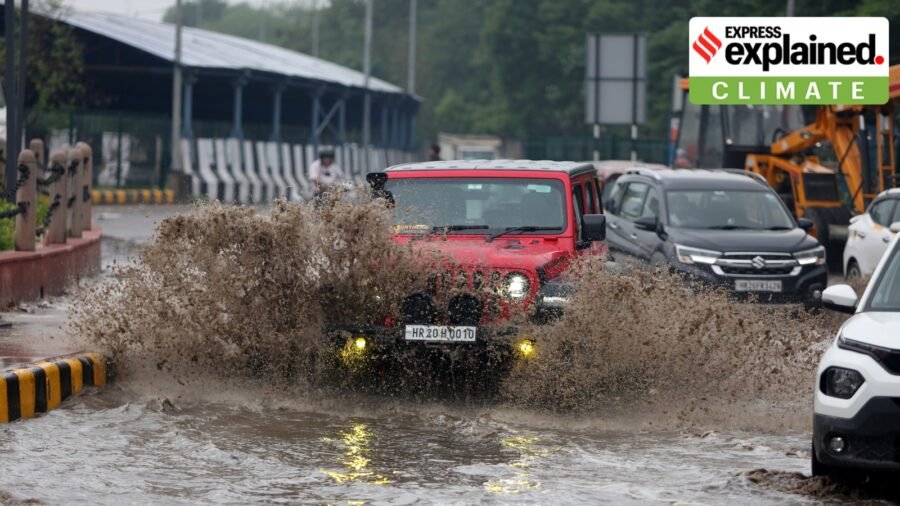
In May, temperatures in parts of Gurugram crossed 44 degrees Celsius, and the India Meteorological Department issued heat alerts for Haryana. On August 6, heavy rain inundated arterial roads and low-lying sectors across the city. Authorities advised offices to let employees work from home so that fewer vehicles would add to the congestion.
The two episodes were separated by about 11 weeks. One involved extreme heat and the other intense rain, but both exposed the same problem. Weather translates into an urban disaster when it is met with dense construction, weak drainage, loss of open land, unsafe housing and public systems that aren’t ready for those most at risk.
When does a natural hazard become an urban disaster?
Story continues below this ad
A heatwave, cloudburst or cyclone is a hazard. It becomes a disaster when it strikes a place where people, buildings, and public services are exposed and lack the capacity to withstand it. This is the distinction made by the United Nations Office for Disaster Risk Reduction, which describes disaster risk as the interaction between a hazard and the conditions in which it occurs.
In cities, those conditions are shaped by planning. Heavy rain need not cause severe flooding if water can drain, spread or seep into the ground. But the same rain can bring a city to a halt when natural drains have been narrowed, lakes and floodplains built over, and large areas covered with concrete. The amount of rain matters, but so does the surface on which it falls.
The same applies to heat. Dense construction, asphalt, poor ventilation and the loss of tree cover cause neighbourhoods to absorb heat during the day and retain it after sunset. The danger is greater for people living in poorly ventilated homes and for those who work outdoors without reliable access to shade, drinking water or healthcare. The hazard may begin with the weather, but the extent of the damage depends on how the city has been built and governed.
Why are Indian cities becoming more vulnerable?
Climate change and unplanned urban growth are increasing the risk together. Heatwaves and periods of intense rainfall are becoming more severe, while cities continue to replace soil, vegetation and water bodies with buildings, roads and other hard surfaces. This raises local temperatures and leaves less ground through which rainwater can drain.
Story continues below this ad
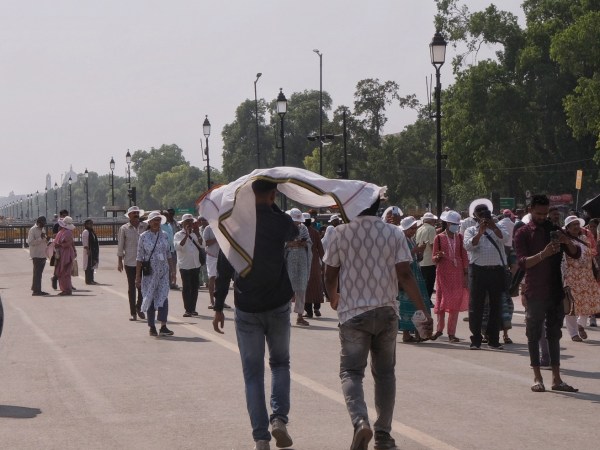 During a heatwave in Delhi. Express file
The World Bank estimates that temperatures in Indian city centres can be three to four degrees Celsius higher than in surrounding areas. The change in land use has been stark in Bengaluru. Research by the Indian Institute of Science found that built-up land increased from about eight per cent in 1973 to nearly 74 per cent in 2013, while vegetation fell from 68 per cent to less than 15 per cent.
India’s urban population is expected to reach 951 million by 2050, and more than 144 million new homes may be required by 2070. More than half the infrastructure that Indian cities will need by 2050 is yet to be built. Whether this expansion adds to the risk will depend on where construction is permitted, what materials are used, and whether natural drainage systems and open spaces are retained.
What do these disasters cost?
The damage recorded after a flood or heatwave is only part of the cost. Official estimates generally capture deaths and damage to roads, buildings and other public assets. They are less likely to capture wages lost by informal workers, the cost of illness, the disruption of small businesses or the time spent recovering from repeated flooding.
The World Bank estimates that timely adaptation could prevent annual urban flood losses of about $5 billion by 2030 and $30 billion by 2070. Measures to reduce extreme heat could also save more than 130,000 lives by 2050. These figures represent losses that could be avoided, rather than costs that must inevitably be borne.
What has changed in the law?
Story continues below this ad
The Disaster Management Act, 2005 established disaster management authorities at the national, state and district levels. The 2025 amendment created a mechanism for dealing with risks specific to large cities. Section 41A allows state governments to constitute an Urban Disaster Management Authority in every state capital and city with a municipal corporation, except Delhi and Chandigarh.
These authorities are chaired by the municipal commissioner and are responsible for preparing and implementing an urban disaster management plan. The amendment also provides for a national database containing risk assessments, mitigation plans and real-time information on disasters.
A separate change was made to disaster financing in August 2026, when heatwaves and lightning were included in the list of notified natural calamities for the 2026-31 Finance Commission period. States can now use disaster response funds for eligible relief, while heatwave mitigation projects can receive support from disaster mitigation funds. This addresses a gap in financing, but it does not resolve the planning failures that make cities vulnerable to heat.
Where does the system fall short?
The amendment leaves the constitution of urban disaster authorities to state governments and sets no deadline. In February 2026, the Home Ministry told Parliament that Karnataka was the only state to have reported setting up such an authority for Bengaluru. In most cities, responsibility therefore remains divided among municipal corporations, district administrations and state departments, which may work under different plans and lines of authority.
Story continues below this ad
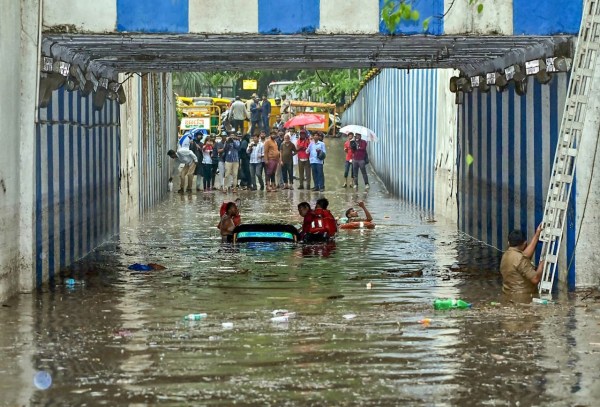 A flooded underpass in Bengaluru. Jithendra M/file
There is also a shortage of basic planning capacity. A 2021 NITI Aayog report found that 65 per cent of India’s 7,933 urban settlements had no master plan. State planning departments had fewer than 4,000 sanctioned town-planner posts against an estimated requirement of 12,000, and many of the sanctioned posts were vacant.
The existence of a master plan does not settle the matter. Floodplains, lakes, drainage channels and open spaces must first be identified and protected through zoning and building regulations. A heat action plan or climate plan will have limited effect if road projects, building approvals and changes in land use are allowed to proceed without reference to it.
What would reduce the risk?
Disaster planning needs to become part of the routine decisions through which a city grows. Flood maps should determine where construction is prohibited, where drainage capacity must be increased and what plinth levels buildings must maintain. Heat maps should inform requirements for shade, ventilation, tree cover and building materials. These provisions need to be incorporated into statutory development plans rather than placed in separate advisory documents.
City governments need qualified urban planners and technical experts working on development decisions, so that plans account for who is exposed to hazards and what resilience measures are appropriate. Urban disaster authorities need the same expertise on their staff, along with budgets and the power to coordinate municipal engineering, water, health, transport, revenue and emergency services. Urban investment decisions and project approvals should then follow the plans these teams prepare, with responsibility assigned for each measure and deadlines that can be reviewed before the next expected disaster.
Story continues below this ad
Financing must extend beyond relief after an event. Municipal grants and infrastructure spending can be linked to compliance with flood, heat and land-use plans. Early warnings should also trigger measures agreed in advance, including changes in outdoor working hours, hospital preparedness, school closures and traffic diversions.
Weather risk cannot be removed from a city. But when the same roads flood and the same neighbourhoods overheat each year, the failure lies in decisions about land, construction and public infrastructure that were made well before the season began.
Saloni Srivastava is a Senior Research and Policy Associate for Climate Economics and Finance at Gateway Research (IGSD India), based in New Delhi; Aman Kumar (LAMP fellow, 2024) is a Research Associate. He works as a Geo-Spatial data Analyst and Urban Planner at Gateway Research (IGSD India).

Sea level rise: Can a country retain its statehood even if it loses its territory?
By Sohail Khan · 28 Sep
No fuel without PUC in Delhi: What this certificate says about your vehicle
By Sohail Khan · 28 Sep