Expert Explains | Can Meta’s new teen social media rules really protect children’s mental health?
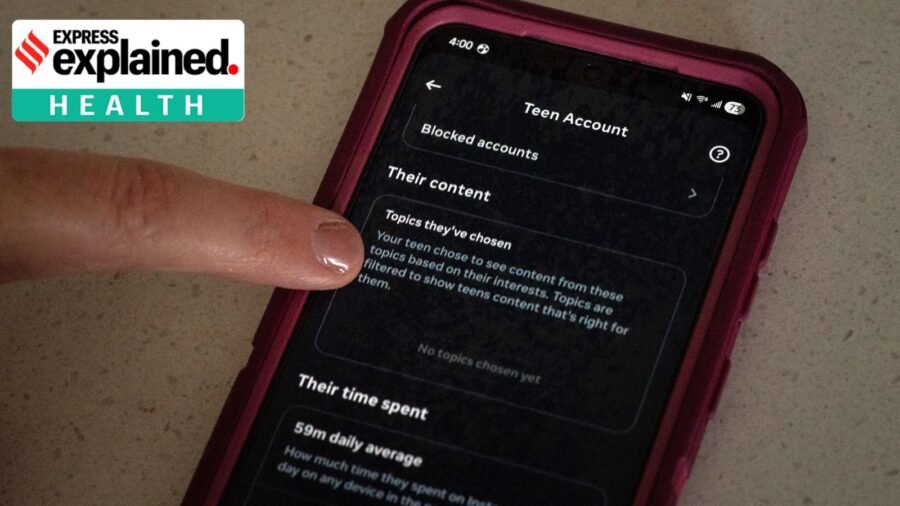
In a dramatic capitulation, Meta, the owner of Facebook and Instagram, has agreed to pay up to $17.1 billion in penalties and make major changes to its products over claims that it endangered children with addictive social media platforms and violated child privacy norms. The landmark settlement was reached with 47 states, the District of Columbia and US territories.
Meta also agreed to limit how long teenagers can spend on its platforms and to ban features that stoke mental health issues, striking at the heart of the company’s business of engagement for advertising.
As part of the settlement, Meta is expected to introduce stronger protections for users under 18. One of the main changes will be a default daily time limit of around two hours for teenagers.
Story continues below this ad
Meta also plans to introduce night-time restrictions, limiting access during late-night hours, roughly from midnight to 6 am. Notifications and certain features may also be reduced during school hours so that social media is less distracting while children are studying.
Meta will provide stronger parental controls. So, parents are expected to receive more information about how their children use the platforms and will have greater control over certain settings. Meta plans to strengthen age verification to prevent children under 13 from accessing accounts that are not appropriate for their age. Another important change is that Meta will try to reduce features that encourage constant engagement. This could include features such as hiding like counts and limiting certain cosmetic features for teenagers. The company will also face greater oversight to ensure that it follows the new requirements.
“I think this is a step in the right direction. The design requirements are more concrete than any other regulation I’ve seen in the US and include default nighttime blocks, daily limits and tested age assurance,” says Dr Johannes Thrul, Associate Professor, Department of Mental Health, Johns Hopkins Bloomberg School of Public Health. Reacting to the verdict, he says it reflected growing recognition that platform design can influence mental health outcomes, particularly for young users, and wants evidence-based standards for safer platform design.
Can limiting the amount of time teenagers spend on social media have a positive impact on their mental health?
“I expect positive impacts on mental health, especially from the nighttime use restrictions, because youngsters can get more sleep. In fact, sleep displacement is a reasonably well-supported causal pathway between social media use and mental health,” says Dr Thrul.
Story continues below this ad
There is experimental evidence supporting the idea that reducing social media and screen time can improve certain aspects of young people’s mental health, particularly anxiety, depression, loneliness, sleep and emotional difficulties. A 2025 randomised controlled trial studied 220 young people with emotional distress. The group that reduced smartphone-based social media use to about one hour per day for three weeks experienced greater reductions in depression, anxiety and fear of missing out, as well as improvements in sleep.
A 2026 randomised controlled trial found that young people with symptoms of anxiety or depression, who reduced their social media use by about 78 minutes per day, experienced a significant reduction in loneliness.
To what extent do social media features designed to maximise user engagement contribute to anxiety, depression, low self-esteem, sleep problems, or other mental-health concerns among adolescents?
“There is reasonable support that some of these features contribute to compulsive use of social media platforms and consequently mental health challenges. Appearance-based social comparison, quantified feedback such as visible like counts, and overnight notifications have clear mechanisms of impact,” says Dr Thrul.
Story continues below this ad
The American Psychological Association (APA) specifically identifies features such as likes, recommended content, unrestricted time limits and endless scrolling as features that should be carefully considered when designing platforms for adolescents. A 2024 meta-analysis of 143 studies involving more than one million adolescents found that greater social media engagement was associated with higher levels of anxiety and depression.
Should social media companies be legally responsible for addressing features that may negatively affect the mental health of children and adolescents?
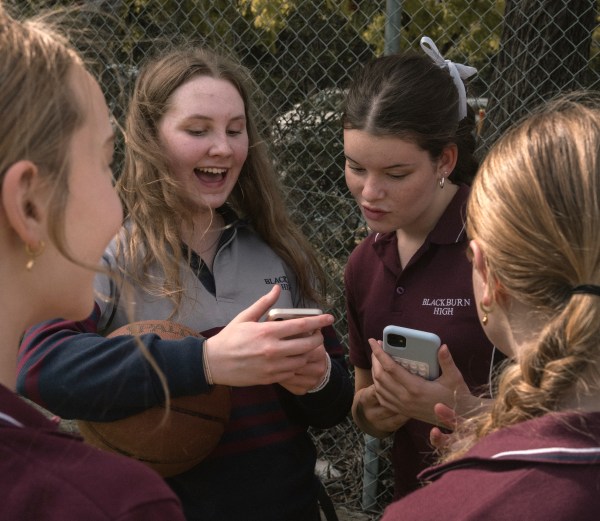 Friends gather to watch a TikTok videoÊin Melbourne, Australia, Nov. 13, 2025. (Matthew Abbott /The New York Times)
“I’m not a lawyer, so I’ll answer as a scientist. Design defaults are decisions, and if a company can measure that a feature increases distress and ships it anyway, that’s a foreseeable consequence of a choice,” says Dr Thrul.
A 2025 review of 70 reports found strong support for greater government regulation and accountability of social-media companies, including penalties when companies fail to protect young users. Research has also found that the impact of social media depends partly on platform design, meaning that responsibility cannot be placed entirely on teenagers and their parents. The US Surgeon General, therefore, recommended that technology companies prioritise children’s health and safety when designing their platforms and that governments introduce stronger safety standards.
Story continues below this ad
Do mental health concerns among young people appear to be associated with excessive or problematic social media use?
“What we have seen in our research is that social media use disorder is related to loneliness, depression and anxiety in young people. We have also found that reducing social media use or taking a break can improve mental health,” says Dr Thrul.
Dr Thrul conducted a study involving 2,990 high-school students in Saudi Arabia and found that those with excessive social media use reported greater loneliness and mental distress than their peers. They also cited loss of control, continued use despite negative consequences, interference with everyday life and negative effects on sleep. “Nearly a third of students screened positive for loneliness, and over 40% screened positive for depression or anxiety symptoms. Saudi Arabia, like many countries, is undergoing rapid digitalisation, and the infrastructure for addressing problematic technology use — in terms of clinical training, school-based programmes and public awareness—needs to keep pace,” he adds.
A 2025 systematic review of 34 studies involving children and adolescents also found that off-task social media and smartphone use was generally associated with lower academic achievement, suggesting that frequent checking or scrolling can interfere with schoolwork and staying focused.
“That’s why for me, the nighttime access restriction, which enables sleep, hiding like counts and disabling cosmetic-procedure filters by default, because those target social comparison, can work,” adds Dr Thrul.
Story continues below this ad
Does the Meta ruling represent an appropriate step toward protecting children and adolescents?
Dr Thrul believes it is “a real step in the right direction” but cautions, “Meta is only a single company and it remains to be seen if TikTok, Snap, YouTube and other platforms accept equivalent obligations. The bigger missed opportunity is accountability. I would like to see independent scientists evaluate whether any of these regulations work to improve mental health among young people,” he says.
Some critics believe these changes may not be enough because they do not completely address the recommendation algorithms that can encourage users to keep scrolling.

Light on truth: on the Tamil Nadu G.O. and RTI
By Sohail Khan · 29 Sep
Tackling food loss and waste — India’s opportunity
By Sohail Khan · 28 Sep
Revisiting the farmer question
By Sohail Khan · 28 Sep