Ensuring equity amid India’s educational progress
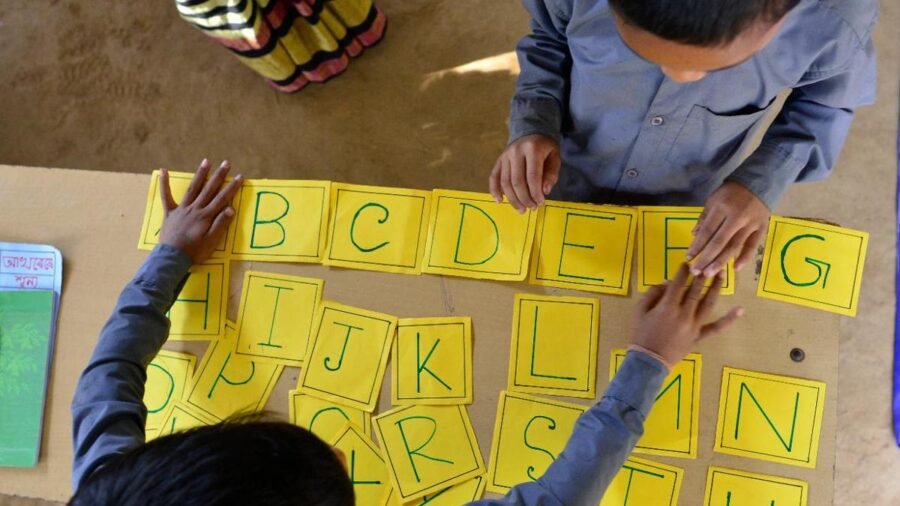
The Unified District Information System for Education Plus (UDISE+) 2025-26 report highlights notable progress in India’s school education system, covering 1.47 million schools, 240 million students, and 10.2 million teachers. Progress has been recorded in gross enrolment, student retention, dropout reduction, teacher availability, and educational infrastructure. However, the report also shows that regional and social disparities persist in access, resources, learning opportunities, and educational outcomes. Disparities in gross enrolment ratios (GER), dropout rates, pupil-teacher ratios, and infrastructure availability across regions and social groups indicate the ongoing challenge of guaranteeing equitable, inclusive, and quality education in India.
Regional and social imbalances
The report confirms that significant variations exist across socioeconomic groups and geographic regions in terms of various indicators. The distribution of enrolled students shows that Andhra Pradesh leads in Aadhaar seeding (99.6%), followed by Chandigarh (99%), while Meghalaya records the lowest rate (35%), compared with the national average of 90.2%. Uttar Pradesh accounts for the highest share of schools and student enrolment, while Meghalaya and Himachal Pradesh have the lowest shares of schools relative to enrolment, indicating higher student-school ratios.
At the school level, West Bengal has recorded the highest proportion of foundational and preparatory schools (79%) of total, and among the lowest secondary schools (11%); Chandigarh has the highest secondary schools (83%) and the lowest foundational and preparatory schools (5%) of total. The social composition of enrolled students shows significant variation across regions. Chandigarh and Delhi have the highest proportions of General category students, while Lakshadweep, Mizoram, Meghalaya, and Ladakh have high proportions of Schedule Tribe (ST) enrolment. Punjab records one of the highest shares of Scheduled Caste (SC) enrolment, whereas Other Backward Classes representation is particularly high in Tamil Nadu and Gujarat.
At the national level, the GER has recorded highest for OBCs (49%), followed by General (27%), SCs (17%), and STs (10%). Thus, GER indicates large differences in school education enrolment in comparison to their corresponding population of each social group.
The Gender Parity Index across all school levels shows higher girls’ enrolment and participation than boys across most of the States/Union Territories. The UDISE+ data show that students from minority communities account for more than 20% of enrolment, with Muslims and Parsis among the major minority groups. The average enrolment per school shows that Chandigarh registers the highest average enrolment per school (1,194), followed by Delhi (788); while Ladakh records the lowest average enrolment (64), indicating variation in the size of the schools across the country.
The pupil-teacher ratio (PTR) is an important factor influencing students’ performance and achievement. The PTR varies highly, registering lowest in Union Territories and highest in densely populated States. A significant inter-State variation in PTR exists across pedagogical stages; i.e., foundational, preparatory, and middle PTRs are generally lower than secondary across most of the States. Jharkhand records the highest Secondary PTR (43), followed by Uttar Pradesh, signifying a heavy workload on teachers. On the other hand, Sikkim has the lowest secondary PTR (6), followed by Ladakh. The GER varies significantly at the levels of schools and regions across the country. Meghalaya records the highest Foundational GER (131), followed by Mizoram, while Bihar has the lowest GER (24), preceded by Uttar Pradesh. Meghalaya again records the highest Preparatory GER (171), followed by Manipur; whereas Gujarat has the lowest GER (74), preceded by Bihar. Chandigarh and Meghalaya record the highest Middle GER (118), followed by Delhi. On the contrary, Bihar has the lowest GER (70), preceded by Nagaland. Similarly, Chandigarh registers the highest Secondary GER (109), followed by Goa; while Bihar has the lowest GER (48), preceded by Nagaland.
The dropout rate determines the attainment and transition rate to the next stage of schools. Bihar accounts for the highest preparatory dropout rate (7.9%), followed by Meghalaya. On the other hand, many States/Union Territories such as Delhi, Haryana and Maharashtra do not report dropout. Similarly, Bihar records the highest middle-level dropout rate (9%), followed by Uttar Pradesh. While several States/Union Territories such as Chandigarh, Maharashtra and Andhra Pradesh do not register dropouts at this stage, Ladakh records the highest secondary dropout rate (14.8%), followed by Karnataka. West Bengal has the lowest dropout rate (1.5%), preceded by Telangana.
Persistent gaps
Generally, access to schooling has improved significantly over the years. Most children now have a school at a suitable distance, but regional differences continue. Remotely located places, hilly, tribal and border areas still have limited schools and transport facilities, where school-going children face greater difficulties in attending school regularly, such as in Bageshwar district of Uttarakhand, Ganjam and Kandhamal districts of Odisha, Kathua district of Jammu and Kashmir, and Palghar district of Maharashtra. Simultaneously, children from SCs, STs, minorities, and economically poor families have a greater likelihood to face different barriers that limit their enrolment, attendance, and completion of schooling.
School infrastructure has improved in several areas of the country, i.e., access to drinking water and electricity. However, the availability of infrastructure varies regionally across the country. Educationally backward districts are still struggling to provide a learning environment in rural schools in comparison to urban areas.
Teacher availability is a factor that significantly influences educational outcomes. The report shows that many States have recruited qualified teachers, while teacher shortages continue in several regions. Rural and remote schools often face a shortage of teachers performing multiple classes and subjects and many other non-teaching responsibilities allotted by the government. High student-teacher ratios reduce the individual attention students receive and adversely affect the learning process. Despite progress in girls’ schooling, challenges persist in reducing dropout rates, enhancing transition from primary to secondary education, and providing sufficient and suitable facilities for disabled children. Inclusive infrastructure, accessible classrooms, and supportive teaching practices are essential for equitable education.
Targeted investment will help
The UDISE+ 2025-26 report shows that educational inequality persists across accessibility, infrastructure, teacher availability, digital resources, and social inclusion. Addressing these dimensions collectively is essential for equitable educational development. In line with the National Education Policy (NEP) 2020, targeted investment in educationally deprived regions, improved digital infrastructure, adequate teacher deployment, and stronger support for disadvantaged groups can help bridge persistent gaps.
Regional and social imbalances continue to influence educational opportunities and learning conditions. Reducing these disparities requires a balanced approach that collectively improves infrastructure, promotes equitable teacher deployment, strengthens inclusive social and economic policies, and provides dedicated support for disadvantaged social groups. A regionally and socially balanced approach that integrates educational quality, equity, and accessibility will help create a more inclusive education system, address the paradox of progress in India’s evolving school education landscape, and contribute to the country’s long-term social, economic, and regional development.
Sahab Deen is a Project Scientist at the Remote Sensing Applications Centre, Lucknow, Uttar Pradesh. Navneet Sharma teaches Education at the Central University of Himachal Pradesh, Dharamshala

Sea level rise: Can a country retain its statehood even if it loses its territory?
By Sohail Khan · 28 Sep
No fuel without PUC in Delhi: What this certificate says about your vehicle
By Sohail Khan · 28 Sep