A new playbook for sports governance
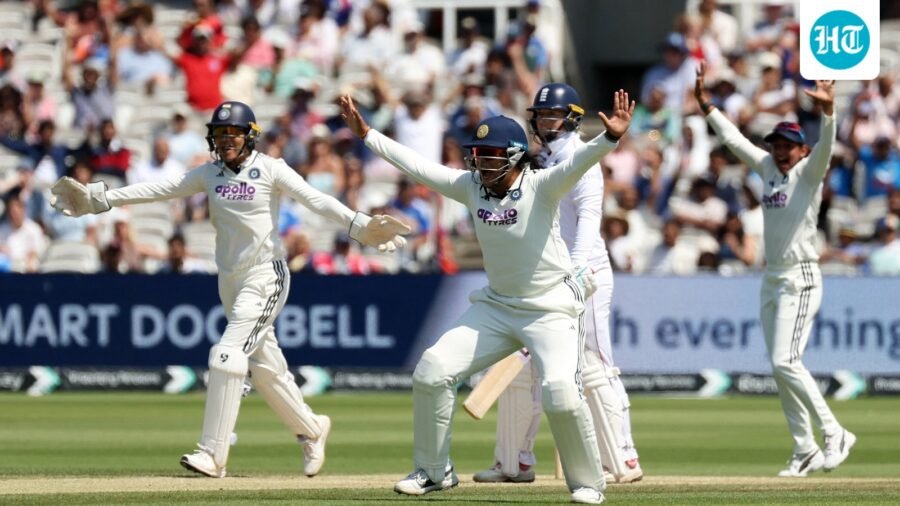
To make India the sporting powerhouse it intends to become, regional strengths must be linked to become a national network
Published on: Aug 22, 2026, 08:14:01 IST
Prefer HTon Google
Share via
Copy link
The enactment of the National Sports Governance Act 2025 and the subsequent notification of the National Sports Board (NSB) and National Sports Tribunal (NST) Rules in 2026 mark a consequential shift in how India conducts its sporting affairs — coming alongside an 18% jump in sports spending, the Khelo India mission, a projected ₹12.45 lakh crore sports economy by 2030, and a stated ambition to break into the top ten sporting nations by 2036 and top five by 2047.
The funding increase is the opening move, not the whole game: The ₹4,479.88 crore allocated to the ministry of youth affairs and sports for the current financial year signals depth of intent. The question now is: How does that number compound over a decade? South Korea offers an encouraging template. Ahead of the 1988 Seoul Olympics, the government created the Korea Sports Promotion Foundation. This institution still handles more than 85% of the country’s sports funding today and has channelled roughly ₹0.77 lakh crore into the sector since 1989. India’s lesson: Pair budget growth with a dedicated, ringfenced institutional vehicle — much as the Sports Authority of India and Khelo India already do. Let it compound across cycles rather than resetting each year.
Team Britain finished the 1996 Atlanta Olympics with a single gold medal and 36th place on the medal table. Sixteen years later, at London 2012, they had climbed to third with 65 medals. The mechanism was simple: National Lottery funding was redirected into elite sport from 1997, tied to a transparent, sport-by-sport performance framework rather than being spread evenly. India’s runway to 2036 mirrors this exactly.
The WPL and IPL underline the impact of focused, well-governed investment on one sport; the template for scaling that discipline across kabaddi, football, hockey and table tennis can be seen in India’s recent history. It simply needs wider application.
That said, the accountability layer is what makes everything else work. This is one of India’s most important recent moves. The NSB is now the apex authority for recognising national sports bodies and monitoring compliance. This closes a longstanding gap: the absence of a single body to enforce standards across federations. The NST, whose rulings can be appealed at the Supreme Court level, replaces the civil litigation pathway — where dispute resolution takes years — with a specialised and faster forum.
Money moving faster into sport is only half the equation; the other half is ensuring it is governed transparently. India has built its own version of what took Korea’s KSPO and Britain’s UK Sport years to formalise.
To make India the sporting powerhouse it intends to become, regional strengths must be linked to become a national network. Jalandhar and Meerut account for 75-80% of India’s sporting goods production. This is less a concentration risk than a proof of concept — two world-class manufacturing clusters with deep institutional knowledge, ready to be replicated rather than centralised further. Odisha’s emergence as a serious sporting infrastructure hub over the last decade is this playbook in action: a state with no prior sporting-manufacturing legacy building world-class capability through sustained investment. Extending that knowhow into new hubs, backed by the NSB’s compliance framework, is a realistic route to push India’s sporting goods economy well beyond its current 60% export share.
Manufacturing capacity is only half of what a national network needs — the other half is a systematic pipeline for finding and developing athletes. Australia’s Institute of Sport, set up in 1981, tracks athletes from early testing through to elite performance,
backed by dedicated coaching, data analytics and pathway funding at every stage. China’s whole-nation system takes a more centralised route, identifying sporting aptitude at the primary school level and channelling children into dedicated sports schools attached to provincial training centres. This approach took China from a minor Olympic presence in the 1980s to the top of the medal table by 2008. India’s Khelo India network, with its district- and state-level competitions is well placed to serve this role: standardised district-level assessments, a national athlete database tracking performers from an early age so that a talented teenager in a small town has the same visibility as one in a metro academy, and dedicated sports schools attached to the national centres of excellence, with selection anchored in the NSB’s oversight.
Cricket’s commercial success is best read as a demonstration of what strong governance, broadcast innovation, and investor confidence can do for a sport. The scale is worth stating plainly: The IPL’s total business value is now estimated at roughly ₹1.77 lakh crore.
The WPL, only in its third year, has already added close to ₹4,600 crore of its own commercial value — a first-of-its-kind T20 league for women, built on gender equality and equal pay. That formula is directly transferable.
Privately run leagues in kabaddi, football, volleyball and hockey are already building independent sponsorship and merchandise streams and the NSB’s oversight will provide investors the governance assurance that has so far been cricket’s unique advantage.
India’s 2036 and 2047 targets closely track timelines Korea and Britain have already delivered on, from broadly comparable starting points. What sets this moment apart is that India isn’t waiting until after a marquee hosting opportunity such as Commonwealth Games 2030 and perhaps the Olympics in 2036 to build its regulatory backbone, as both above nations effectively did. With the NSB and the NST becoming operational soon, rising budgets, and a maturing private capital ecosystem, India has assembled funding, institutions, infrastructure and talent pipelines together rather than in sequence — a faster, more deliberate start than the nations it is now catching up with.
Anand Garg is an independent director and business advisor. The views expressed are personal
Get Current Updates on India News, Elections 2024, Lok sabha election 2024 voting live , Karnataka election 2024 live in Bengaluru , Election 2024 Date along with Latest News and Top Headlines from India and around the world.
See Less

Sea level rise: Can a country retain its statehood even if it loses its territory?
By Sohail Khan · 28 Sep

No fuel without PUC in Delhi: What this certificate says about your vehicle
By Sohail Khan · 28 Sep