What do we tell a girl who asks: Was it my clothes? My body?
I was seven years old. My swimming class had ended, and I was walking to the changing room when I sensed a presence behind me. I turned around and found a member of the swimming complex staff charging towards me. In that split second, I shouted. My mother came rushing, and the man made an excuse about being there to protect me. As a cop’s daughter, I have grown up surrounded by men. And the prepubescent me, informed about “good” and “bad” touch, could instinctively identify an improper gaze. While I immediately told my parents what had happened, in the hullabaloo that followed, the incident was resolved.
My parents were careful not to let me or themselves become paranoid, because even though nothing untoward happened, the trauma could have set in. As I confided in my parents, however, the incident made me aware of a reality that I was not just a child, but a girl. I wish this realisation had not come to me so early in my life.
Advertisement
After losing my father as an adult, I became acutely aware of some older men who tried to show me unwanted avuncular affection. Again, there was no incident, but my skin crawled each time, and I began despising any conversation with them.
What changed over the years? Only that my awareness of this reality grew deeper.
So, when I read a news report about a minor rape survivor who told a court that the man she called “uncle” should be kept in jail until he grows old, my skin crawled again. The matter pertained to an incident that took place in July 2023, when the girl was seven.
Advertisement
After announcing the verdict, the judge read out a personal message to the child, and now the Delhi High Court has ordered that the message be delivered to the child along with the compensation. My skin crawls while writing this article too. The judge further wrote that the Court cannot give the child her childhood back but that the court had heard her words.
The judge also lauded the child’s courage in identifying the man, recounting the truth and speaking up. Even today, some of my relatives dismiss the incident at the swimming complex, arguing that a child couldn’t have known. They remain firm in their belief that the man had indeed been there to protect me. This is infantilisation, which knows no bounds. Would we say the same to a seven-year-old boy who alleges that he has been attacked? If the answer is no, we need to ask why our lens is coloured for girls and gendered crimes.
As per the National Crime Records Bureau’s Crime in India 2024 Report, in cases pertaining to Section 4 (penetrative sexual assault) and Section 6 (aggravated penetrative sexual assault) of the POCSO Act, only 1,492 cases of a total of 44,126 involved an unknown or unidentified offender. This effectively puts the focus on why these wounds go so deep. Studies have documented how childhood trauma can lead to the development of insecure attachments, emotional dysregulation, and relational challenges in adult relationships.
The judge’s “message of encouragement” goes beyond that one young child. It acknowledged the wound that the seven-year-old was carrying. I have forgotten much, but that evening after the swimming class remains fresh in my memory. It came as a baton of strength to the woman who, after losing her father, had to battle the unwanted male attention that came in the garb of concern. When the judge lauded the child’s courage, I felt exonerated, vicariously and personally.
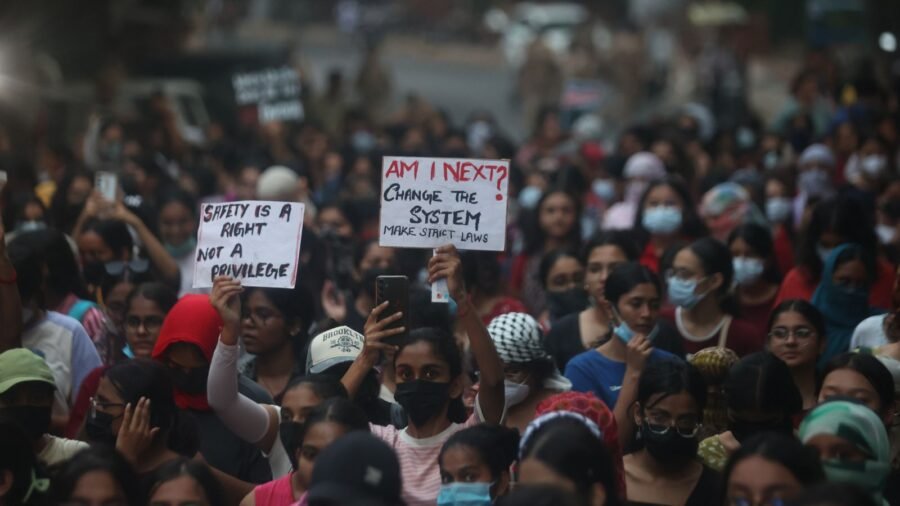
How can we tell the child that there will be a time she will have to devise her own handbook on how to deal with the male gaze? That she will have a drill of what to wear when using public transport? That she will be asked whether she “asked for it”? That she will need nerves of steel, veins of iron and a numb mind to ignore the stray palms that brush against her, even inside her home. How can we tell her this, for she will ask us the question we are unprepared to answer: Was it my clothes? Was it my body? Was it me? Did I do anything to “ask for it”?
Women do not need a handbook that instructs them in avoiding violence. We need a handbook, as a society, to prevent violence.
The writer is an officer of the Indian Revenue Service (Income Tax). Views expressed are personal


Scientists can now measure the damage each new coal mine can do to people, nature
By Sohail Khan · 1 Oct

Leave a Reply