Science Snapshots: October 4, 2026
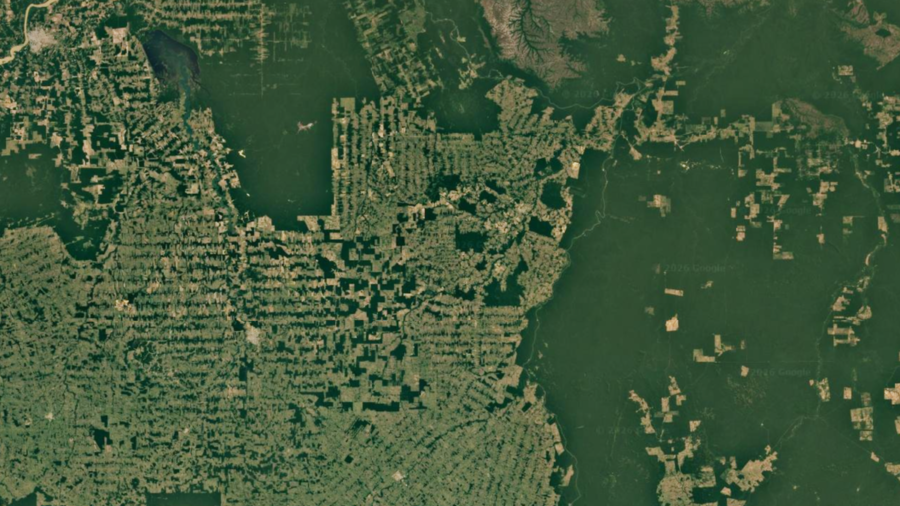
Breaking up forests is just as bad for global warming
How broken up a forest is can affect local temperatures as much as the forested area, a new study has found. Using satellite data, researchers found that in tropical and temperate zones, dividing continuous forests into smaller, isolated patches significantly raised surface temperature. In high-altitude boreal forests, however, fragmentation had a cooling effect because it exposed more open ground to snow cover, which reflects sunlight. The findings mean climate action needs to track fragmentation, too.
Radio jets from colossal black holes light up gas clouds
Astronomers have wondered how large black holes affect the gas halos surrounding their host galaxies. An Indian team combined hundreds of observations to find a glow of ionised hydrogen only along the path of radio-frequency energy blasting from the galaxies’ centres. Magnesium, a marker of cool gas, was however found scattered around the galaxies. This meant the jets don’t create the halos; instead, as they shoot out, they crash into existing gas clouds and light them up.
Flying butterflies use wing patterns to confuse predators
The striking wing patterns of butterflies may be a visual defence. By studying high-speed videos of butterfly flights and using 3D computer models, scientists found the combination of flapping wings and contrasting patterns, such as stripes and bright edges, creates an optical illusion that tricks a predator’s eyes and confuses its judgment of the insect’s speed and direction. The team said this “potentially represents one of the most successful visual defence strategies in moving animals”.

Gyanesh Kumar row: Key takeaways from Kerala probe, protests against ECI and SIR
By Sohail Khan · 4 Oct
France high school students’ protest: What sparked violence, what’s next
By Sohail Khan · 4 Oct
6 simple washroom hygiene tips when travelling via trains
By Sohail Khan · 4 Oct
Leave a Reply