Metabolic specialist with 21 years of experience flags exercise habits that may accelerate ageing
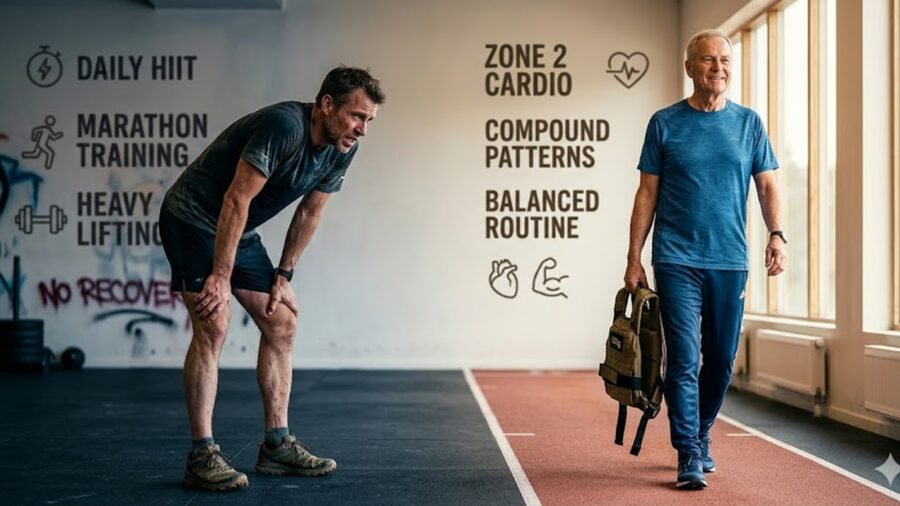
A specialist with 21 years of medical experience recently listed daily HIIT, long-distance running, and heavy lifting without recovery as reasons that accelerate biological ageing. Taking to X, metabolic specialist Dr Sumit Sharma noted, “21 years of practising medicine, I’ve watched: 40 y/o destroys their joints chasing fitness while 65 y/o moves like they’re 45. The difference wasn’t effort. It was exercise selection. Here’s what actually reverses biological ageing & what quietly accelerates it: ‘What wears you down (long-term) is daily HIIT, long-distance running on concrete, and heavy lifting without recovery.'”
According to him, Zone 2 Cardio (45–60 mins, 3–4x/week) at a conversational pace; strength training (2–3x/week); compound patterns: squat, hinge, push, pull; and weighted walking (10–20kg) help.
Story continues below.
Subscribe to see fewer ads.
We asked Dr Aniket Mule, a consultant in internal medicine at KIMS Hospitals, Thane, to explain further and he said that ageing isn’t only about the years we live; it’s also about how well our bodies work. “The right kind of exercise can help preserve muscle mass, support joint health, improve metabolism, and boost overall mobility. On the other hand, improper or excessive training can speed up wear and tear, especially on joints and connective tissues,” said Dr Mule.
Stressing that it often comes down to the type of exercise and how it’s done, Dr Mule added, High-impact workouts, overtraining, or poor form can put a lot of stress on joints over time, particularly in those who push themselves without enough conditioning. In contrast, older individuals who focus on controlled, joint-friendly movements tend to maintain better mobility and function.
 Here’s what you should consider
Emphasising that a balanced routine is key, Dr Mule said that strength training helps maintain muscle mass and bone density, both of which naturally decline with age. “Low-impact activities like walking, swimming, or cycling are great for cardiovascular health without stressing the joints. Mobility and flexibility exercises, like stretching or yoga, help maintain range of motion and prevent stiffness,” said Dr Mule.
Which exercises can accelerate ageing if done incorrectly?
Repeated high-impact activities, heavy lifting without proper guidance, and workouts that skip recovery can lead to joint degeneration and chronic injuries. “These exercises aren’t harmful in themselves, but if done without the right technique or progression, they can cause more harm than good,” said Dr Mule.
In 21 years of practicing medicine, I’ve watched:
40 y/o destroys their joints chasing fitness while 65 y/o moves like they’re 45
The difference wasn’t effort. It was exercise selection.Here’s what actually reverses biological ageing & what quietly accelerates it: pic.twitter.com/404w9lrRwM
— Dr Sumit Sharma (@dr_sumit_sharma) March 14, 2026
How does exercise impact metabolism as we age?
Story continues below this ad
Muscle tissue plays a major role in metabolic health. “Strength-focused exercises help maintain lean muscle mass, which supports better glucose regulation, energy balance, and overall metabolic function. This becomes especially important with age, as metabolism naturally slows down,” said Dr Mule.
What helps?
Sustainability matters more than intensity. “Choosing the right exercises, focusing on proper form, allowing for recovery, and adjusting workouts to meet your body’s needs can help you stay active and functional for decades. The goal is not just to stay fit, but to age well with strength, stability, and resilience.”

Shah Rukh Khan’s Mohabbatein look: Hairstylist reveals how it happened
By Sohail Khan · 2 Oct
How ‘namjai’ captures the spirit of Thai food culture
By Sohail Khan · 2 Oct

Leave a Reply