In trade deal with US, India needs to secure terms harder to reverse
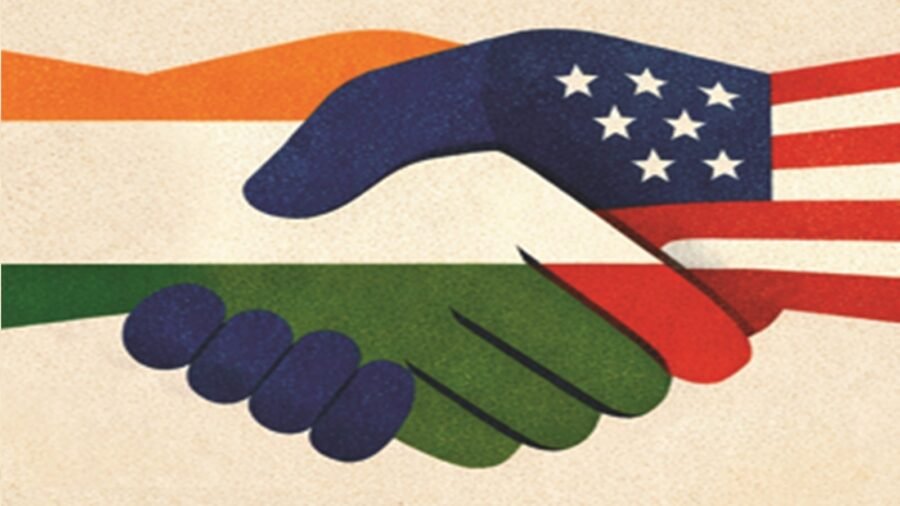
In February this year, 10 days after New Delhi and Washington unveiled the framework for an interim trade deal, I testified before the US-China Economic and Security Review Commission on Capitol Hill. One of the points I made was that the costliest tariff in the India-US relationship was not any rate on paper, but confusion. Whatever Washington does on trade with partners like India, it should pair enforcement with predictability through transparent guidance, structured consultations, and fewer of the avoidable uncertainties that push partners and firms to hedge. Days later, the US Supreme Court struck down Trump’s reciprocal tariffs, the country-by-country duties he had imposed since April 2025 under an emergency law that was also the basis on which India’s new rate had been set. From then on, confusion stopped being a risk and became the operating condition.
We are still stuck there. Twenty months after the two governments launched negotiations, the deal has stalled for a third time. In August 2025, American negotiators called off a round in New Delhi as tariffs on India climbed towards 50 per cent. In February, a planned visit by India’s negotiators was put off while the legal ground kept shifting. Now, a week after the US State Department declared that the deal was “90 per cent-plus there”, the US Trade Representative has said he sees nothing imminent. The reasons have changed each time, but the story has remained the same: The two sides have moved closer on the text even as the payoff from signing has kept shifting. So the real question is not how close the deal is, but what India would actually get if it is signed today.
Advertisement
In February, the joint statement set out to bring the US tariff on Indian goods down from 50 to 18 per cent. In return, India agreed to cut its own duties on American industrial goods and buy more from the US. Within two weeks, the legal basis for that 18 per cent was gone. Washington first imposed a temporary global tariff on most imports, then replaced it in July with new tariffs based on how effectively each country keeps goods made with forced labour out of its market. India landed in the lower group at 10 per cent, helped by its own move to ban such imports, which was a sensible step. But Vietnam, which competes with India in many of the same products, pays only slightly more, while several other countries pay the same as India. The clear advantage India appeared to have won in February has shrunk to a narrow lead that could easily disappear.
New Delhi wants a clear advantage over its rivals before it signs, and the logic is easy to follow. If India cuts its own tariffs and agrees to buy more from the US, but Indian companies selling goods to America end up no better than they are today, India gains very little from the deal. The objective makes sense, but a tariff advantage is a weak thing to rely on because, under the current US system, it can be lost in at least three ways.
First, the edge is relative, and Washington decides who gets it. The new rates have already moved once, with India itself among a handful of economies whose proposed rate of 12.5 per cent was cut to 10 per cent after they acted on forced-labour imports during the investigation. Vietnam’s trade deal with the US is now reportedly close to completion, and if it is signed, India’s margin could disappear overnight.
Advertisement
Second, the baseline itself can change. A separate US investigation into “structural excess capacity”, opened in March, covers 16 economies, including India and Vietnam, and has a statutory deadline of March 2027. Its findings could reset rates across board, regardless of what New Delhi signs now. Sector-specific tariffs also sit outside any bilateral rate. Generic medicines, the backbone of India’s pharmaceutical exports to the US, are exempt from the new pharma duties for now, but that exemption is up for review by April 2027, and Trump has announced a plan to impose steep duties on imported generics from 2028.
Third, what each side gives up does not last equally long. India would offer tariff cuts on industrial goods, openings on some farm products and purchase commitments, all of which would be long-term and politically difficult to reverse. In return, it would receive a tariff rate set by an administrative decision that Washington can revise on its own. India would, in effect, be trading permanent concessions for a temporary advantage, an exchange few governments would accept in any other setting.
New Delhi’s bargaining power would, therefore, be better spent securing terms that are harder to reverse than chasing a wider tariff gap. It should seek a ceiling: Washington would commit not to raise duties on Indian goods above the agreed level for the life of the deal, not to treat India less favourably than competitors, and to subject any new tariff affecting India to prior notice and consultation. India should also seek sector-specific exemptions written into the agreement, starting with pharmaceuticals. Certain Indian speciality medicines already qualify for zero duty under the new pharma tariffs, suggesting that such carve-outs are negotiable. Finally, India should phase in its own tariff cuts and purchase commitments and tie them to US compliance, so that if Washington raises India’s rate or withdraws agreed exemptions, India’s obligations adjust in turn.
There is a practical reason to push for this now. In the past eight months, Washington has based its tariffs on three different laws, namely the emergency statute the Supreme Court struck down, a temporary measure that expired in July, and the forced-labour tariffs now in place, a sequence that would be a joke if exporters were not paying for it. The central problem in this trade negotiation is therefore no longer simply how low the tariff is, but how long the agreed terms can be relied on.
The writer is with the Observer Research Foundation
40 years ago October 5, 1986: P T Usha leads winning spree
By Sohail Khan · 5 Oct
Why edible oils are bearing the brunt of food inflation
By Sohail Khan · 5 Oct
Remembering Ashok Singhal, karmayogi who worked with diligence and detachment
By Sohail Khan · 5 Oct
Leave a Reply