In India’s education debate, the ‘fourth language’ we are leaving out
Advertisement
I have been thinking about this as artificial intelligence moves from our phones into our classrooms and workplaces. Knowing the right answer will still matter. But it cannot be the only thing we reward. We will need people who can ask better questions, challenge what they are told, experiment, and imagine something that does not yet exist.
I have seen young graduates grow into CEOs. They did not always begin with the best degrees or the most knowledge. What stood out was their belief that they could figure things out. They were willing to say, “I don’t know. Let me try.”
Where does that confidence begin?
For nearly two decades, I have worked with children and teachers in government schools. I have watched what happens when a child understands the lesson, and what happens when the language itself becomes a barrier.
Advertisement
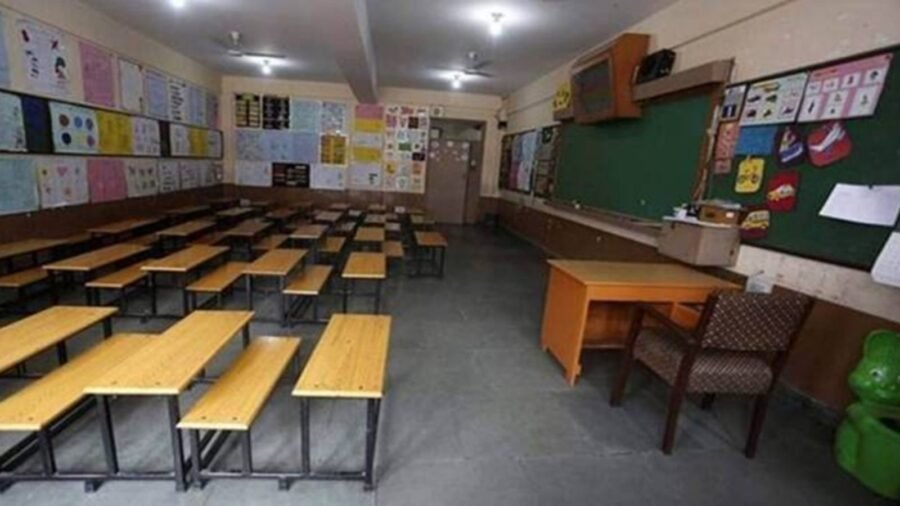
Imagine a six-year-old girl. At home, she talks endlessly, argues with her parents, and asks questions about everything. At school, the teacher begins explaining a lesson in a language she barely understands. Other children raise their hands. She stays quiet. Tomorrow, it happens again.
Soon, “I don’t understand the language” becomes “I don’t understand the lesson.” And then, perhaps, “I am not as smart as the others.” The tragedy is that nobody may notice. A test will tell us she is falling behind in reading or mathematics. It will not tell us when she stopped raising her hand.
This is why the language in which a child first learns matters so much now. A familiar language lets the child concentrate on the idea rather than struggle with the words used to explain it. More importantly, it gives her the confidence to participate. She can ask why, disagree, make mistakes, and try again.
In that classroom, she begins to discover something precious: My question matters. My idea matters. I matter.
I worry that we underestimate this. We speak about learning outcomes, but what about the child’s belief in her own ability to learn? We can help her catch up on a missed chapter. Rebuilding the confidence to speak after years of silence is much harder.
India’s debate about languages in education is, therefore, about more than which languages appear on a timetable. For millions of children, the mother tongue is the language in which they first learned to think aloud, tell stories, make friends and ask why the world works as it does. It deserves a place at the beginning of their education, not just in a cultural celebration.
This is not an argument against English. I know how many doors English can open, and I want those doors open to every child. But learning English and being required to learn everything through English are not the same thing. We should not make a child feel less intelligent simply because she has yet to master a second language.
Begin with the language she can understand and be understood in. Build her confidence. Then give her English and other languages, and all the opportunities they bring. There is another reason this matters now.
For generations, we have often treated the child with the correct answer as the smartest child in the room. Today, a machine can produce answers in seconds. It can translate, summarise and solve problems that once took us hours. What will distinguish the person using it?
The ability to ask why the answer might be wrong. To notice the problem nobody has framed. To wonder whether there is a better way. To test an idea even when the outcome is uncertain.
I call this the fourth language: The language of questions.
It is not taught by asking children to memorise a list of questions. It grows when a teacher welcomes an unexpected “why”, when a child is allowed to be wrong without being embarrassed, and when curiosity is treated as a strength rather than an interruption. And it begins long before a young person joins a company or learns to use AI. It begins in that first classroom, with a child who feels she has something worth saying.
We cannot ask children to challenge the world if we first teach them to doubt their own voice. So as we discuss how many languages our children should learn, let us pay attention to the one in which they begin.
The first language gives a child the confidence to speak. Only then can she learn the fourth, the courage to question.
The writer is Founder Chairman, Sampark Foundation, and ex-CEO, HCLT


5 ‘silent signs’ of high blood sugar: Doctor explains which symptoms really matter
By Sohail Khan · 3 Oct

Leave a Reply