Breaking the blister pack: Counterfeit, adulterated medicines network busted
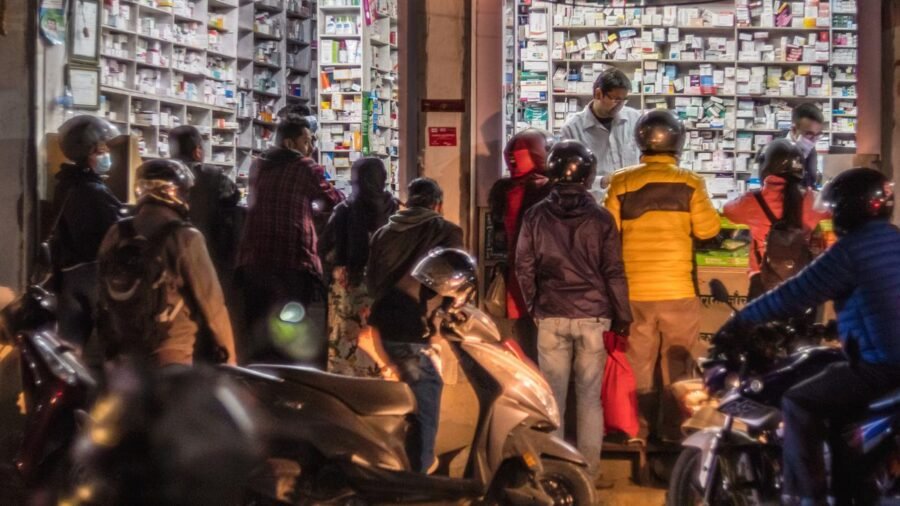
Rajkumari and Darshan, both in their mid-30s and from Jharkhand, are leaving Delhi’s All India Institute of Medical Sciences (AIIMS) after a check-up. They pause to collect themselves before navigating the medical stores outside. Rajkumari hangs on to her husband, who lugs an oversized bag that weighs him down. They have been given a list of medicines to buy.
Rajkumari was diagnosed with blood cancer about 10 months ago and referred to AIIMS for treatment. Since then, the couple has spent a large part of its savings on medicines, travel, and staying in Delhi. Darshan says he has sold their land to keep paying for the medicines.
He pulls out her prescription and points to a name. A single injection of the medicine costs around ₹1.5 lakh and his wife will need several vials. The drug is used in the treatment of blood and bone marrow cancers, including multiple myeloma. It is also among the high-value cancer medicines that figure in an investigation by Delhi Police’s Inter-State Cell into counterfeit and illegally diverted drugs. The racket, spread across Rajasthan, Uttar Pradesh, Maharashtra, and Telangana, was busted in late August.
Aditya Gautam, Deputy Commissioner of Police, Crime Branch, says Delhi Police has so far arrested 17 people and recovered 588 filled vials and 3,021 other medicines, all valued at about ₹9 crore. “Investigators found original cartons and empty boxes being retained and reused. Batch numbers, MRP details, and other identifying marks were allegedly removed with chemicals like acetone before the medicines were repackaged,” he says.

“Investigators found original cartons and empty boxes being retained and reused. Batch numbers, MRP details, and other identifying marks were allegedly removed with chemicals like acetone, before the medicines were repackaged”Aditya GautamDCP, Crime Branch, Delhi Police
The seized cancer drugs include Darzalex, Imfinzi, Erbitux, Opdyta, Gazyva, Bavencio, Adcetris, and Keytruda. Bavencio and Adcetris have been confirmed as counterfeit by the manufacturers; reports on the others are awaited.
A doctor at AIIMS involved in Rajkumari’s treatment says a red flag for a counterfeit drug is when it shows no results. He also says large discounts on drugs may indicate they are fake.
People pour in from across the country to Delhi for medical treatment.
In 2022, the national capital had nine Joint Commission International-accredited hospitals, meaning they meet global standards of clinical excellence. This is the highest number in the country, making Delhi a medical hub. This also brings with it the problem of counterfeit drugs.
Every month, Delhi Police and the Delhi Drugs Control Department report seizures of medicines they describe as “counterfeit, spurious, adulterated, illegally diverted or unauthorised”.
Substances seized range from basic allergy and skin treatment drugs to high-value cancer medicines, antibiotics, vaccines, and other life-saving pharmaceuticals.
Unless the operations are large, news of these raids and the names of the medicines seized seldom reach people. Tracing a fake medicine to a person is a long and expensive process, so it is seldom done.
Medicine raids
In May this year, spurious oxytocin injections in government hospitals in Rajasthan’s Kota were a major reason for the deaths of five women following caesarean-section deliveries. The same batch of spurious oxytocin had reached Delhi government hospitals too, sources say, after which it was seized by the Drugs Control Department.
Five days after the inter-State drug raid that seized cancer medicines, the Crime Branch, in a separate investigation, arrested Dr. Manish Sharma, 39, a resident of Faridabad in Haryana, for allegedly selling smuggled, suspected adulterated, and counterfeit life-saving drugs.
According to the police, Sharma had gone to Russia to study medicine and returned to India in 2014. He later worked at a hospital in Faridabad before opening his own hospital. After those ventures shut down, he and his wife started a polyclinic in the city. Sharma also registered HK Pharmaceuticals at the same address and began selling medicines on an e-commerce platform.
The police claim that he began sourcing medicines through illegal channels and selling them to buyers online. Last month, the Drugs Control Department seized a counterfeit anti-rabies vaccine worth ₹2 lakh from Chandni Chowk’s Bhagirath Palace. A government official says the department acted on a tip-off and sent the vaccine to a testing centre in Himachal Pradesh’s Kasauli.
The problem of counterfeit drugs is not new. During the COVID-19 pandemic in 2021, the Crime Branch busted a facility allegedly manufacturing fake Remdesivir. At the time, hospitals were prescribing Remdesivir for COVID-19, and families were pooling savings to procure it, with one vial selling for as much as ₹90,000.
In 2022, spurious medicines valued at over ₹5 crore were seized from a factory at Tronica City in Uttar Pradesh’s Ghaziabad district. In 2024, investigators detected vials resembling high-value cancer drugs. Investigators are examining possible links between some of these and the present inter-State network, but no definitive connection has been established so far.
Labels stripped away
According to Crime Branch officials, medicines may reach people in different ways: counterfeit drugs made in warehouses, often made to look genuine; genuine medicines illegally diverted from the chain for which they were procured, such as drugs from a government hospital being diverted to the open market; and unauthorised medicines that are genuine but not legally approved or permitted for sale in India.
Once a medicine is tainted, either because it is spurious or has been removed from its legitimate supply chain, it moves through layers of intermediaries across States. Some are stored in homes or warehouses before being passed on to wholesalers, brokers, and pharmacists.
Paperwork is another layer of camouflage. The police say invoices are generated for medicines that were never actually supplied, creating a paper trail for illicit transactions. In one instance, investigators found amounts routed through a firm’s bank account and, after GST and commission were deducted, the balance returned in cash. Registers and diaries recording medicine transactions and cash dealings were also recovered. The total turnover and profit from the illicit trade are still being worked out.
Medicines typically pass through manufacturers, clearing and forwarding agents, stockists, sub-stockists, and retailers before reaching a patient. Each handover creates an opportunity for pilferage, according to the police.
“Indian laws require purchase and sale records at every stage, but an invoice only attests that a transaction occurred; it does not ensure that the product inside the box matches its label,” says Nilaya Varma, Group CEO of Primus Partners. “That loophole is precisely where counterfeiters operate,” he adds.
Manufacturing and packaging can be particularly difficult to police, he says, because convincing labels, copied batch numbers, holograms, and reused original packaging can defeat visual inspection. At the wholesale level, multiple transfers can further blur a product’s source, allowing suspect stock to mix with genuine medicines. A pharmacist may be able to check the brand and batch number, but cannot establish the history of an individual pack.
Technology has added another layer of protection, but not an infallible one. India has required barcodes or QR codes on around 300 specified brands since August 2023, but a code that is merely scanned is not necessarily proof of provenance. “A copied or cloned code will pass a visual or app-based scan just as readily,” Varma says, arguing that verification against the manufacturer’s own database at the point of sale would provide a stronger safeguard.
The scale of the pharmaceutical market also limits the reach of testing. The Central Drugs Standard Control Organisation and State drug regulators tested 1,16,323 samples in 2024-25, of which 245 were declared spurious or adulterated.
According to the government, more than 960 drug manufacturing premises have undergone risk-based inspections, resulting in over 860 regulatory actions.
Varma says regulators cannot physically examine every pack moving through more than 8.5 lakh retail pharmacies. “Sampling is a backstop that identifies a bad batch after the fact,” he says. “It cannot certify the pack in a patient’s hand at the moment of sale.”
The Crime Branch is still tracing the complete downstream chain, including pharmacies, distributors, end beneficiaries, and the financial trail. The number of patients who may have received counterfeit medicines, and any confirmed adverse health consequences, has not yet been established.
The lowest bidder
The wider supply chain also raises questions about how medicines enter hospitals in the first place. Lower tendering costs are among the causes, say doctors in Delhi, particularly those working in government settings.
“The government should facilitate more sampling and have more testing labs. The onus can only be on the government to make these checks. It isn’t possible for individual hospitals to do actual quality checks”Dr. Sumit RayMedical Director, Holy Family Hospital, Delhi
Hospitals have drug and therapeutics committees that select and regulate the medicines brought into the premises. They point out that government directives require medicines to be procured from the lowest bidder, and if a hospital has not done so, it is expected to explain why.
Dr. Sumit Ray, Medical Director of Holy Family Hospital in Okhla, Delhi, a hospital run by a charitable trust, says the committee he chairs decides which medicines are selected. “It is difficult to prevent such medicines from entering the system, but there can be multiple levels of checks. For instance, if it is a new pharmaceutical company, we check which other hospitals it has supplied to, who its manufacturers are, and what the reputation of the manufacturer is. The packaging and labelling can also throw up red flags.”
He says while it is not a perfect system, hospitals do what they can to ensure that medicines are genuine. “Ideally, the government should facilitate more sampling and have more testing labs. The onus can only be on the government to make these checks. It isn’t possible for individual hospitals to do actual quality checks,” he says.
Dr. Shyam Agarwal, chairperson of the Department of Medical Oncology at Sir Ganga Ram Hospital, says when a patient reports that a medicine is not effective, doctors cannot establish whether the medicine itself is to blame.
“One way to avoid counterfeits is to ensure that the supply coming into hospitals is from genuine companies and that they are not offering steep discounts. A 50% discount should raise suspicion,” he says.
A broken chain
While investigations have traced the chain in such cases, the implications for patients are rarely known. Patients find it almost impossible to establish whether they have consumed a counterfeit medicine. In the case of the rabies vaccine, for instance, a government official says, “It is hard to trace how many patients have consumed it, and from where. If we circulate notices warning patients about a particular medicine, it might lead to more panic.”
The official adds that one way to check whether a patient has received a counterfeit medicine is to trace the batch number recorded on the bill.
Patient rights advocate Bejon Kumar Misra points out that there are not enough large-scale studies to ascertain the impact of counterfeit medicines and that even when data is recorded, it is rarely traced back to patients. “One of the major causes of the issue is that the lowest bidder ends up getting preference,” he says.
He adds that while many patients are affected, many do not even realise they have consumed counterfeit medicines and that the medicines are not working.
According to government data, drug regulators tested 1,41,322 samples across India in 2025-26. Of these, 3,012 were declared ‘Not of Standard Quality’ and 283 were found to be spurious or adulterated. State drug regulators initiated 779 prosecution cases for the manufacture, sale, and distribution of spurious or adulterated drugs.
When medicines fail silently
The consequences are most serious when the failure is not immediately visible.
In cancer treatment, a counterfeit or substandard medicine may contain too little or none of the active ingredients needed to work. A patient may continue treatment believing therapy is being administered while the disease progresses. The delay in detecting treatment failure makes oncology one of the areas most affected by counterfeit medicines, Varma says. With emergency or other life-saving medicines, the consequences can be immediate. Incorrect ingredients or contamination can also cause harm independent of the illness being treated.
For the health industry, the damage extends beyond the patient. Manufacturers can face lost sales and complaints over products they did not make; legitimate distributors and pharmacies bear the cost of investigations and recalls; and repeated counterfeit incidents can erode confidence in genuine medicines and India’s pharmaceutical supply chain.
The answer has to move beyond periodic enforcement, Varma says. Manufacturers need tighter accounting of unused and returned vials, hospitals need records of who receives high-value injections and how empty vials are disposed of, and wholesalers and pharmacies need to conduct stronger checks on suppliers and maintain traceable purchase records.
The fear of fake
Every time Jharana Mallick, 32, who has thalassemia, goes to buy iron chelator medicines, she is careful about which company she picks and medical store she buys from, hoping she does not have to relive what happened 10 years ago.
“For a whole year, the medicines I bought from dispensaries had no effect. After five or six tests, I realised my serum ferritin levels were going up rather than coming down. And I simultaneously started developing issues like osteoporosis and even a gall bladder stone,” she says.
Originally from Odisha, she now lives in Delhi and undergoes frequent blood transfusions. Her mistrust extends beyond the medicines to the system itself. “These are supposed to be life-saving drugs, but they are bought at the lowest tendering costs,” says Mallick, who now works with a charitable trust, Sarvesham Mangalam Foundation, focussed on thalassemia awareness and prevention. In a month, she says, people living with thalassemia can spend up to ₹50,000 on drugs.
Doctors never told her that the medicines she took were counterfeit, she says. But the experience left her with a demand that goes beyond her own treatment: the system should stop “compromising on life-saving drugs”.



Leave a Reply